Blog

Thinking About Flowers

By Jessica Ballard
Farm and Family Advocate

As I am writing this post, snow is gently falling outside my window. It seems a bit ironic to be writing about flowers right now, but flowers are all I can think about as we plan our spring and summer gardens.

When I began working at GreenHouse17 four years ago, we wanted to grow a garden in order to create access to fresh produce and integrate nature-based programming into our services…

And we did that.

And we still do that…

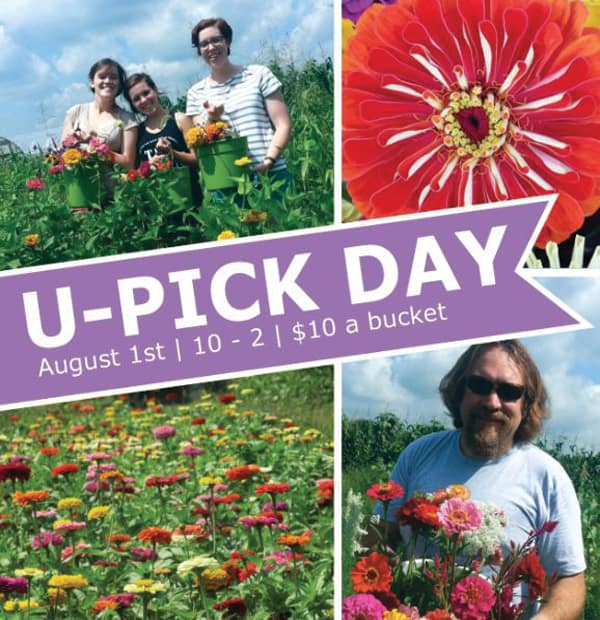
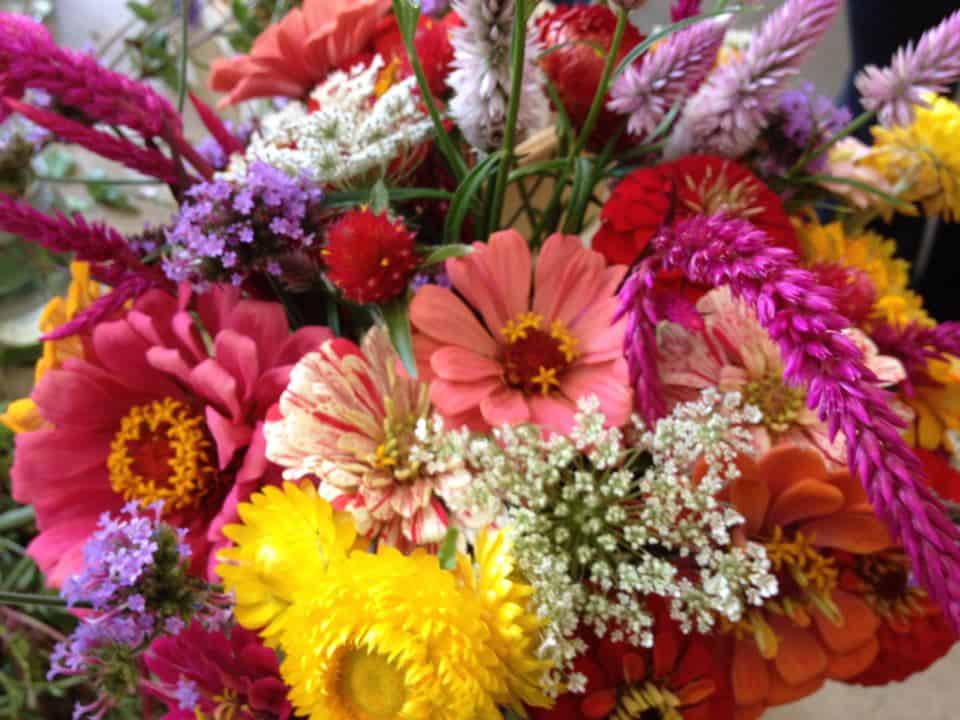
And we’ve found that while people like our tomatoes and peppers and sweet potatoes, they LOVE our flowers. Survivors, staff, and community all connect to them.  I think maybe it’s because flowers offer something deep and special in a different way than vegetables.

Flowers symbolize beauty, gratitude, devotion, love and wonder. They are almost always given as a gift or as an offering with intention. We share them during times of celebration, sadness, ritual and prayer. There seems to be something about flowers that just makes us feel better.

Our flowers help us tell our story in a very simple way.  Our mission is to cultivate opportunities for growth and healing in all of the work we do.  Flowers are a perfect demonstration of the immense beauty and grace that can bloom from hard work, patience and love.

We think you deserve weekly flowers this summer! If you agree, follow this link to register for a full-season of  beautiful flower bouquets every week this summer! We also offer a partial-season CSA for one month during the summer.

Your purchase a flower CSA helps survivors on their journey of healing and reminds them our community cares about their well-being.

READ MORE

Our Anniversary Love Letter to Survivors

Ten years ago our organization received its federal nonprofit status.The official date on the paperwork was February 14. Some think this to be  ironic given we are an agency working to end intimate partner abuse. We think it speaks to the power of healthy and supportive love!

So since Valentine’s Day has a special connection to our mission and its our 10 year anniversary, we made this short video “love letter” for the strong survivors who have passed through our lives during their journey of healing.

And the amazing central Kentucky community that supports our mission with such compassion and generosity. We are grateful for all of you!

(A special thank you to our friend and stellar videographer Patrick Drury. You can find him online at this link.)

READ MORE
Blog

West Sixth Brewery: Pay It Forward Cocoa Porter

West Sixth Brewery has chosen our organization to be  this quarter’s beneficiary of their Pay it Forward Cocoa Porter!

Every time a six-pack of Cocoa Porter is sold in the central Kentucky region, West Sixth Brewery will donate 50 cents to help survivors of intimate partner abuse. And Clark Distributing will match this donation with another 50 cents. That’s a dollar for every six cans sold through December 31.

The brew is described as “a robust American porter that has been brewed with organic, direct-trade cocoa nibs” and “dominated by roasty malts and a strong aroma of chocolate.”

In addition to the taproom at West Sixth Brewery, you can purchase the Pay it Forward Cocoa Porter at select liquor retail locations throughout the area.


READ MORE
Blog

17 Days/17 Ways – Purchase Products Handmade By Survivors

Our new Etsy shop opens for business today!

The shop features ten listings for body care products handmade by survivors of intimate partner abuse. We’re so excited to share this big announcement with you. It’s been many months in the making.

Survivors enrolled in our farm stipend program began experimenting with product recipes and making test batches of products at the beginning of this year. Some early recipes were spot on, and others needed a little tweaking. Through trial and error and openness to the possibilities, we managed to find the perfect formula for each product.

Along the way we also completed certification training, sought lots of advice from our community partners, and forged some exciting new relationships with regional businesses. It’s all been an amazing learning experience.

And this process of making products has a special connection to our mission.

Activities related to the production of these products add value for survivors through restorative healing, collaborative, and micro-business experience.  There is nothing more beautiful and affirming for our program than to see survivors take on the role of leaders, and we witness this as they facilitate production and teach new stipend participants.

Sales of products will add value to our organization, too. Our organization benefits from a trauma-informed program model to address barriers faced by survivors while generating revenue to support services for survivors. We wanted the marketing of our products to highlight this important connection to the mission. All packaging proudly include the phrase “handmade by survivors,” and the names for each of the products recall the healing experiences of survivors.

Please visit the shop and help spread the word. Our Handmade by Survivor products make meaningful holiday gifts for friends, family, and co-workers!  100% of your purchase from our shop supports survivors of intimate partner abuse.

[portfolio_slideshow id=1869]
The integration of our farm and product programming with traditional services for survivors of intimate partner abuse has received the national Mary Byron Project Celebrating Solutions Award, Kentucky Nonprofit Network Innovative Nonprofit Award, and the Center for Nonprofit Excellence Pyramid Award for Social Innovation. And we’re so fortunate and grateful for the help and guidance from our friends at Grow Appalachia during this journey.

This post is part of this year’s 17 Days/17 Ways Campaign to end intimate partner abuse.

READ MORE
Blog

17 Days/17 Ways – Believe Your Voice Matters

By Curtis Bethel
Student Blogger

Note: The following post was written by a freshman at the University of Kentucky with help from our staff as part of a service learning project.

Everyone knows about high-profile intimate partner violence, like when Chris Brown hit Rihanna or the recent Ray Rice video showing the football player striking his fiancé, but the stories of most survivors never get told.  Intimate partner abuse doesn’t just happen in celebrity lives. It happens in every neighborhood, many families, and most schools. Even though you’re not famous, your voice can make a difference.

Imagine a scene…

A family puts on a facade. You may have spotted them out in the crowd of people at the fair, or sitting in the front row at your church. You recognize the family as the perfect family with no problems, almost too perfect at times. Little did you know, they head home each day to violence. They fear for their well-being and are afraid to tell anyone. As a result, they live their days in the shadow of violence.

Now imagine a new world for this family. Imagine a world where victims, survivors, and bystanders believe their voice matters and will be heard. Imagine a world where we all…

  • Change our profile pics on social media during Domestic Violence Awareness Month.
  • Have a safe plan of action if we see or hear intimate partner abuse happening.
  • Speak out when someone is using abusive or controlling language.
  • Reach out to someone who might be experiencing intimate partner abuse.
  • Make connections between animal and human abuse.
  • S​peak the names of lives lost to intimate partner homicide.
  • Volunteer our time and talents to help organizations helping survivors.
  • Read a book, listen to a song, or watch a movie that addresses the topic.
  • Follow other organizations working doing good for survivors.
  • Talk to young adults about healthy relationships and dating violence.
  • Plan a donation drive for survivors and their children living in emergency shelter during the holidays.
  • Tell elected officials that we support protections for survivors, and so should they.
  • Honestly ask ourselves if our behavior is violence-free.
  • Write a letter to or local newspaper describing the problem of domestic violence.
  • Adopt the cause at our workplace, and ask our company to address domestic violence in the workplace.

Your voice DOES matter.  You can make a difference. ​Your ideas, words, and actions help end intimate partner abuse.

This post is part of this year’s 17 Days/17 Ways Campaign to end intimate partner abuse.

READ MORE
Blog

17 Days/17 Ways – Work with your HR Department

The effects of intimate partner abuse often extend to the workplace. Consider real stories from the Society of Human Resource Management (SHRM) website:

  • Shirley was shot 13 times by her ex-husband on the way to work
  • Delia and her co-worker were shot to death by Delia’s estranged husband.
  • John had just arrived at work when a woman he had been dating shot him multiple times.

Yet the Family Violence Prevention Funds estimates that over 70% of U.S. workplaces have no formal program or policy that addresses workplace violence. Information prepared by the National Council Against Domestic Violence reports only 4% of all workplaces train employees on domestic violence and its impact on the workplace.

We can all be advocates at the workplace to help end intimate partner abuse.

Asking your HR staff if the company has a policy to address domestic violence in the workplace is a good place to start. Urge your employer to establish employee assistance programs for survivors of intimate partner abuse. When choosing topics for professional development, consider professional training events that build awareness and understanding about intimate partner violence.

If you supervise a team in your role at the workplace, SHRM suggests you should look for a pattern of these behaviors to identify staff who may be struggling to escape abuse:

  • Unexplained absenteeism or tardiness
  • Requests for time off to attend court appearances
  • Unusual number of e-mails, texts, phone calls, etc. from a current or former partner
  • Abrupt change of address

Another way to make a real difference is to suggest your company adopt the cause. We always welcome and appreciate the help of workplace volunteer groups. In the warmer weather, your team can help out on the farm and around the property. We have a very long farm fence just waiting for the perfect workplace volunteer group to paint! In the winter months, your workplace team could commit to coordinating collections of groceries at a local Kroger store during the annual Shop & Share event or assisting with winterization projects at our shelter facility.

We welcome talking with you more about work group volunteer projects. Reach out to us on social media or send us a note. We can brainstorm ideas to find the perfect project fit for your team.

This post is part of this year’s 17 Days/17 Ways Campaign to end intimate partner abuse.

READ MORE
Blog

17 Days/17 Ways – Write A Letter

Intimate partner violence happens in every community and neighborhood, but sometimes we don’t hear about the issue in the news until someone is harmed. On the other hand, the issue of intimate abuse is a popular topic in television and film. Unfortunately, many of these stories perpetuate myths by mythologizing, minimizing, and misnaming the abuse

Writing a letter to the editor of your local paper is an effective way to create awareness during Domestic Violence Awareness Month. The Kentuckians for the Commonwealth website includes this useful resource to help you write a letter. They’ve compiled a list of newspaper contacts from across the state, including colleges and university papers, and offer these tips for an effective letter:

  • Keep the letter short, usually less than 250 words
  • Support your point of view with key facts (consider statistics from the National Network to End Domestic Violence)
  • Make a personal connection and describe why you care about the issue.
  • Remember to include a call for community action. What do you want people to do?

And when you watch a popular show or film that irresponsibly handles the topic of intimate partner violence, look to the program’s social media pages to offer feedback about the misrepresentation of the issue. Your voice matters.

Let us know if your letter is published, and tweet us a link to programs you comment on. We’d like to feature your thoughts here on our blog.

This post is part of this year’s 17 Days/17 Ways Campaign to end intimate partner abuse.

READ MORE
Blog

17 Days/17 Ways – Honestly Ask Yourself

By Dan Schlachter
Student Blogger

Note: Today’s post was written by a freshman at the University of Kentucky with help from GreenHouse17 staff as part of a service learning project.

Oftentimes we don’t consciously think about many of our everyday habits. We get so caught up in the endless distractions and stresses of life that we rarely examine our own behaviors.

An examination of our behaviors allows us to look deeper into daily actions that can have big effects on other people’s lives, and not just intimate partners. Our behavior in family relationships, at the workplace, and in friendships should be free from emotional, verbal, and physical aggression.

Honestly ask yourself:

  • Do I ever make threats to get my way at work or at home?
  • Am I more interested in being right than finding comprises?
  • Do I really listen to other points of view during conflicts at work, home, and play?
  • Have I ever verbally or emotionally manipulated someone to get even or gain power?

Becoming violence free takes discipline because conflicts happen in almost every relationship. When we feel angry, we must practice healthy conflict resolution. We should always be demonstrating our care for others instead of demanding to receive something from them. Many times people forget this first priority.

The only way to break a habit is to constantly work at it, and working at it requires self-awareness. By practicing healthier relationship habits and modeling them for others, you are helping to end intimate partner abuse.

So go out and do your part in making our world a better place.

This post is part of our 17 Days/17 Ways Campaign to end intimate partner abuse.

READ MORE
Blog

17 Days/17 Ways – Speak Their Names

Today’s way to help is a more difficult one. Data collected by the Department of Justice Bureau of Justice Statistics finds an average of three women are murdered by an intimate partner every day in the United States. These murders represent more than a third of all female homicides.

Last year the ZeroV compiled a list of 25 Kentucky women who were murdered by an intimate partner between October 1, 2011 and September 30, 2012. We must remember their lives. Consider how many times they tried to leave, and imagine the barriers to safety and healing they might have faced. Think about the friends, family and children who are still mourning.

Speak their names, and commit to help end intimate partner abuse in families and our community in their memory.

  • Sandy Allen, 24, Oldham County
  • Tasha Campbell, 26, Kenton County
  • Karyn Michelle Carr, 38, Jefferson County
  • Katie Coomer, 28, Woodford County
  • Amy Dennison, 36, Muhlenberg County
  • Sherry Dillon, 52, Pike County
  • Mary Gilmore-Hislope, 44, Pulaski County
  • Sade Goldsmith, 28, Jefferson County
  • Lori Hall-Boswell, 35, Powell County
  • Erika L Hutchason, 43, Webster County
  • Leigh-Ann Kinder-Parsons, 35, Boone County
  • Leslie “Cricket” Lanham, 43, Greenup County*
  • Barbara Martin, 64, Powell County
  • Kathleen McGee, 30, Christian County
  • Tamlyn Nguyen, 36, Daviess County*
  • Jessica T Rawls, 27, Christian County
  • Autumn Rollings, 24, Christian County
  • Robyn Slone, 37, Boyd County
  • Valeria K Stevens, 43, Rowan County
  • Modena Sutton, 50, Anderson County
  • Danielle Thomas, 27, Boyle County
  • Angela Thurman Ervin, 34, Monroe County*
  • April Turner, 35, Gallatin County
  • Theresa Utley, 51, Gallatin County
  • Barbara Walker, 51, Larue County

*The deaths of these women occurred before September 30, 2011 but the cases were pending when the list was published. Since then someone has been charged in each case.

This post is part of this year’s 17 Days/17 Ways Campaign to end intimate partner abuse.

READ MORE
Blog

17 Days/17 Ways – Plan a Donation Drive for Survivors

By Zach Logue
Student Blogger

Note: This post was written by a freshman student at the University of Kentucky with help from GreenHouse17 staff as part of a service learning project.

Donation drives are a great way for individuals and groups to get involved in the community and help survivors of intimate partner abuse. Donations are especially important around the winter holidays. Everyone deserves to receive a gift they want or need,  and you can help make this happen for survivors.

GreenHouse17 will be the 0nly source of holiday help for about 100 adults and their children who are receiving their services or living at the emergency shelter. At any given time, about half of residents living at the agency’s shelter are children. You and your church, work, or community group can collect and donate all kinds of things to make the holidays special. Some gift ideas include robes, pajamas, slippers, board games, non-violent toys, purses, blankets, perfume, and many more.

You don’t even have to wrap the gifts because the organization’s staff  sets up “stores” in the safety of the shelter for parents to “shop” for gifts for their children and kids to “shop” for gifts for their parents. Are you someone who’s never sure what to buy for someone? You could consider purchasing gift cards to grocery or department stores in the region to help survivors during the holidays.

A complete list of gift ideas for survivors of all ages is available at this link.

Although GreenHouse17 isn’t able to accept donations of used goods at the shelter, you can donate your gently used items at area Goodwill or Habitat for Humanity on behalf of survivors. Just tell them the donation is for GreenHouse17. They will process the used items and provide vouchers for families in the shelter to shop for goods they need.

Your time and generosity will put a smile on a child’s face and help survivors to feel supported this holiday season!

This post is part of this year’s 17 Days/17 Ways Campaign to end intimate partner abuse.

READ MORE