Blog

Day 2: Participate in Events that Support Survivors

Isolation is one of the most common tactics used by abusers to maintain power and control. Although some survivors have a strong support system, many are navigating their journeys toward safety and healing alone.

“My friends supported me for the first months, but then they just didn’t want to talk about it anymore.”

“We moved more than a hundred miles away from my friends and family the day after our wedding.”

“I had to leave behind friends I’d known since childhood just to stay alive.”

When you attend community events that support survivors, your presence sends a strong message to survivors. Your participation reminds survivors they’re not alone. And that our community cares about their well-being.

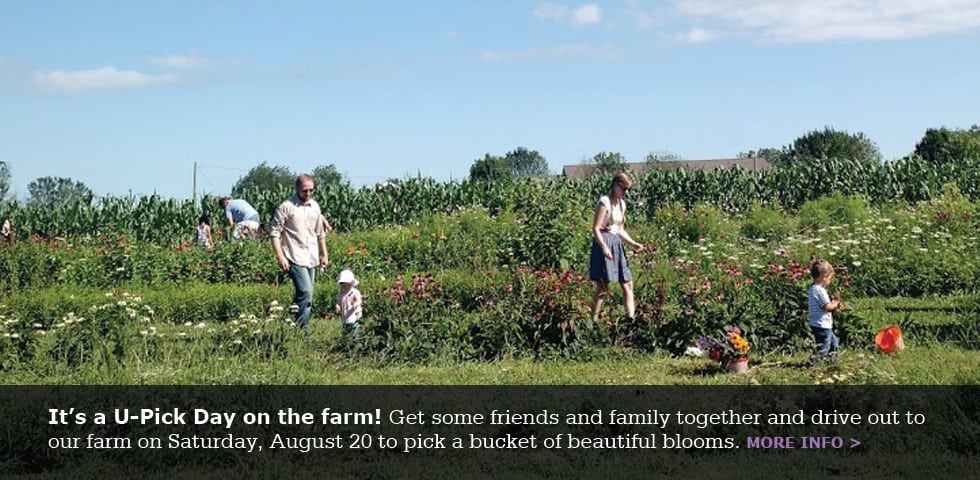
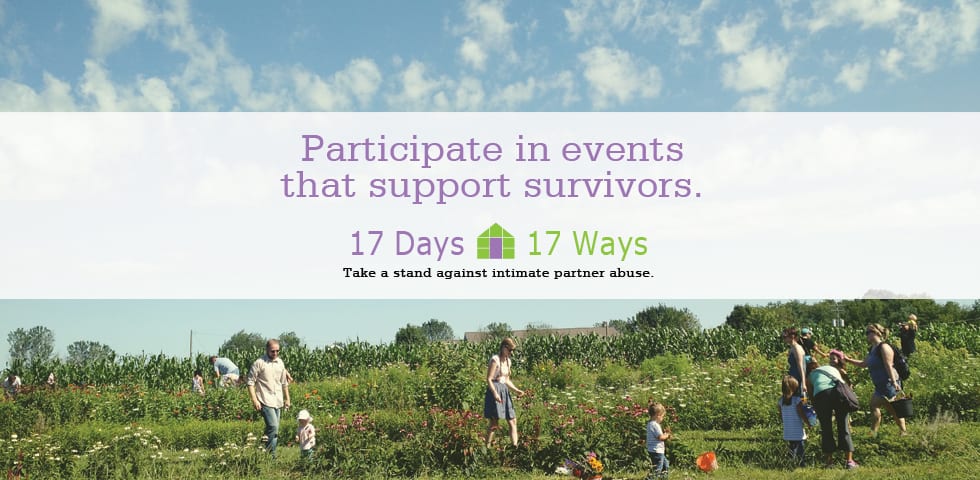
Our Autumn U-Pick Day on the farm this Saturday, October 3 is a fun and affordable event that supports survivors. Come on out to the farm between 10 a.m. and 2 p.m. to pick beautiful flowers from our farm. Only $10 for a bucket of local flowers grown by strong survivors.

“This many people in my community support me?!”

“I looked around and realized no one in this room judges me.”

“It made me feel good to know that so many cared for my well-being, even if I don’t know them personally.”

We’ll be picking this Saturday, rain or shine, so long as the weather is safe. Bring your bucket and clippers, if you got ‘em. If not, we’ll have some for you to use. This is a rain or shine, family-friendly event. Let’s fill the farm with love and support to remind survivors they’re not alone in our community. Send us a note if you need driving directions to the farm.

This post is part of our 17 Days/17 Ways campaign to take a stand against intimate partner abuse.

READ MORE
Blog

Day 3: Speak Up When Someone Victim Blames

We’ve probably all heard friends and family say things like these before. Maybe you’ve even said one of the statements:

“She went back, so now it’s on her.”

“I wonder what he did to provoke it?”

“She knew he had a short fuse when they got married.”

Speak out when you hear someone using victim-blaming language. Chances are they don’t know they’re doing it. You can say something like “Did you know the words we choose sometimes blame victims?” Then let explain how.

Talking about the power and control associated with intimate partner abuse is a good place to start.Your discussion might address how the physical, emotional, and financial violence make it very difficult for someone to leave. Remind others that threats of retaliation can be scary, and sometimes survivors return to a life shared with their abusers to stay alive.

Re-framing common questions is another effective way to address victim-blaming. Instead of asking “Why do they stay?” consider asking questions like, “I wonder what barriers they face to leaving?” or “Let’s talk about why the abuser isn’t being held accountable.”

Start a conversation about word choice. Help someone understand how language affects perspective, and how the wrong language can be dangerous.

READ MORE
Blog

Day 4: Protect Family Pets, Too

The National Coalition Against Domestic Violence reports more than 40% of victims stayed with their abusers because of concerns for the safety of animal companions. And more than two-thirds of survivors with animal companions say their abusers harmed family pets for revenge or emotional control.

With the support of RedRover, a national organization committed to helping animals in crisis, we offer kennels on the property that surrounds  our emergency shelter. The kennels are based in the SAF-T™  model, a global initiative that encourages domestic violence shelters to Shelter Animals and Families Together.

[slideshow_deploy id=’3041′]

The Lexington Humane Society helped us develop the program, and they provide free examinations and vaccinations for every animal that lives with us. Our friends at the Chevy Chase Animal Hospital provide medical care for animals with injuries from abuse. Each kennel includes an access door to a fenced run area under beautiful shade trees. When weather conditions are too hot or cold for pets to safely reside in the kennels, we turn to a circle of animal foster families to care for family pets while their humans find safety at the shelter.

You can learn more about the connection between animal and human abuse at the SAF-T website. And check out the Spot Abuse Project that encourages the reporting of suspected animal abuse to protect victims of domestic violence. The campaign is based on research from the Association of Prosecuting Attorneys that found 76% of animal abusers also abuse a member of their family.

spot abuse cat   spot abuse dog

Please share this information with your friends and family, and send us a note if you’re interested in making a donation of food, bedding, or other animal care supplies for the kennels. Together we can protect family pets, too.

This post is part of our 17 Days/17 Ways campaign to take a stand against intimate partner abuse.

READ MORE
Blog

Day 5: Reach Out to Someone

Today’s way to take a stand against intimate partner abuse is important and difficult. Reaching out to someone who you think is being abused by an intimate partner can be scary.

What if I’m wrong?

What if my friend is offended by me asking?

What if I make things worse?

Although all of these are possibilities, it’s more likely your friend will appreciate knowing you care enough to check in. The National Domestic Violence Hotline recommends these steps to help someone you know:

  • Acknowledge your friend is in a difficult and scary situation. Say these words as many times as possible: “It’s not your fault.”
  • Listen to your friend. It may be difficult for your friend to talk about the abuse. What s/he needs most is someone who will believe and listen. Practice saying these words: “I believe you.”
  • Be non-judgmental. Avoid victim-blaming language and remember that intimate partner abuse doesn’t always happen like it’s portrayed in the movies.
  • Support your friend’s decision to stay or flee. There are many reasons why victims stay in abusive relationships. They may leave and return to the abuser several times.  They will need your support even more during those times.
  • Encourage your friend to talk to people who can help. Reassure them that they are not alone and that there is help and support out there. Have the number of our crisis hotline memorized or written down for your friend: 800-544-2022. Our crisis counselors are available 24-hours a day, every day of the year to safety plan and provide resources.

Your friend must decide the best course of action. So much of their power and control already has been taken by the abuser.  Remember that your role is to empower and support and resources, not to rescue them.

This post is part of our 17 Days/17 Ways campaign to take a stand against intimate partner abuse.


READ MORE
Blog

Day 6: Think About How You Would Respond

You hear yelling coming from the apartment upstairs again.

It sounds like someone just hit a wall.

What do you do?

We all know how to react if we witness a crime and take action if we witness a car accident or robbery. We call 911 and make sure everyone’s ok. Studies show most people are less likely to take action during crimes of intimate partner abuse that other crimes. Maybe they think it’s none of their business. Maybe concerns about safety keep them from getting it’s or be concerned about your own safety.

Instincts to avoid danger are on mark. Although it’s never safe to intervene when someone is physically abusing another person, you can still take actions to help. Advocates recommend a two-part strategy: delegate and distract.

Always call 911 to delegate the responsibility of physical intervention to trained law enforcement.

Then make a distraction to pause the abuse until law enforcement can arrive. If the abuse is verbal and you’re friends with the couple, you might feel comfortable approaching the situation and posing a question to distract. If the abuse has escalated to physical violence, distractions like setting off car, fire, or house alarms can be effective.

Right and wrong reactions are illustrated in the video below. The situation depicted makes you think. How you would respond if you witness or overhear intimate partner abuse? Share your ideas for safe interventions in the comments.

This post is part of our 17 Days/17 Ways campaign to take a stand against intimate partner abuse.

READ MORE
Blog

Day 7: Volunteer Your Time and Talents

When you volunteer your time and talents to support survivors of intimate partner abuse, your actions send a strong message.

You are worthy.

You are important.

You deserve to be cared about.

Your safety and healing matters.

Volunteer service benefits those who are helping, too. A report from Harvard Health Publications finds adults who volunteers for at least an hour a month are happier than an adults who don’t volunteer.

So, how can you get happier by supporting survivors? In the words of Mark Bezos: “Don’t wait…if you have something to give, give it now.”

If you’re interested in volunteering as a group of friends, family or co-workers, the possibilities are plenty:

  • Fence painting and repairs
  • Seasonal help on the farm
  • Collecting and delivering holiday gifts
  • Sorting and organizing nonperishable groceries
  • Minor repairs on the property
  • Landscaping/yard work

Volunteers interested in one-time or recurring involvement are required to complete a Volunteer Application prior to beginning service. Your individual volunteer time can be tailored to your interest and expertise. Here are some ideas:

  • Data entry
  • Donation delivery and pickup
  • Helping at fairs and community events
  • Building maintenance/winterization
  • Workshops related to workplace skills and business enterprise

Complete this form if you’d like to chat with Vanessa, our Volunteer Coordinator, about volunteer opportunities. She looks forward to hearing from you and matching you or your group with the perfect volunteer service to support survivors.

READ MORE
Blog

Day 8: Let’s Talk About Intimate Partner Abuse in the LGBTQ Community

Intimate partner abuse is a pattern of behavior in which the thoughts, beliefs and conduct of an intimate partner are controlled through physical, emotional, sexual and/or economic violence.

The National Intimate Partner and Sexual Violence Survey published by Center for Disease Control and Prevention finds LGBTQ identified people experience intimate partner violence at rates similar to or higher than heterosexual people.

  • For example, 44% of lesbian women and 66% of bisexual women will experience intimate partner abuse during their lifetime in comparison to 35% of heterosexual women.
  • Rates of victimization for gay men and heterosexual men are similar, 26% and 29% respectively. For bisexual men, the rate of victimization is 37%.
  • According to the National Center for Anti-Violence Programs, transgender survivors of intimate partner violence were nearly twice as likely to experience physical abuse than cisgender survivors. 

Tactics of power and control used by abusive partners in LGBTQ relationships often make it more difficult for survivors to flee:

  • Outing the survivor’s sexual orientation or gender identity to family and employers.
  • Portraying the violence as mutual or consensual.
  • Denying a survivor’s gender identity and/or expression.

These threats and manipulations are compounded by a lack of community resources that understand and affirm LGBTQ identities and fear of further oppression due to intersecting identities, such as race, ethnicity, and socioeconomic status.

In this month’s issue of LinQ Magazine, Carol Taylor-Shim writes about the issue: “Our silence as a community around dating and domestic violence helps nurture the conditions needed for IPV [intimate partner violence] to thrive. The shame, guilt, and fear that consume survivors are burdens too heavy for anyone to bear.” Follow this link to read the complete article on page 10.

If you are being harmed by an intimate partner, our crisis counselors are available 24 hours a day, every day of the year. Call us to safety plan, seek shelter, find a support group, and explore resources: 800-544-2022.

This post is part of our 17 Days/17 Ways campaign to take a stand against intimate partner abuse.


READ MORE
Blog

Day 9: Talk to Young People About Healthy Relationships

Dating relationships, even healthy ones, are complex at any age.

Do I trust my dating partner?

Do I feel supported?

Do we respect each other?

These questions are especially important for teens in dating relationships to consider. The Centers for Disease Control and Prevention reports nearly 1.5 million high school students nationwide experience physical abuse from a dating partner each year, but studies show that only a third of teens who are being abused by their dating partner tell an adult.

Having a conversation about healthy relationships with your teenager might feel uncomfortable at first, but this is a conversation that matters. Here are some conversation starters recommended by Talk With Your Kids:

  • What would your ideal relationship be like?
  • What are you looking for in a boyfriend/girlfriend?
  • What does a healthy and unhealthy relationship look like to you?

The last question on the list might be difficult to answer. Love Is Respect, a project of the National Domestic Violence Hotline and Break the Cycle, explains that it can be hard to tell when a behavior crosses the line from healthy to unhealthy or even abusive. They offer this list of warning signs to help:

  • You notice their partner calls them names or puts them down in front of other people.
  • They frequently cancel plans at the last minute for reasons that sound untrue.
  • Their partner is always checking up on them by phone or text.
  • They’re constantly worried about upsetting their partner or making them angry.

After you have that first conversation with your teen about healthy relationships, keep talking about it. Make connections to pop culture headlines and related topics in the news. Here are some other ways to keep the conversation going:

  • Share this Spotify playlist of songs about healthy relationships with your teen. They’ll know how to listen to the songs, even if you can’t figure it out. :)
  • Remind teens that they can text “loveis” to 22522 to check in with a peer advocate about their relationship.
  • Encourage teens in your life to take these Healthy Relationship and Good Dating Partner quizzes online.

This post is part of our 17 Days/17 Ways campaign to take a stand against intimate partner abuse.

READ MORE
Blog

Day 10: Organize a Donation Drive

Survivors of intimate partner abuse leave behind so much when they flee violence.

Homes.

Jobs.

Friends and family.

Pets.

Some survivors have time to pack a bag of essential clothing and keepsakes that matter to them. Others arrive at our shelter with just the clothes on their backs. Children in shelter especially miss their favorite stuffed animals and toys, and very few survivors are able to flee with everyday items that bring comfort like warm slippers or a favorite coffee mug.

A donation drive is a great way for school, community and faith groups to take a collective stand against intimate partner abuse and support survivors.

Our Right Now Wish List
Our shelter is always in need of new socks, twin-size bedding, and robes for survivors. Right now we could sure use some basic supplies like toilet paper and feminine hygiene products.

We update the wish list on the right of this page every month or so.  Send us a note if you’d like to connect about planning a collection or need directions to deliver your donations to shelter.

Holiday Wish List
Winter is just around the corner, and it’s not too early to start thinking about holiday donation drives.

More than 100 adults and their dependent children surviving intimate partner abuse this winter will look to us for holiday help. At any given time about half of our shelter residents are children.

Your purchase and delivery of holiday gifts for survivors of all ages really makes a difference. Follow this link for our holiday wish list.

Gently Used Donations
People often ask if we accept donations of gently used clothing and furniture. We sure wish we could, but storage limitations at our shelter make it difficult.

We’re lucky to have some amazing community partners that help. Area Goodwill locations will happily accept gently loved clothing on our behalf, and our friends at the Lexington Habitat for Humanity ReStore accept gently used appliances for survivors.

Just drop off your donations during their regular operating hours, and tell the customer service agent that it’s for GreenHouse17. They’ll ask you to complete a special donation form. Then survivors who are receiving our services will receive shopping vouchers in the value of your donation.

This post is part of our 17 Days/17 Ways campaign to take a stand against intimate partner abuse.

READ MORE
Blog

Day 11: Follow Kentucky Organizations That Support Survivors

Liking and following partners in the mission to end intimate partner abuse is a great way to engage in the mission and advocate for survivors.  We hope you already like us on Facebook and follow us on Twitter and Instagram. And here are some of the organizations we follow. What organizations and businesses committed to ending intimate partner violence did we miss? Leave a comment to let us know.

100 Women
Facebook
A grassroots, all-volunteer women’s advocacy and philanthropic group serving the Bluegrass region of Kentucky, with a particular focus on the needs of women, children, families.

Bluegrass Rape Crisis Center
Facebook
An organization committed to ending sexual violence through crisis intervention, therapy, advocacy and education.

Chrysalis House, Inc.
Facebook
Supporting central Kentucky women and their families in recovery from alcohol and other drug addiction.

Dress for Success Lexington
Facebook
Empowering women in our community and change their lives.

Glean KY
Facebook
Gathers and redistributes excess fruits and vegetables to nourish Kentucky’s hungry.

Grow Appalachia
Facebook
Planting seeds for a sustainable future by providing families in Central Appalachia with the tools to grow nutritious food.

Heart of Kentucky United Way
Facebook
Promotes the common good by focusing on Education, Income, and Health in Boyle, Garrard, Lincoln, and Mercer counties.

ZeroV
Facebook
Ending intimate partner violence, promote healthy relationships and engage communities through social change, economic empowerment, educational opportunities and other prevention strategies.

Kentucky Association of Sexual Assault Programs
Facebook
Promoting prevention and public awareness regarding sexual violence and related issues.

Mitchell Family Foundation
Facebook / Twitter
UK Coach Mitchell’s family foundation believes in strength of character, and we work tirelessly for its cultivation in our community.

MOLLY MAID of Greater Lexington
Website
Donating a dime of every clean to support survivors of intimate partner abuse.

The Nest
Facebook
The Nest – Center for Women, Children and Families offers child care, counseling services, parenting classes and crisis care in Lexington.

Plantory
Facebook / Twitter
The Plantory is Lexington’s nonprofit center for incubation, organizational support, coworking, and cross-sector collaboration.

Seedleaf
Facebook / Twitter
Nourishing communities by growing, cooking, sharing, and recycling food in Lexington, KY.

Violence Intervention and Prevention (VIP) Center
Facebook
Shaping a violence-free campus at the University of Kentucky.

United Way of the Bluegrass
Facebook / Twitter
Improving the lives of all Central Kentuckians.

This post is part of our 17 Days/17 Ways campaign to take a stand against intimate partner abuse.

READ MORE