This post is part of our COVID-19 Response series to provide regular updates on services for survivors during the coronavirus public health crisis.
What this pandemic has allowed all of us to do is to really evaluate our relationships. Our relationship with our self, our work, and those around us. As an agency that prides itself on prioritizing relationships in order to establish safety, we continue to do so every day moving forward. For our staff this means allowing them the space to dream and envision what is necessary as we move forward.
Typically, our days are filled with being out in the community. These days not as much, however survivors are still being supportedregardless. This moment has allowed us as an agency to not only care for survivors, but also our advocates who support survivors every day.
When transitioning staff to remote work, the unique opportunity surfaced to really reflect on both what services survivors need as well as what those who support them need in order to continue to be able to show upeveryday.
What this has led us to is really grappling with the question of what does success look like for us. As we move forward, we’ve created internal special project teams looking into how to create services to better support survivors and staff.
Projects we are currently working on is Virtual Support Groups, Alternative Models of Advocacy, Inclusion and Diversity, and a variety of others.
“For us to be able to do the work that we do we must create a community and culture of feedback which requires trust so people can grow.” – Diane Fleet, Associate Director
Just as we are a greenhouse to protect survivors, we also see those who serve here as flowers in our garden. Maintaining relationships is the way we tend to our garden and build trust. This is how we ensure that we can continue to grow and be able to support survivors.
This post is part of our COVID-19 Response series to provide regular updates on services for survivors during the coronavirus public health crisis.
Some would say that we are in the business of contingency planning. Like most folks though, the severity of COVID-19 also caught us by surprise. When first responding to this crisis we did what wedo with our clients every day, we safety planned.
In the case of COVID-19, this means ensuring that our 35+ shelter residents, survivors in the community, and staffare as supported as they can be given the circumstances.
Trusted friends and family are critical to safety plans for survivors, and our organization fulfilled this role as we created plans to assure staff health and safety during the coronavirus response.
Rethinking our staffing to 5 days on and 10 days off is to ensure that if anyone in our community presents with COVID-19 symptoms we are able respond accordingly, ensuring the safety of everyone. This is achieved by also mandating that only essential staff be present at shelter. Our Administrative, Development/Communication, and Crisis Hotline Team have been transitioned to work remotely. We’ve also implemented temperature check-points for those entering and exiting shelter.
Residents who were already residing at shelter who wanted to continue to come and go and not shelter in-place, arrangements were made with our wonderful community hotel partners to make sure that survivors still had shelter as well as access to resources such as dining and advocacy from our advocates who areavailableat their hotel.
With the increase in cases of intimate partner violence (IPV) since COVID-19, we’ve been sure act accordingly by increasing our efforts to support those for whom home is not a safe place. This has been accessible based on our relationship with local hotel partners. For those who meet the criterion for our program and wish to transition to shelter they’re provided temporary shelter at a hotel until being cleared for COVID-19 to guarantee safety for existing residents.
Things are guaranteed to always change, that we know for sure. Our job is to maintain the relationships necessary to establish safety for those we serve. Relationships with survivors, the community, and our staff. This is how we grow together towards ending intimate partner abuse.
“The heart is like a garden. It can grow compassion or fear, resentment or love. What seeds will you plant there?” – Jack Kornfield
The beauty of social justice movements — including our mission to end intimate partner abuse — is each of us can do something to create change. A metaphor we often use to connect our farm to this change is Hope Blooms.
Linda Kurtz is a pastor in Lexington who tries to invest in the community, especially related to healing and wellness for people.
“I can imagine no better way to do this than by participating in the Summer Flower CSA. My money stays local, supporting not only GreenHouse17’s mission but the survivors who are cultivating their own well-being while they cultivate beautiful blooms. Plus, flowers bring me such joy — don’t they for you, too?! I am looking forward to having beautiful arrangements on my kitchen table all summer long!”
This year marks the second time that Jane Bennington has signed up for the Summer Flower CSA. She chooses to have the flowers delivered to her home:
“The flowers are truly gorgeous, every week. Each time I get home to find the flowers on my front porch, I get a huge lift in my spirits! They are fabulous, every week. Throughout the week, each time I see my beautiful arrangement in its simple mason jar, I feel good about my tiny contribution to the healing of someone in need.”
Survivors are still finding hope on our farm, even during this difficult coronavirus response. Our gardens continue to grow, blooming with hope for an easier summer. If you would like to get in on one of our favorite seasons around here, follow this link to learn more about joining our Summer Flower CSA.
This post is part of our COVID-19 Response series to provide regular updates on services for survivors during the coronavirus public health crisis.
Home isn’t always a safe place to isolate.
Domestic violence offenses result in approximately 40 deaths in Kentucky annually. For many survivors, home can be the most dangerous of places. Not having the option to leave heightens the risk of violence.
Intimate partner abuse is rooted in power and control. During stay-at-home orders, this control may be exerted by using “social distancing” as means to further isolate survivors from supportive friends and family. Abuse of power could also include forcing a survivor to leave the home and risk exposure. This recent article from Cosmopolitan magazine shares more stories of survivors caught in a cycle of abuse during coronavirus isolation. One survivor was forced to wash her hands over and over until they were raw and bleeding.
We must come together and be the neighbors that survivors need. Reach out, check in, and make space for the conversation. Never make a presumption of what home may have violence or may not have violence because intimate partner abuse doesn’t discriminate. It might be difficult to begin the dialogue at first, but being direct always works. Try questions like these: “Are you well?”, “Are you safe?”, and “Are things safe for you right now in the home?”
Step-by-Step: How to #SupportSurvivors
Reach out to those you may suspect are at risk of violence.
Text and social media often are monitored by abusers, so sometimes a phone conversation is safer.
Ask if they’re safe right now.
Listen more than you talk. Believe the stories they tell you, and avoid saying what you would do.
Instead, say you are really worried about their safety and ask if they have a safety plan.
Many safety plans suggest creating code words that a friend or family member can text or say to ask for help. For example, “pineapple” could mean to call the police or “apple” to come over. A survivor may decide to stay, even though they are being abused. Honor this decision. Sometimes, it’s because leaving wold be more dangerous right now. Your role is to help them make their own decisions, not rescue them.
Our friends at the Lexington Domestic & Sexual Violence Prevention Coalition wrote this wonderful resource with more tips to reach out safely and effectively during times of social isolation. Most importantly, we must ensure that survivors know they’re not alone. People and organizations are here to support them, and we’re not going anywhere. If you have any questions or concerns, please do not hesitate to call our 24-hour hotline: 800-544-2022.
This data does not mean less violence is happening during the coronavirus pandemic. Victims simply cannot safely call for help when co-isolated with their abuser. More than 40 adults and children were safely sheltered with us today, and we continue to receive calls to our crisis hotline every day. We are bracing for an increased volume of calls for support as tensions rise during and after the pandemic.
Abuse is rooted in power and control. Separation from supportive friends and family is one of the most common ways abusers maintain this control. Examples of other abuse during social separation include the following:
Withholding necessary items, such as hand sanitizer or disinfectants.
Sharing misinformation about the pandemic to control or frighten survivors, or to prevent them from seeking appropriate medical attention if they have symptoms.
Withholding insurance cards, threaten to cancel insurance, or prevent survivors from seeking medical attention if they need it.
If you are safe, remember to reach out to friends and family.
Sometimes it can be difficult to start a conversation with someone who might not be safe at home, but it’s important to check in with friend and family despite the discomfort. Give some thought about the safest way to have the conversation. Remember that abusers often monitor social media and text messages. Sometimes a phone call is the safest and allows you to hear the tone in the voice.
No one deserves to live in fear of violence.
We are here for you. You are not alone. For support please call our 24-hour hotline at 800-544-2022. Advocates are standing by to provide resources, discuss options, create a safety plan, and just listen.
This post is part of our COVID-19 Response series to provide regular updates on services for survivors during this public health crisis.
“We understand that this is a difficult time for all folks in our community. We first and foremost want you to know that we are here for you, our doors are open, and we are not going anywhere.”
We would like to start this week’s update with a sincere and huge thank you to our state and local leadership and community partners. The information we are receiving from leadership informs us how to make the best decisions when it comes to survivors and how we continue to serve them.
“It is during times like these that we realize that the world is really small and that people do truly care for one another.”
Our shelter is still open. We are adapting in order to best serve survivors, while also keeping both our staff and residents as safe as possible. We are currently scheduling advocates 5 days on and 10 days off to ensure that if either a staff or resident becomes unwell, we will be able to continue services to the best of our abilities.
We are currently taking care of 42 women and children at this time, and half of those, around 20, are children. The majority of children are school age, so we are wrapping much support around them, as well including loads of outdoor play and education groups to ensure that homework is continuing to be completed.
“Our 24-hour crisis line is still being answered 24 hours a day by advocates.”
If you have any questions, if you feel alone or uncertain, please reach out. Our number is 800-544-2022.
The most significant recent change to services is related to courts. As of last week, we were going to courts and attending protective order hearings. Even though general attendance was restricted, we were considered essential to those hearings. What we are hearing from some our judges is that more social distancing measures are being put into place as a part of COVID-19 safety protocols.
We are learning more about these changes. If you have questions in the meantime–if you have filed a protective order, if you’ve been given a hearing date, if you need to know if you’ll be allowed to have an advocate with you in the court room–please call our crisis hotline for up-to-date information.
“Please know that our hearts and thoughts are with all of those who’ve been affected by COVID-19.”
We are blessed and appreciating health, but we are knowledgeable that it is around us and understand it is our duty to care for one another. Special thanks and gratitude to those who are on the front lines day in and day out. We wish you all good health and well-being.
This post is part of our COVID-19 Response series to provide regular updates on services for survivors during this public health crisis.
There’s lots of people who still care, and are here to support all of us in this time. Our shelter is here for those whose home isn’t safe.
I want you to know our shelter and 24-hour crisis line is still operating, being answered by human beings. Please always call 1-800-544-2022 anytime you have questions.
We’re still going to courts with the support of our judges and Supreme Court Justice, we’re still able to make sure advocates are present and that survivors shouldn’t go to protective order hearings without an advocate. We will try to do everything possible so that you don’t have to go alone through that process should you or someone you loved has filed a protective order.
In heed of warnings from state and local leaders, we’re limiting some programming until it’s safe to gather again.
Temporarily, until further assessment, our Children’s Safe Exchange and Visitation centers, we needed to temporarily suspend those services to protect all of the families that come in and out of the centers. Our courts are aware of it, and hopefully that goes smoothly for you, but if not, you know how to reach us.
We’ve also had to suspend non-residential support groups, but we’re happy to talk to you by phone, walk you through safety planning, things that are changing for you and your family or situation given the stressful circumstances we’re all in at this moment.
Thank you to everyone who has called and reached out to us about ways to help.
We aren’t allowed to accept donations of gently used goods at our shelter right now, and we can’t have volunteers for either, but we can and still do need your support. We have created our needs list on amazon.com, and you can have items sent directly to us. This helps you stay home safe with your family, while we’re trying to stay home at shelter, safe with our families. You can open the wish lists fromthis link,
I will be checking in frequently trying to keep our community updated about what we’re doing or if there are any changes to our services.
Central Kentucky is incredible. It is strong. The leadership, the community coming together, other agencies all supporting each other, in making sure we are taking care of central Kentucky’s most vulnerable. We are doing it, and we’re doing it with your help. We wish you safety for you and your family. We will check in soon.
Gaslighter, the title track from the 2020 album by The Chicks, reached number one on the country charts and still gets lots of play time.
The song’s title and lyrics also raise important awareness about the dynamics of gaslighting. Maybe you’ve never heard the term gaslighting or wonder exactly what some of the lyric lines mean. We’ve analyzed everything here, verse by verse. Ok, here we go…
[intro]
Gaslighter, denier
Doin’ anything to get your a*s farther
Gaslighter, big timer
Repeating all of the mistakes of your father
“Gaslighting is when your emotions, words, and experiences are twisted and used against you, causing you to question your reality. Once an abusive partner has broken down your ability to trust your own perspective, you may be more vulnerable to the effects of abuse, making it more difficult to leave.” (via the National Coalition Against Domestic Violence)
[verse 1]
We moved to California and we followed your dreams
I believed in the promises you made to me
Swore that night ’til death do us part
But you lie-lie-lie-lie-lied
Hollywood welcomed you with open doors
No matter what they gave you, you still wanted more
Acting all above it when our friends divorced
What a lie-lie-lie-lie-lie
You’re such a
Moving to another town or state, away from the support of family and friends, is often “the first step an abuser uses to convince a victim that their controller is the most important person in the world. By using isolation as a method to cut off family and friends, the abusive partner has a greater amount of control in the relationship.” (via breakthesilencedv.org)
[chorus]
Gaslighter, denier
Doin’ anything to get your a*s farther
Gaslighter, big timer
Repeating all of the mistakes of your father
Gaslighter, you broke me
You’re sorry, but where’s my apology?
Gaslighter, you liar
The term gaslighting comes from the 1938 stage play Gas Light, “in which a husband attempts to drive his wife crazy by dimming the lights (which were powered by gas) in their home, and then he denies that the light changed when his wife points it out.” The movie adaptation in 1944 secured an Academy Award for Ingrid Bergman. (via National Network To End Domestic Violence)
[verse 2]
You thought I wouldn’t see it if you put it in my face
Give you all my money, you’ll gladly walk away
You think it’s justifiable, I think it’s pretty cruel
And you know you lie best when you lie to you
‘Cause, boy, you know exactly what you did on my boat
And, boy, that’s exactly why you ain’t comin’ home
Save your tired stories for your new someone else
‘Cause they’re lie-lie-lie-lie-lies
Look out, you little
“Financial abuse, while less commonly understood, is one of the most powerful methods of keeping a survivor trapped in an abusive relationship and deeply diminishes the victim’s ability to stay safe after leaving an abusive partner. Research indicates that financial abuse occurs in 99% of domestic violence cases.” (via National Network to End Domestic Violence)
[chorus]
Gaslighter, denier
Doin’ anything to get your a*s farther (Ooh)
Gaslighter, big timer
Repeating all of the mistakes of your father
Gaslighter, you broke me
You’re sorry, but where’s my apology?
Gaslighter, you liar
“When children grow up witnessing domestic violence, they carry a lifelong burden. This early trauma may impact their development, emotional regulation, and mental health. But one of the saddest outcomes is that children who witness domestic violence grow up to have a greater risk of living in violent relationships themselves, whether as victims or as perpetrators.” (via Urban Child Institute)
[verse 3]
Just had to start a fire, had to start a fire
Couldn’t take yourself on a road a little higher
Had to burn it up, had to tear it down
Tried to say I’m crazy, babe, we know I’m not crazy, that’s you
Gaslighting
You’re a li-li-li-liar
Oh, honey, that’s you
Gaslighting
You made your bed and then your bed caught fire
“The Burning Bed” was a 1984 made-for-TV movie starring Farrah Fawcett and Paul LeMat. The movie dramatized the true story of Francine Hughes Wilson, who was found not guilty by reason of insanity after setting her abusive ex-husband on fire as he slept in 1977. The National Coalition Against Domestic Violence was founded the following year. More than a decade would pass before Congress amends the Victims of Crime Act to include victims of domestic violence.
[bridge]
Gaslighter, I’m your mirror
Standin’ right here until you can see how you broke me
Yeah, I’m broken
You’re still sorry, and there’s still no apology
“Many abusers misuse the court system to maintain power and control over their former or current partners, a method sometimes called “vexatious” litigation… to keep their victims coming back to court to face them…The process costs money and time, and can further traumatize victims of intimate-partner violence, even after they have managed to leave the relationship.” (via this article from The Atlantic)
[chorus]
Gaslighter, denier (Yeah)
Doin’ anything to get your a*s farther (Ooh)
Gaslighter, big timer
Repeating all of the mistakes of your father (Gaslighter)
Gaslighter, you broke me
You’re sorry, but where’s my apology?
Gaslighter, you liar
We’re available to talk 24 hours a day, every day of the year, if you or someone you know is being gaslighted by an intimate partner: 800-544-2022.
Additional Resources
The links below will open pdf documents for printing on letter-size paper.
When we find ourselves unable to manage or needing to let things go that no longer serve us, nature is the ideal place to be. Gardens seem to always feel like home, whether you’re from the country, the city, or somewhere in between.
“Well first I’d like to start with how “at-home” I feel in the garden. See, I had to move and leave mine behind. In life or in any relationship, each day you have to work at it, or tend to it. You must get the weeds (problems) out each day. If not, the bad will overtake the good and eventually kill it out. But you work at it, watering it, making sure your dirt is always good and loose around your plants, hilling up the dirt around each plant, getting the weeds out and so on. In hopes of producing a great harvest.”
When working on the land we are also able to remember how small we are in the family of things.Of the many beautiful offerings provided by making the choice to heal in the company of flowers, the most valuable is observing the parallels between the human and flower experience.
Both are born to bloom, but sometimes thebloom is compromised by not being in the right environment. This is one of the early connections survivors make while tending to the flowers. The observation is empowering. Just like transplanting in the garden, they too can change their environment.
“Several years ago, I learned that a vegetable garden is a sacred place. The plants, vines, and produce do not judge me for talking to them, praying to my God, crying, singing, or laughing out loud.”
From a more scientific perspective, the garden offers an environment that stabilizes the emotional center of the brain. Many research studieshave supported this with empirical evidence. This makes it easier for survivors to reprocess past trauma in the calm of nature. This sense of calm is vital to the transformation that takes place here in our nature sanctuary of healing and hope.
“As I was weeding this week I thought about “cutting ties with toxic people in my life.” Or “weeding” thru the good and bad to have a good produce or harvest. It seems to me if you allow one toxic person or “weed” in your life very long at all, it takes root and starts to brow and branch out. And roots can grow very, very deep.
I allowed my husband to be that toxic person in my life for over 4 years. I let his everyday poison take root in my life and brow. It grew to the point of overtaking the good. It got so bad; all I could see was the poison. I no longer saw the good fruits in my life. I decided, like those weeds I pulled out by the roots, I also needed to cut him off and dig up the roots and cut ties completely. Now with the weeds gone, the good can start to grow again and produce good harvest.”
Feeling the feels? We’d love to continue sharing the magic from the farm with you. Early member registration for our Summer Flower CSA is open now. Every membership is an investment in the lives of courageous survivors, each on their own journey of safety, healing, and stability.
Follow this link to find out more about our summer flowers and sign up to become a member.
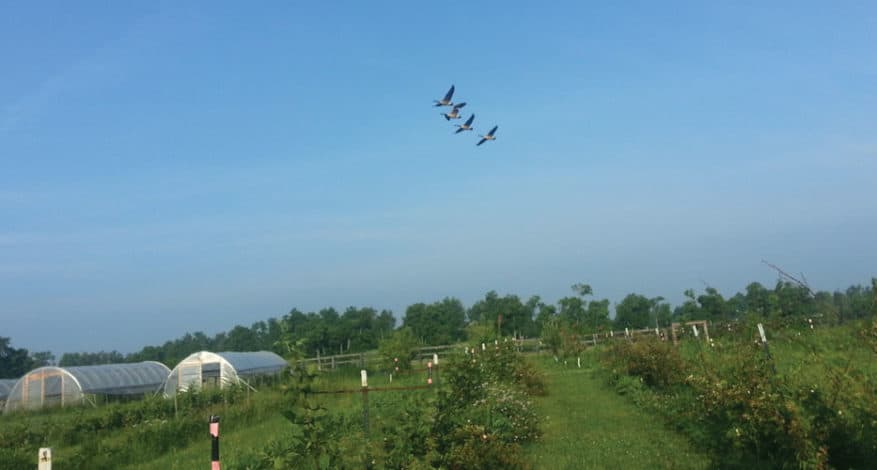
The birds are back in town, so that means blooms are just around the corner.
Early member registration is open. Follow this link to sign up today!
It’s almost our favorite time of year here on the farm! If you’ve ever had the chance to visit our farm, you know it’s pretty magical. Holding space for survivors to heal and grow with nature means the world to us. And it brings us joy to share a bit of the transformation happening in the fields with you. Our Summer Flower CSA provides this opportunity.
“Over the last few weeks I have dealt with a lot of serious emotion. When I work on the farm it seems like all my problems are gone.” Survivor reflection from the farm.
When you become a member of our Summer Flower CSA, you’re supporting nature-based healing for survivors of intimate partner abuse.
Every membership is an investment in the lives of courageous survivors, each on their own journey of safety, healing, and stability. But before we get too far along, let’s start with the basics. You may be wondering, what exactly is a CSA?
CSA is the abbreviation for community-supported agriculture. This phrase means both the farmer and member share in the benefits and risks of agricultural production. We’re in this together. It’s us against the unbridled seasons here in the Bluegrass. Thankfully, our local chemical-free flowers love Kentucky as much as we do.
In the CSA model, farmers like us commit to keeping members informed about successes and challenges on the farm with a monthly member newsletter. Members like you accept that a few bug nibbles on leaves are beautifully natural, and shares could be sparse if a windstorm pushes through the farm.
“Worry and flashback decrease because I’m able to see the fast growth of these amazing plants, knowing that I feel validated that one day I will grow with time, my mind will get through these trials. I feel like I can breathe.”
If you are interested in joining the Summer Flower CSA, early member registration opens on Friday, February 28.
But you’ll want to move fast. CSA memberships sold out the past two years. Although we plan to grow more flowers to welcome new members this year, even more people have expressed interest in a share of the beautiful blooms.
Speaking of blooms, let’s talk about the types of beautiful flowers grown here on the farm. While the colors and varieties change throughout the summer, you’ll receive a seasonal variety of stems in your flower shares. These are the most prolific on our farm:
June flowers include Bachelors Buttons, Calendula, Snapdragons, Ageratum, Rudbeckia, Celosia, Zinnia, Basils, Sweet Peas, Bells of Ireland, Nigella, and Queen Anne’s Lace.
July flowers include Zinnia, Celosia, Ageratum, Basils, Sunflowers, Marigold, Rudbeckia, Gomphrena, Coneflower, Globe Thistle, and Queen Anne’s Lace.
August flowers include Zinnia, Celosia, Amaranthus, Ageratum, Basils, Marigold, Sunflowers, Gomphrena, Sweet Annie, and Dahlias.
September flowers include Zinnia, Celosia, Ageratum, Marigold, Basils, Sunflowers, Gomphrena, and Dahlias.
With the support of our amazing community partners, we offer pickup from several locations in downtown Lexington. This year, our wonderful community partner pickup sites include:
Copyright GreenHouse17 2026 | Privacy PolicyOur services are funded in part by the U.S. Department of Health and Human Services; U.S. Department of Housing and Urban Development; U.S. Department of Justice; Office of Violence Against Women; Grant Numbers VOCA-2024-GreenHou-00098, VAWA-2024-GreenHou-00032, and ARPA-2024-GreenHou-00034 through the Kentucky Justice and Public Safety Cabinet with funds from the U.S. Department of Justice; Kentucky Cabinet for Health and Family Services; ZeroV; Kentucky General Fund; Lexington-Fayette Urban County Government; and other grants, foundations, and private donations. None of these funders nor any of their components operate, control, are responsible for, or necessarily endorse this website (including, without limitation, its content, technical infrastructure, and policies, and any services or tools provided). The opinions, findings, conclusions, and recommendations expressed are those of the author(s) and do not necessarily reflect the views of these funders.