holding up phone showing instagram post21 Years

Domestic Violence is Not a Joke

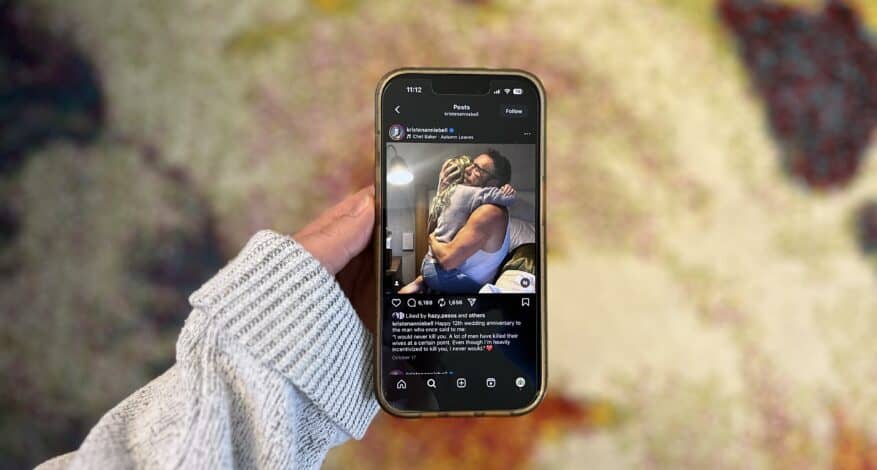
An Instagram post by Kristen Bell caused controversy and made headlines during Domestic Violence Awareness Month.

Bell recently celebrated her 12th wedding anniversary with husband Dax Shepard by posting a photo on Instagram of the couple embracing. The photo caption reads:

“Happy 12th wedding anniversary to the man who once said to me: ‘I would never kill you. A lot of men have killed their wives at a certain point. Even though I’m heavily incentivized to kill you, I never would.’”

Comments on the post have been mixed.

Some have called out the post as offensive, especially during Domestic Violence Awareness Month. Others contend the post is an inside joke shared between two people who are in love.

Dateline, the true-crime news magazine show, commented with one word: “Screenshotted.”

“Heavily Incentivized”

Also a celebrity and actor, Shepard is more recently known as the co-host of Armchair Expert, a popular podcast that is self-described as celebrating the “messiness of being human.”

He often weaves his academic background in anthropology throughout discussions on the podcast. With that slant in mind, Shepard’s remark is not wrong. Most societies have incentivized violence against women for centuries.

Under English common law, for example, “coverture” meant a woman’s identity merged with her husband’s upon marriage. Husbands were legally allowed to “chastise,” a term that allowed physical violence to maintain the obedience of wives.

In recent centuries, laws began to change, but culture didn’t catch up as quickly.

Courts often excused men who killed their wives as victims of passion rather than perpetrators of murder. Media equated possessiveness with love, and advertisers built entire campaigns on the idea that a woman’s role was to please or risk punishment.

An acceptance of dominance has continued to shape expectations of love and marriage in recent generations. Domestic violence was not even defined as a distinct crime in most of the United States until the 1970s.

Concerns

Bell’s decision to share Shepard’s statement in the context of a marriage milestone reveals a spectrum of concern.

An intimate partner’s proclamation that they won’t kill you, even though they could, must be considered a red flag in our mission.

Many commenters contend the photo caption echoes the couple’s dark humor. A resurfaced promotional interview for “Hit & Run,” a 2012 film that co-starred both actors, reveals a history of joking about domestic violence and homicide.

But domestic violence is not a joke, and the threat of lethal violence is not a funny Instagram caption.

The Risk is Real, Scary & Difficult to Escape

Intimate partner violence results in nearly 1,300 deaths and more than two million injuries in our nation annually.

Three women are killed by their husbands or boyfriends in the United States every day. More than 20 domestic violence homicides occur in Kentucky every year.

The risk for lethal harm increases when a victim attempts to escape because the abuser losing power, control, and dominance.

How would you respond if a friend or family member told you their intimate partner said this? Would you dismiss the statement as humor or consider the statement as cause for concern?

Further Reading

Read an article from writer Yvonne Liu. Trigger Warning - these details could be re-traumatizing for survivors of abuse.

READ MORE
21 Years

Tanya’s Story

“In the beginning of our marriage, he was very abusive and controlling.”

The physical abuse had ended, but the mental, emotional, and financial abuse continued. I took off numerous times and went back because it was familiar.

I just woke up one morning and was like, I can’t do this anymore. I have custody of my grandson and packed his things. My best friend came and got me.

I was on the verge of going back home, but my daughter had a co-worker who told her about this place. Thank God GreenHouse17 picked up the phone and had a bed for me.

I was there from October to the end of March. They helped me balance my biggest issues and taught me boundaries. I’ve always said that I was a caretaker, but sometimes people can abuse that.

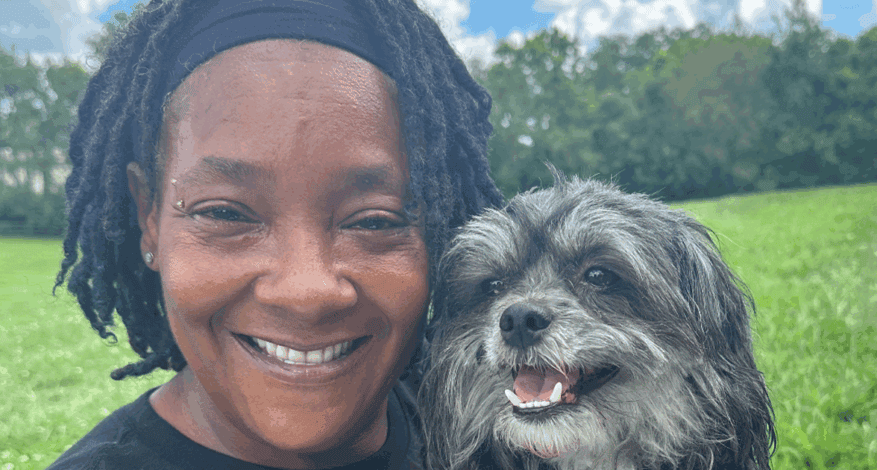
There was another young lady at the shelter, and we became really close. She asked if I’d be willing to keep her dog, Roscoe. He’s been with me ever since.

I’m so glad I was able to keep him. I didn’t know if I could do it because I’ve never owned a pet before. I’ve cried with Roscoe, talked to him.

Transitioning into my new apartment was scary. Every little noise made me think, is someone here with me? I don’t know what I would have done without this fella. Emotionally, he is my everything.

Don’t give up hope. Just reach out. It doesn’t matter your situation—there’s always help. I know what it’s like to be afraid. It’s hard, I get it. But you can do it.

This is only part of Tanya’s story, in her own words, shared with permission.

Read the Fall 2025 Issue of Bloom

This is one article from our print newsletter. Follow the link above to read the full issue!

READ MORE
21 Years

Mary Ann’s Story

“I have reclaimed my strength and my voice.”

On the morning of December 18, 2022, I was jolted awake by my now ex-husband, only to find myself being brutally attacked.

I was hit in the head with a phone, my face busted, knocked to the ground, held down by the back of my neck, and told I was going to be killed if I said anything or moved.

I lay there, my mind racing with a single thought. I don’t want to die. The man staring at me was not the man I had married. I knew I had to run.

I broke free and sprinted out the door. I ran up the driveway, down the road, and finally ducked behind a truck. My hands were shaking as I dialed 911.

He was arrested that night, but less than two weeks later, he was released on bond with an ankle monitor. I was granted a temporary Emergency Protective Order (EPO) until our court hearing on January 10, 2023.

On that day, the court issued a three-year no contact Domestic Violence Order (DVO).

The order meant nothing to him. He wasted no time violating it, calling and leaving 23 messages within five days. The ankle monitor offered no real protection–he had already decided he was coming for me.

As a survivor of domestic violence, I continue to endure the ongoing actions of my abuser every day. My ex-husband has violated the protective order against him more than 50 times, yet each offense has been classified as a misdemeanor.

When does it stop?

I reached out to James Tipton, my state representative, and left a voicemail about my situation. He called me the next day…

Mary Ann’s phone call with Representative Tipton would make history. Her story continues here.

This is only part of Mary Ann’s story, in her own words, shared with permission.

Read the Summer 2025 Issue of Bloom

This is one article from our print newsletter. Follow the link above to read the full issue!

READ MORE
two people embracing outside21 Years

Supporting Your Loved Ones

When someone you love is being abused, the dynamics can be very complicated. We sat down with our executive director, Darlene, to share advice on common questions from families of survivors on our hotline.

How should I act around an abuser?

I believe it’s important to be cordial. They’re still human beings. That doesn’t mean you have to condone their behavior or agree with it. It’s important for the survivor, because when you’re not cordial, the abuser may use that as a way to further manipulate and control their partners. 

It’s hard for family and friends. You don’t really know what to do because you don’t want to lose the person you love. 

Families also need to remember they don’t cause somebody to be abusive. The abuser is already using their tactics day in and day out on the person that you love and care about. You can’t create those dynamics, but the abuser will use those dynamics in order to excuse or justify their abuse because they’re really good at playing the victim. 

I know someone has a history of abuse or that my family member is being abused, but most of the extended family doesn’t. Is this something they need to know if they’ll be around for family events?

I think you have to weigh out the pros and cons. Ask yourself how does it benefit everybody to know? Also, sometimes it can be helpful to pull in influential folks. For example, I might not listen to my mother, but let my grandmother tell me something and it might hold more weight.  

But if something has happened, we’re worried for our loved one’s well-being, or they have fled for their safety, at that point in time, it’s important to keep family members informed.  

Sometimes family members might be upset they didn’t know before, and you can remind them that you were honoring your loved one’s request and trying to keep the peace. 

What are some things we can say to let our loved one know we’re here for them?

You can always say, “I know what’s going on. I’m worried for you. I’m worried for your safety. We are always here, and we love you. Don’t ever think you have gone so far that you can’t come out.”  

That’s really important for a survivor to hear. A lot of the time, survivors have defended and stood beside the abuser, and now to say that everybody else was right can be really hard. So, they’ll hold on tighter in many ways.  

So it’s important for family members to avoid saying, “I told you so.” Instead, do your best to communicate that you are there to support them.   

My family member is dating someone with an abusive past. Can they change?

Can people change? I have to believe on some level that yes, people can change. Do abusers change? Not much.  

I think abusers adapt based on the situation they’re in, what they can get by with, and how far they can push. It depends on the survivor, their background, their history, their strengths, and their weaknesses. It can look a little different from one victim to another. 

What most people don’t understand is just because you’re not seeing the abuse now doesn’t mean it’s not going to happen. 

Abusers don’t start to show who they are until they’re comfortable knowing they have you hooked enough. That could be living together, marriage, or your first child together. The abuser is grooming, waiting, and learning about their situation. Then they’re going to adapt to that as necessary.  

It’s very rare you see an abuser accept responsibility for their behavior and they have a tendency to blame everybody else for why it happened.  

What if they’re in therapy? Can that help them change?

When an abuser goes to therapy – whether individual or couples therapy – they’re often treated for anger issues if the therapist doesn’t understand intimate partner abuse, histories of domestic violence, power and control, and other dynamics.  

Sometimes while in therapy, abusers learn different behavioral options versus physical violence. That is not addressing the realities of intimate partner abuse, which is power-based violence.  

Domestic violence is not about anger. People who abuse their intimate partners are often able to control their anger with other family members, at work, and with friends.  

I’m not going to say somebody can’t make a decision to be different. They can, but not without some serious intervention and ownership over their behavior, with some real years showing they can do things differently. In my career, I find that a rare occasion for those that do harm. 

How does an abuser manipulate those around the survivor?

If an abuser can manipulate the loyalty or care of the family, then they’ll do that. And if that doesn’t work, they’ll turn around and undo it. But if it works, that’s the best-case scenario for the abuser.  

Survivors might think, “If everybody else likes them, then I must be crazy. Everybody else likes him, he’s a good guy. They’re all saying he’s trying, but yet these things are happening to me. So maybe it’s me, maybe I should be better.”  

Family and friends need to stay focused on behavior, not words.  

Abusers can say all the right things like, “Oh, I just love them. I’m trying my best. I’m not perfect, but she’s not perfect either.” They know what to say, how to minimize, how to charm people, how to twist the story around just enough to make people have some doubts.  

And people are imperfect. Survivors are imperfect so they will not always say the right things or do the right things or react to whatever people perceive is the right way of what they’re experiencing. 

Is there anything else you would like to share about complicated family dynamics?

I’d like to validate that it’s a difficult balancing act because it sometimes calls into question your own integrity.  

As family, sometimes we have to say to ourselves, ‘I can play this game, because I love you and I’m going to be here for you no matter what. It’s going to get difficult. This person might try to tear you from me, or try to interfere in our relationship, but I’m not going to let it happen.’  

I want to tell families it’s hard. You can’t swoop in and try to be the hero because it could further do harm to your family member or isolate them even more. 

It feels a little helpless sometimes. What we need to be careful of, though, is not to blame the victim. It’s everybody’s individual journey, and all you would hope for in the end, when they really need you, they’re going to come to find the people they feel safest with.  

I think you should be telling the people you love what you see and are worried about in a supportive way. The message should be, “I’m worried for you. You deserve better. If you’re that uncomfortable, you need to trust yourself. What do you need help with?” 

If people have questions, they should call our hotline. You don’t have to be the victim to call hotlines and get support.

READ MORE
21 Years

20 Years of Supporting Survivors

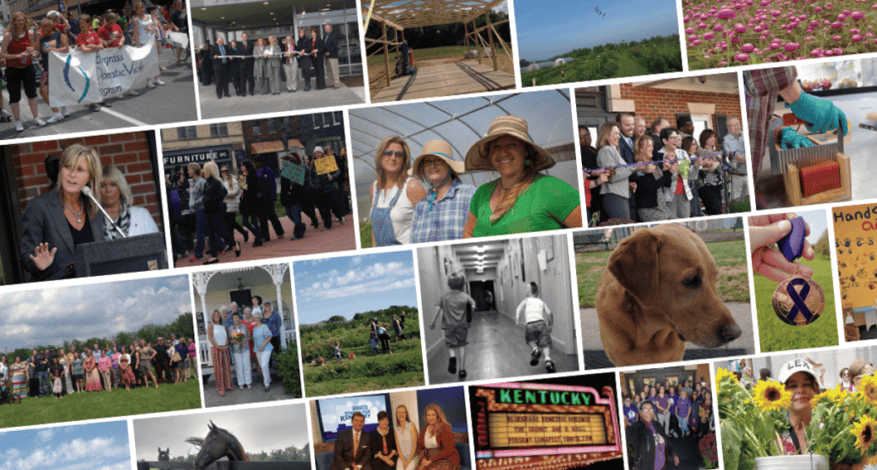
This year marks a milestone. Twenty years ago, on February 14, 2005, we officially became a nonprofit organization.

We embrace our anniversary falling on Valentine’s Day to celebrate supportive love and healthy relationships. 

“Authentic love is the most powerful expression that genuinely shows those we serve that they are valued and worthy. It is in that love that survivors remember how to love and care for themselves again,” says Darlene, executive director.  

Two decades have passed, but she will always remember a pivotal moment in our early history. Court advocacy and supportive services were already being provided across the service area, but she faced a decision about the emergency shelter. 

“I was standing at the back door of an empty building looking out on 40 acres of rural farmland. Could this be our new home? How will survivors stay connected with other community service organizations? Can we engage supporters from this country location?”  

“Feelings of safety warmed my heart as the sun lowered in the sky. As day transitioned to night, I imagined a small group of survivors talking on the back porch, looking out to the fields where their children were playing and laughing.”  

Before the sun dipped below the horizon, she had clarity. This property should become a safe home for survivors and our new headquarters.

In the years to come, partners from near and far would help imagine opportunities for the beautiful land to foster healing. More than 65,000 adults and children have been supported during the past 20 years, including 4,600 who found safety at the shelter.

“Our mission holds thousands of stories of celebration, fear, loss, and possibility—most with happy endings and many still being told.”

image
image
image
image
image
image
image
image
image
image
image
image
image
image
image
image
image

We are here for you 24/7.

Call our hotline at 800-544-2022 to speak with a trained advocate.

READ MORE
hand holding kindle version of it ends with us21 Years

It Ends with Us

Original publish date: 8/13/24. Updated 12/17/24 – It Ends with Us is now streaming on Netflix. Send us a message on social media and let us know your thoughts on the movie! 

Everyone is talking about It Ends with Us. The book has sold millions of copies, and the movie had a huge opening at the box office over the weekend.

Both tell the story of Lily Bloom, a young woman who falls in love with neurosurgeon Ryle Kincaid after meeting him on a rooftop in Boston. What happens after they fall in love has sparked conversation about intimate partner abuse. But what do the book and movie portray well, and what else can we learn from the story?  

Spoiler Alert and Trigger Warning! This post reveals plot details from the book and movie. These details could be re-traumatizing for survivors of abuse.

What the Book Does Well

Ryle is portrayed as a charming and charismatic neurosurgeon. This depiction is powerful because it reflects how abusers often present themselves in a positive light, making it difficult for victims and those around them to recognize red flags. 

The book effectively highlights several red flags, such as Ryle not being able to control his anger, rushing into the relationship, proposing marriage after a short time together, and breaking Lily’s personal boundaries by going through her journals. Additionally, his act of buying her an apartment without asking—an example of love bombing—is another red flag. 

What the Movie Does Well

After the first two times Ryle hurts Lily, the audience shares in her confusion and doubt. Were these really accidents? Were these purposely violent incidents? During a later scene, Ryle sexually assaults Lily. This is when the flashbacks of the past incidents are revealed to Lily and the audience to have been violent abuse.  

The video techniques used during this scene create a powerful visual representation of how abuse can escalate over time and the mental turmoil it causes. What had once been confusing and gaslighted memories quite literally are brought into focus. The abuse was Ryle’s choice.  

Lily learns she is pregnant and ends her romantic relationship with Ryle. The movie depicts the passage of Lily’s pregnancy through several scenes, including one specific scene in which Ryle arrives at Lily’s apartment. Although hesitant, she invites him inside to help put together the baby’s crib. After the baby is born, Lily tells Ryle she wants a divorce.  

Both the book and movie also explore Lily’s complicated relationship with her abusive father and judgment of her mother. Lily struggled to understand why her mom stayed and often considered her weak for not leaving. When Lily faces the same decision, she vows to break the generational trauma. The title of both the book and movie come from Lily telling her daughter the cycle of abuse ‘ends with us.’ 

What’s Missing

While the movie brings much needed attention to intimate partner abuse, it misses deeper discussion about the complexities. 

Marketing for the movie has framed it as a romcom and love triangle. Viewers are encouraged to wear florals to the movie and there have been pop up flower shops for promotion. Many of the marketing strategies avoid the movie’s prevalent topic of domestic violence. 

We overheard a small group of ladies discussing the movie after it ended. One mentioned how she thought the ending was wrapped up in a perfect bow, and that’s not how these situations usually end up for the survivor. Other comments were about concern for the baby, and how Lily doesn’t seem worried that Ryle will continue to hurt her and their child. 

This might be the most important criticism of the movie. It presents the process of escaping an abuser as a decision that can be implemented easily and quickly.  We know this isn’t reality. It takes a victim an average of seven times to escape the abuse. Attempting to flee is the most dangerous time, and abuse often escalates during pregnancy.

Lily does not explore options for a protective order, her friends stay available to her, and she doesn’t experience risks of job loss because of the abuse. Unlike Lily, many victims are isolated through the power and control of the abuser. With no one to turn to for help and not enough money to begin again, victims often navigate a series of barriers to safety.  

The story also ends with Lily and Ryle easily agreeing to a co-parenting relationship without meaningful discussions of the terms or consideration of the risks—and those risks are many. Abusers often use co-parenting arrangements with the survivor to continue control and intimidation. This is why safe exchange and visitation programs like ours are so important. 

And finally, the movie doesn’t include a domestic violence hotline number until after the credits have ended. Given the anticipation and early popularity of the movie, not including a hotline number was very disappointing.  

What’s Next

Educate yourself on intimate partner abuse. Read this blog post about myths and truths. Learn about what a healthy relationship is. Find out how you can start conversations with young people in your life. 

Watch other shows like Maid, which does an exceptional job at showing the hurdles survivors go through. Alex, the survivor and main character, navigates the lack of employment, childcare, and friends because her circle of support was tied with her abuser.  

Have you wondered if your relationship is healthy? Do you have a friend you suspect could be suffering from physical or emotional abuse? Whether you just want to talk or you’re ready to initiate services, we will answer your call 24 hours a day, every day of the year. 

800-544-2022

24-hour Crisis Hotline

READ MORE
tania and her two girls standing in front of a tree making hearts with their hands21 Years

Tania’s Story

“We believe this is the only person that is going to save us when they are the person that is ruining us.”

I realized that’s why I got targeted, because they look for people that are merciless to themselves. The strong woman that I am would never have allowed that to happen.

But it’s not about strength. It’s not about knowledge. It’s not about being intelligent or unintelligent.

This person strips everything from you. It does not happen overnight. It is a process. By the time they get you to your most vulnerable, you are alone, because they’ve made sure of that.

Even if you want help, even if you have people in your life, you don’t know how to articulate to these people that you need help. You’re worried about this person hurting your family, hurting people that you care about.

I made a choice to get out. It doesn’t matter when you make that choice. It doesn’t matter why you make that choice. Whatever gets you out of that situation. That’s all that matters.

There were times in the shelter I was a hot mess, but you all saw more in me. That’s what you need. You need people around you that see something great. It was me saying I was worthy of that.

I want my daughters to see that there is better in life, and they don’t have to go down my path. They can go a different way because they are worthy.

That’s why I call them my princesses because I want them to know that they are royalty. It doesn’t matter where they grow up or if we have a lot of money. Your heart and your mind are what matters.

This is only part of Tania’s story, in her own words, shared with permission.

Read the Fall 2024 Issue of Bloom

This is one article from our print newsletter. Follow the link above to read the full issue!

READ MORE
merry who used our hotline for advice21 Years

24/7 Crisis Hotline

Our 24-hour crisis hotline is answered every day of the year.

Merry’s Story 

Merry is a survivor of intimate partner abuse. Her mother encouraged her to call our hotline.  

“I don’t remember who I talked to, and it was a short conversation. They gave me a lot of advice that I wish I’d taken. It was such a pivotal moment because I had looked at your website so many times over the last few years and questioned ‘is what I’m going through abuse?’

I talked to a lot of people who go through the same thing. They’ll look at that website for months before they decide to call. I think it’s a mental unraveling and acceptance of the situation that you’re in. Because your brain is trying to protect you in that environment so you can keep going. 

The call made me realize I’m a victim of what’s happening to me and I don’t have to accept it anymore. It was huge.” 

Common Questions 

Our hotline receives an average of 15-20 calls each day. You will speak to a compassionate Certified Domestic Violence Advocate who wants to support your specific needs.

Do you have space at the shelter?

Although the shelter has 42 beds, our capacity is always changing. If we aren’t able to provide space at any time, we rely on a strong network of temporary shelter solutions.  

Can my kids come to the shelter with me?

Yes, our shelter is a kid-friendly space. We have a special advocate focused on supporting children and youth. The shelter property includes a fenced playground and lots of swings. 

What about my pets?

Our shelter facility and rural property is pet-friendly. We also have partnerships to help with medical care of pets that have been harmed from abuse. Sometimes the shelter isn’t a good fit for family pets. If this is the case for your pet, we can help identify a temporary caregiver who is dedicated to fostering pets of survivors. 

Can someone come to court with me?

Legal advocates attend family court every day that a domestic violence case is being heard in all 17 counties we serve. 

What support groups do you offer?

We offer many support groups for survivors, and most are available online via Zoom. Find more information here. 

17 Counties 

Some people who need assistance don’t reach out because they don’t need emergency shelter. You don’t have to come to the shelter to receive services.  

Staff of our organization live and work in all 17 counties of our service area – Anderson, Bourbon, Boyle, Clark, Estill, Fayette, Franklin, Garrard, Harrison, Jessamine, Lincoln, Madison, Mercer, Nicholas, Powell, Scott, and Woodford.     

A hotline advocate will connect you with your county’s advocate. Even if you aren’t in these counties, we can direct you to the designated service provider for your area. 

Call us anytime.

800.544.2022

READ MORE
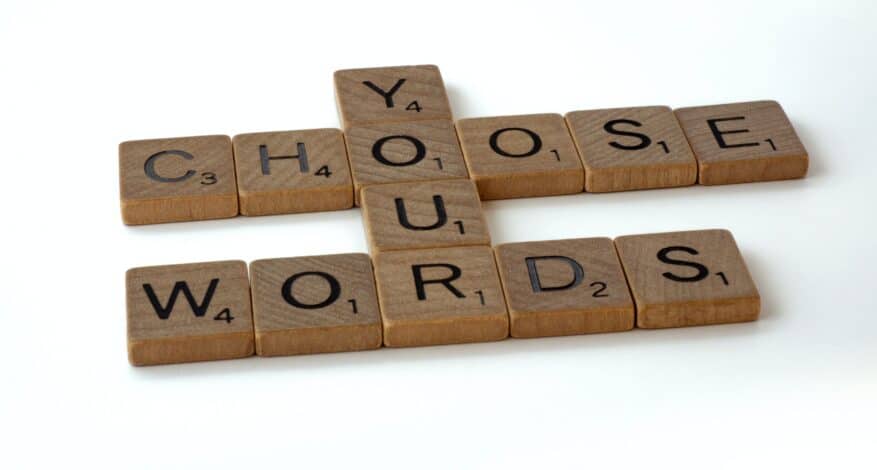
spells choose your words with scrabble pieces21 Years

Evolving Terminology – Intimate Partner Abuse

Intimate partner abuse has been called many things over the years.

From battered women to domestic violence, as the understanding of intimate partner abuse has evolved, so has the terminology used to describe it.  

Changing Terminology 

The phrase domestic violence gained wider recognition in the 1970s with the Battered Women’s Movement, or Domestic Violence Movement.  

Historically the term domestic violence implied: 

  • Physical violence 
  • Violence against women in heterosexual relationships 
  • Residing in the same home 
  • Domestic issue 

The legal definition of domestic violence or domestic abuse includes intimate partners but can also refer to family violence, such as violence between siblings or abuse of an elderly parent. 

We know intimate partner abuse can happen in any type of relationship regardless of gender, age, or gender identity. It can be more than just violence, including emotional and financial abuse. 

Our Terminology 

As an organization, we prefer to use the term ‘intimate partner abuse.’ This distinguishes the focus of our mission and avoids historic assumptions common to the term domestic violence.  

Use of the word “abuse” rather than “violence” conveys that one person made the decision to harm another person. 

Academic research and many who advocate for survivors often use the abbreviation IPV for intimate partner violence. But our mission is still a topic that isn’t talked about publicly, and too often is still considered a private matter.  

We say the words because they need to be heard, considered, and talked about. 

Call us anytime.

24-HOUR HOTLINE 800.544.2022

READ MORE