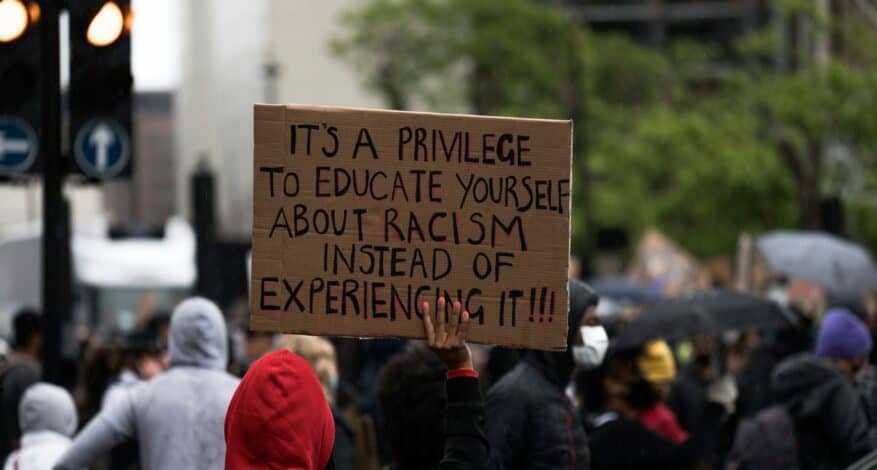
person holding sign that reads It's a privilege to educate yourself about racism instead of experiencing itBlog

Black History Month

This month and every month, we celebrate the contributions Black advocates have made to our mission, agriculture, and those who create safe spaces for positive change. 

This post is inspired by  “Giants Among Men and Women On Whose Shoulders We Stand” from Ujima, The National Center on Violence Against Women in the Black Community and Black Soil KY‘s Black History Month Resource Guide. Click on each card to learn more.  

Umi Hankins

Activist and cofounder of the Institute on Domestic Violence in the African American Community.

Ulester Douglas

Psychotherapist, consultant, keynote speaker, and social justice advocate.

Kimberlé Crenshaw

American civil rights advocate and a leading scholar of critical race theory.

The Combahee River Collective

“As Black feminists and Lesbians we know that we have a very definite revolutionary task to perform.”

Dr. Beth Ritchie

Researcher and author of Compelled to Crime: the Gender Entrapment of Black Battered Women and more titles.

Devine Carama

Socially conscious hip hop artist, activist, motivational speaker, and director of One Lexington.

Booker T. Whatley

Tuskegee University professor who first introduced the concept of a CSA.

Farmers' Improvement Society

FIS worked to help poor farmers escape the cycle of debt caused by the share cropping and credit system

Fannie Lou Hamer

Civil and voting rights activist and founder of the Freedom Farm Cooperative.

READ MORE
Blog

Celebrating Dr. Martin Luther King Jr. Day

“Our lives begin to end the day we become silent about things that matter.”  

As we honor and celebrate the legacy of Dr. Martin Luther King, Jr., his powerful words from decades ago resonate deeply with our mission.  

“The time is always right to do what is right.”

“At the center of nonviolence stands the principle of love.”

“Darkness cannot drive out darkness; only light can do that. Hate cannot drive out hate; only love can do that.”

“True peace is not merely the absence of tension; it is the presence of justice.” 

    Staff members are attending the annual MLK Holiday Celebration today and joining the Freedom March, walking in solidarity with our community to honor Dr. King’s message of equality and action. 

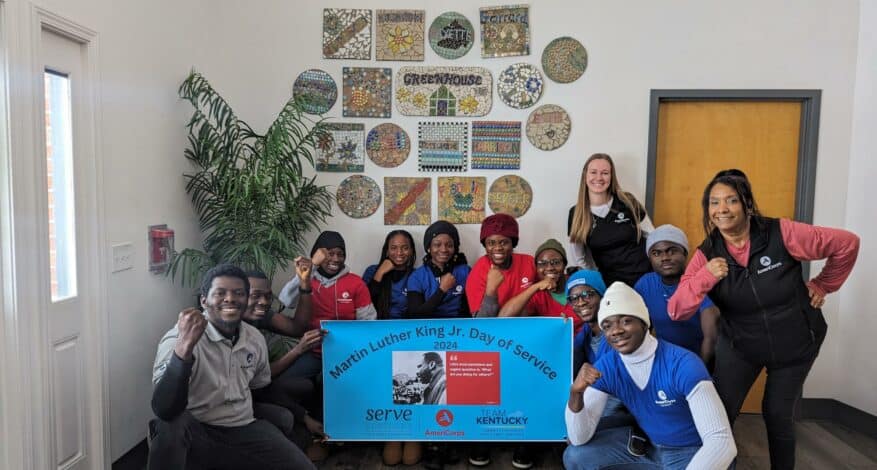
    We were also grateful to host an incredible group of University of Kentucky volunteers for their MLK Day of Service over the weekend. They helped us organize our shelter’s basement in preparation for incoming Shop & Share donations on February 8. 

    Read more.

    Learn about the history of the MLK holiday celebration in Lexington.

    READ MORE
    rccg volunteers holding mlk signBlog

    Martin Luther King Jr. Day

    Community coming together in honor of Martin Luther King Jr.

    Today staff members are attending the annual MLK Holiday Celebration and joining the Freedom March to honor Martin Luther King Jr.’s legacy. The program after the march includes keynote speaker Rev. Kevin W. Cosby, Ph.D. and Peabo Bryson performing with youth choral groups Uniting Voices Chicago and Uniting Voices Lexington.  

    We’re also excited to welcome back our former AmeriCorps VISTA, Carla, with a group from her church, Redeemed Christian Church of God Open Door Parish. Their Martin Luther King Jr. Day of Service includes organizing the supplies in the basement to prepare for our next Shop & Share event in February.  

    We are honored to attend the MLK Holiday Celebration and are thankful for all RCCG Open Door Parish has done to support survivors 💜 

    READ MORE
    Blog

    The Combahee River Collective

    Black women have and continue to be leaders in the movement to end sexual and domestic violence.  

    “We are a collective of Black feminists who have been meeting together since 1974.”

    These words open The Combahee River Collective Statement published in April 1977, one of the earliest documents to define the movement of Black feminism, especially in the context of lesbian identity. The collective’s name was inspired by the Combahee River Raid coordinated by Harriet Tubman to free slaves in South Carolina.

    Founding and early members included Barbara Smith, Beverly Smith, Demita Frazier, Cheryl Clarke, Akasha Hull, Margo Okazawa-Rey, Chirlane McCray, and Audre Lorde. Their statement explored the intersections of race and class in the oppression of Black women, while also identifying the privilege and power of white feminism.

    “Black feminists and many more Black women who do not define themselves as feminists have all experienced sexual oppression as a constant factor in our day-to-day existence…it difficult to separate race from class from sex oppression because in our lives they are most often experienced simultaneously.”

    The collective defined its political position as “a healthy love for ourselves, our sisters and our community which allows us to continue our struggle and work.” This love was enacted during six months in 1979 in a suburb on the south side of Boston during the Roxbury murders.

    Two Black women were brutally murdered in January of that year. During the next five months, nine more Black women would be killed. The murders received little to no attention until The Combahee River Collective launched a coordinated awareness campaign. Members canvased the community to alert women of color in the area and published pamphlets that identified systemic racism and sexism as cause for the murders. Their protests and marches shined a light on ineffective police investigations and the lack of media attention.

    Although meetings of the collective ended in 1980, the final sentence from their statement gives voice to the continuation of shared commitment: “As Black feminists and Lesbians we know that we have a very definite revolutionary task to perform and we are ready for the lifetime of work and struggle before us.”

    This post is part of our Black History Month series celebrating the contributions of Black women in the movement to end intimate partner and sexual abuse. 

    Listen to an essay by Audre Lorde

    Follow the link to listen to ``There is no hierarchy of oppression`` read by Lauren Lyons


    Image credit: This image was created with free-use resources from Smithsonian.org, including an advocacy poster from the 1970s, a sign from the 2020 Commitment March in Washington DC., and an archived photograph of a handkerchief that belonged to Harriet Tubman.  For more information about resources linked in this post, please visit these links:

    READ MORE

    Kimberlé Crenshaw & Intersectionality

    Black women have and continue to be leaders in the movement to end sexual and domestic violence.  

    Kimberlé Crenshaw coined the phrase “intersectionality” in 1989 to describe how race, class, gender, and other individual characteristics “intersect” and overlap. The theory allows deeper understanding of racism and sexism in context of the mission to end intimate partner abuse.

    For example, how does the intersection of race, gender, and economic oppression contribute to research that finds Black women experience domestic violence at rates higher than white women? Similarly, how do historic racist representations perpetuate today’s higher arrest rates of Black women who are defending themselves from intimate partner abuse?

    Professor Crenshaw explains, “If you don’t have a lens that’s been trained to look at how various forms of discrimination come together, you’re unlikely to develop a set of policies that will be as inclusive as they need to be.”

    Her groundbreaking work to amplify the voice and visibility of Black women who have survived intimate partner abuse makes our movement, mission, and work stronger. Without understanding the oppression survivors of color face, we can’t provide the necessary support. To effectively serve survivors, we must understand that anti-oppression work is anti-violence work.

    Kimberle Crenshaw is Professor of Law at Columbia Law School and Distinguished Professor of Law at the University of California. She is co-founder of the Columbia Law School African American Policy Forum (AAPF) and co-authored Say Her Name: Resisting Police Brutality Against Black Women.

    This post is part of our Black History Month series celebrating the contributions of Black women in the movement to end intimate partner and sexual abuse.

    What Intersectionality Means to Crenshaw Today

    Click on the link above to read Crenshaw's interview with Time Magazine.

    READ MORE

    Tarana Burke & the #MeToo Movement

    Black women have and continue to be leaders in the movement to end sexual and domestic violence.  

    Tarana Burke is known as an activist, community organizer, executive, and founder of the “me too” movement. With over 19 million uses on Twitter in one year alone, this hashtag started one of the most notable movements of our time.

    In a Variety article penned by Burke, she explains, “Everyday people — queer, trans, disabled, men and women — are living in the aftermath of a trauma that tried, at the very worst, to take away their humanity. This movement at its core is about the restoration of that humanity.”

    The “me too” movement was created to highlight the violence experienced by marginalized women. Along the way, it brought international attention to the universal prevalence of sexual violence. 

    Research finds 4 of every 10 Black and multiracial non-Hispanic women in the U.S. report experiencing rape, physical violence, and/or stalking by an intimate partner.

    Burke is now considered a global leader in the movement to end sexual violence and does so with her theory of “empowerment through empathy.” Her work is changing how we talk about sexual violence and serve survivors.

    This movement was built with the intention of collective healing by creating space for survivors to cultivate empathy with one another.

    “For too long women and others living on the margins have managed to survive without our full dignity intact,” reminds Burke. “It can’t continue to be our reality.” 

    This post is part of our Black History Month series celebrating the contributions of Black women in the movement to end intimate partner and sexual abuse. 

    #MeToo and Your Healing Journey

    Click on the link above to watch this Youtube video.

    READ MORE
    Blog

    Black History Month Series

    Black women have and continue to be leaders in the movement to end sexual and domestic violence.  

    This month, we’re learning more about the lives of Black women who built, shaped, and continue to lead the missions to end intimate partner abuse and sexual violence. The series was inspired by an inspirational list created by the Virginia Sexual and Domestic Violence Action Alliance.
    Click or tap on the image to open the poster.

    Read more at this link

    Follow the link above to be connected with articles from this month's series.

    READ MORE
    Blog

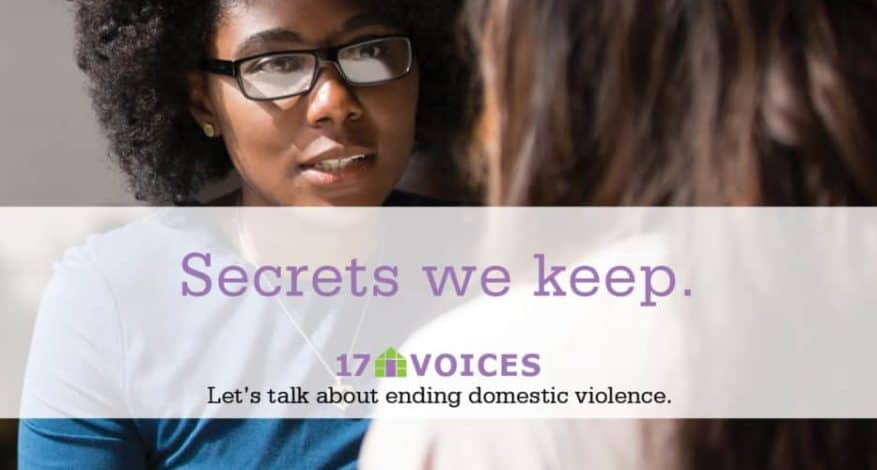
    Secrets We Keep

    By Carol Taylor-Shim, Former Chair/President of our Board of Directors. This is a re-post of an article originally published during our  17 Voices campaign during Domestic Violence Awareness Month in 2016.

    Dear Sister,

    I’m writing to you because I love you and know you are in pain. I know you are hurting. I know you are unsafe, confused, and feeling alone.  I know the secrets you keep. You see, I know that as women of color we are not seen as survivors.

    We are not seen as being in need of services and advocacy that are tied directly to our marginalized identities. I know the burden you feel of not wanting to get another brother in trouble.  I know some of you don’t and won’t see yourselves as survivors.  And that’s ok, I get it.  You are fighters, because you have to be to survive.  I understand.

    I just want you to know that I see you.

    And in those moments when you cannot speak for yourself, it is the responsibility of those of us working to end all forms on interpersonal violence, including dating/domestic violence, to do that for you.

    To acknowledge that women of color are exposed to domestic violence at higher rates.  To acknowledge that any shelter or service provider has to be fully committed to working through a lens of cultural proficiency.  To acknowledge that there are additional dynamics that you must navigate that other survivors who are not marginalized by their identities don’t have to.  That’s what we have to do for you.

    Please know this my beautiful sister, I see you and I believe you.


    Featured image labeled for re-use with a Creative Commons license from Women of Color in Tech. 

    READ MORE