graphic from zerov reading get loudBlog

National Day of Action

#GetLoudforSurvivors

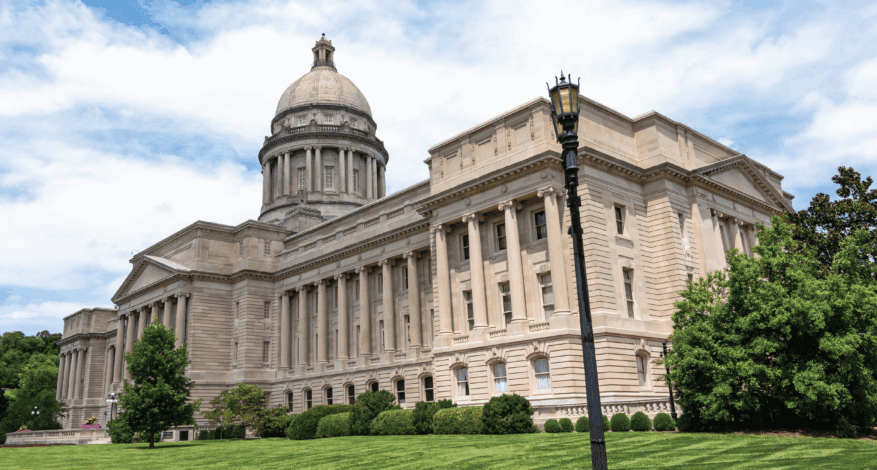
The National Network to End Domestic Violence is organizing a Day of Action on June 5 to elevate the importance of federal funding for sexual assault and domestic violence services.

ZeroV, Kentucky’s coalition of domestic violence programs, is asking us to “Get Loud” for survivors and their children.

The 15 programs that comprise our state’s coalition receive more than $20 million in federal funding for crisis lines, emergency shelter, safety planning, court advocacy, housing assistance, and more.

This funding saves lives, and it’s in jeopardy.

ZeroV has organized the “Get Loud” campaign to call on our elected officials with a united message. Save domestic violence funding in the Fiscal Year 2026 Federal Budget.

Let’s Get Loud for Survivors!

Phone numbers, emails, and templates are available from ZeroV at the link above.

READ MORE
Shape of Kentucky in blue with an orange heart in the central KY region.Blog

Endow Kentucky Tax Credit Opens July 1

The Endow Kentucky Tax Credit can support survivors and offers a great tax incentive.

Endow Kentucky Tax Credit season is quickly approaching! Tax credits totaling $1 million will become available on July 1. But these tax credits are often gone in the first week, so now is the time to start planning.

Individuals and businesses can receive a credit on Kentucky state taxes of up to 20% of a gift to our endowed fund held at Blue Grass Community Foundation. The credit is in addition to your federal and state charitable tax deduction.

Answers to frequently asked questions are included below:

Is there a minimum or maximum gift amount for the tax credit?

There is no minimum gift size required to receive the tax credit.The maximum gift amount is $50,000.

What if I'm not itemizing my charitable donations this year?

You can likely still take advantage of the Endow Kentucky Tax Credit. This is a state tax credit, not a deduction. A tax credit reduces your Kentucky state tax liability dollar-for-dollar, regardless of your ability to itemize.

Are donations of non-cash assets eligible for the tax credit?

Yes, these non-cash assets could be eligible:

  • stocks 
  • mutual funds
  • tangible property
  • donations of life insurance
  • donors 70 ½ and older can make a qualified charitable distribution from qualifying IRAs (QCDs can be made to any endowed funds other than donor advised funds).  

How do I apply for the tax credit?

Here is a link to this year’s Application for Preliminary Authorization.

How do I make sure my application is received on July 1?

With your permission, Blue Grass Community Foundation can submit the application on your behalf on July 1. You may also email or fax the completed form to the Kentucky Department of Revenue on July 1. Mailing your application is not advised.

How can I learn more about your endowment? 

We look forward to sharing more about how our permanent endowment supports the mission in perpetuity–through times of crisis and opportunity. Please reach out to Corissa Phillips, our Certified Fund Raising Executive on staff. She can be reached by calling 859-519-1904 or you can send her a note here.


This post was written with information provided by the Blue Grass Community Foundation. We always encourage you to consult your accountant or professional advisor to learn about the personal impact of receiving your tax credit.

READ MORE
Blog

Justice for Families

Improving Safety for Children and Parents

A new federal grant will strengthen our community’s safe visitation and exchange services for children.

The three-year award was received through a competitive application for Grants to Support Families in the Justice System, commonly known as the Justice for Families Program. Only 24 communities in the nation were selected for funding last year.

“This is a major investment that responds to a critical need in our communities,” says Scott Lancaster, manager of our safe exchange and visitation program. “The funding helps stabilize the operation of our existing services while expanding partnerships to support children and their parents.”

The Justice for Families Program is dedicated to improving the civil and criminal justice system for families with a history of intimate partner abuse and other violence. Guiding principles of the program include equal regard for the safety of children and adults through respectful and fair interactions.

A team united in these goals will bring varied experience and perspective to the effort. Partners include the Board of Directors for the Lexington Domestic and Sexual Violence Prevention Coalition, Georgetown Police Department, and Boyle County and Mercer County Family Court.

“Children deserve safety and predictability. I’m proud that our organization was able to ensure continuation of safe visitation and exchange services in the region seven years ago and honored the program has received federal support.”

The Grants to Support Families in the Justice System program is authorized by the Violence Against Women Act (VAWA) of 2013 per 34 U.S. Code § 12464. Neither the funder nor its components operate, control, are responsible for, or necessarily endorse this program, including, without limitation, the program content, technical infrastructure, policies, and any services or tools provided.

Read the Spring 2025 Issue of Bloom

This is one article from our print newsletter. Follow the link above to read the full issue!

READ MORE
Mary Ann Pratt and Representative James TiptonBlog

HB 38 Signed into Law

“No one should live in fear every day.”

During this year’s legislative session, a survivor gave her testimony in support of HB 38, introduced by Representative James Tipton. 
 
She received a standing ovation from the Senate floor. Read more about her story here.

The legislation, passed with bipartisan support and signed into law in March, responds to repeated violations of protective orders. A third violation may now be charged as a felony. 

In an interview with WKYT our executive director Darlene said –

“Survivors are told and informed that violations are serious, and I do believe our system tries to take those seriously, but I find that they’re often disappointed to realize that everything is a misdemeanor. 

Every violation to a survivor says that that party is willing to walk through that protective order and not listen to it because they don’t believe there will be serious repercussions. 

We do have criminal law that has three fourth-degree assault convictions that get boosted, but in domestic violence, a lot of times, it’s not an assault, so the legislature really looking at the cumulative type of ongoing violating behavior, I think, speaks volumes to survivors.” 

Cover photo from LRC Public Information Office

READ MORE
Blog

Gray’s Groundbreaking Women

Hooray for Gray’s!

Gray’s employee driven cooperative, Groundbreaking Women, demonstrates their leadership through action and impact.

They have volunteered their time to organize the emergency shelter, collect gifts for the holidays, and wear so much purple to raise awareness during Purple Thursday and Domestic Violence Awareness Month.

Last year, they also undertook an archiving project, organizing documents from our early years as a nonprofit. This initiative preserves our history while honoring the strides made toward safety and empowerment.

“We’re so grateful for the support of the Groundbreaking Women,” shares Corissa, our external relations director. “This is a group that exemplifies partnership and community. They get things done!”

Through every effort, Gray’s Groundbreaking Women embody the values of collaboration and compassion, making a lasting difference for our organization and survivors of intimate partner abuse.

Read the Spring 2025 Issue of Bloom

This is one article from our print newsletter. Follow the link above to read the full issue!

READ MORE
Blog

Blood Center Partnership

Healing Together

Donors at select Kentucky Blood Center locations could choose to give the value of their thank you gifts to our organization during the Healing Together campaign in November and December.

The partnership raised an incredible $7,500 to support services for survivors.

“We love partnerships that allow our generous blood donors the chance to help another great local nonprofit. Far too many families are impacted by intimate partner abuse and we’re thrilled to be able to support the work our friends at GreenHouse17 do every day to assist people in need at a very critical time,” says Mandy Brajuha, VP of external relations at the Kentucky Blood Center.

The community’s generosity made a significant impact, contributing to lifesaving blood donations while also providing critical funds to support survivors.

“Although our missions are accomplished in different ways, both of our organizations are committed to nurturing lives and need community support to be successful,” adds Darlene Thomas, our executive director.

Read the Spring 2025 Issue of Bloom

This is one article from our print newsletter. Follow the link above to read the full issue!

READ MORE
Blog

Cassie’s Story

“Accepting help was one of the most challenging, yet life-changing decisions we made.”

I was raised in an upper middle-class family surrounded by support and stability. When I married, I believed I was building a life with a partner who was committed to his sobriety and helping others through his profession as a clinical social worker.  

On the outside, everything seemed ideal. Behind closed doors, the reality was much different. He made the choice to return to using drugs and everything began to unravel.  

It wasn’t just the physical abuse – chairs being thrown at us or being threatened with knives. My reality was constantly being twisted. Gaslighting made me question my memory, instincts, and sanity. We walked on eggshells. 

My children were at a point where suicide seemed a viable option, coming to me saying, ‘what if we just all died, and it wouldn’t be so bad anymore.’ That was the wake-up call for me to finally do something. 

With several late-night calls to the hotline at GreenHouse17, we planned and filed an emergency protective order. Accepting help was one of the most challenging, yet life-changing decisions we made.  

My advocate was there the day of the court appearance. She held my hand during all of it and walked me to my car.  

After 23 years of marriage, my children and I finally found the courage to seek help. For too many years I had been trapped in a cycle of fear, silence, and self-doubt. 

I am proud to say my children and I have been free from abuse for the last seven years. It hasn’t been an easy road, but it was worth every step. 

I have amazing kids, and they make me so proud. My oldest graduated with honors and went on to receive her master’s degree and my youngest is a sophomore with a full ride scholarship, pursuing their dreams. I have found a job I enjoy, and, after all these years, I am in a healthy relationship built on trust and respect. Our story is one of survival, resilience, and healing 

This is only part of Cassie’s story, in her own words, shared with permission.

Read the Spring 2025 Issue of Bloom

This is one article from our print newsletter. Follow the link above to read the full issue!

READ MORE
flowers in front of our greenhouse logo with a fenceBlog

U-Pick Days

Bright skies & bountiful blooms!

There’s something magical about being among the beautiful flowers in the fields on our farm. This summer we’re excited to host four opportunities to share the experience with you.

You can come to pick one time or purchase a season pass to participate in all four u-pick days this summer.

Bring a friend to share a bucket and introduce them to our mission. Well-behaved dogs on leashes are welcome in the fields, too. U-pick days are rain or shine, unless the weather becomes dangerous.

“We’re always looking at our farm programming to find ways for more survivors to participate,” says Diane Fleet, associate director. “It will take a lot of extra hands to keep the u-pick fields healthy and full through the summer months.”

Survivors receive a weekly stipend to help grow and care for the flowers in the fields.

The variety and colors of the flowers will change with the season. The most prolific flowers on the farm include Ageratum, Celosia, Cosmos, Gomphrena, Rudbeckia, Sunflowers, and Zinnia.

“Opening the farm to the community is meaningful for everyone,” shares Diane. “You’ll get a bucket of beautiful blooms and make a lasting impact.”

A survivor recalls looking out into the fields during last year’s u-pick event and thinking, “All of these people care about us—me and my children.”

Sign up today to reserve your bucket!

Click the button above for details and registration.

READ MORE
isabel morganBlog

Women’s History Month

We’re celebrating five women’s stories that deserve more attention 💜

This post is inspired by the online exhibit, Becoming Visible, presented by the Smithsonian American Women’s History Museum and narrated by Rosario Dawson. The project explores women’s stories that have been “excluded, erased, obscured, forgotten, and almost lost.”

Visit the interactive exhibit here. 

Elizabeth Keckly

Dressmaker and author of “Thirty Years A Slave and Four Years in the White House. 

Hazel Fellows

Spacesuit seamstress.

Isabel Morgan

Scientist and researcher of polio and polio vaccines. 

Margaret Knight

Inventor of a paper bag feeding and folding machine and many other patents. 

Hisako Hibi

Artist, painter, and art teacher. 

Images and information featured in this blog post have been shared for noncommercial and educational purposes as outlined in the Smithsonian Terms of Use.

READ MORE
Blog

Gabby Petito Netflix Docuseries

Since Netflix’s docuseries about Gabby Petito was released on February 17, the series has stayed in the top-watched list. 

As of February 25, more than 30 million views from 90 countries have started the series. It has sparked lots of conversation about intimate partner abuse. 

Trigger Warning! These details could be re-traumatizing for survivors of abuse.

Warning Signs 

Gabby and Brian’s relationship moved quickly. They both described their meeting as love at first sight. She moved to live nearer to Brian and his family in another state, a common tactic used by abusers to isolate partners from supportive friends and family.

They were engaged after a little more than a year of dating. 

Gabby’s dream was to be a van lifer and vlogger, despite Brian telling her she wouldn’t succeed. Determined to live her dream, she got a job at Taco Bell to earn money for renovations to her van in preparation for a cross-country trip. 

Brian didn’t like that Gabby’s job pulled her time and attention away from him. His text messages show clear patterns of gaslighting. He even calls her mom to express his concern about her behavior. 

He also didn’t like that she had made a new friend, going so far as to steal her wallet to prevent Gabby from going out without him. After starting fights, he would be extra kind and do “sweet things,” to make Gabby feel guilty and blame herself. 

Moab 911 Call 

About a month after Gabby and Brian began their road trip, a bystander called 911 to report a man was slapping a girl and driving erratically.  

The officers pulled them over and spoke with them individually. Brian had locked Gabby out of her van and stolen her keys, and she was trying to get them back. They both had marks from the physical violence, but Gabby told the officers she had used violence first. 

After talking with Gabby and Brian, the police officers concluded Brian was the victim of domestic violence despite bodycam footage that captured their conversations of concern. Here are some notable quotes from the recordings: 

“The reason they don’t give us discretion on these things is because too many times women who are at risk want to go back to their abuser and then they end up getting worse and worse treatment and then they end up getting killed.” 

“Everything she’s saying tells me that she is the primary aggressor.”  

“I’m looking at a 110-pound female. She’s not a threat to him.” 

The police decided to separate Gabby and Brian for the night instead of making an arrest. Brian was taken to a hotel, and Gabby was told to stay in the van with no contact with each other until morning.  

Planning to Escape 

Brian murdered Gabby a few weeks later.  

Gabby had begun texting with her ex-boyfriend, someone she trusted. Those messages communicated she was planning to leave Brian but feared for her safety. Gabby also sent a text message to her mom saying she might continue the trip on her own without Brian.   

After Brian murdered Gabby, investigators believe he used Gabby’s phone to establish his alibi by transferring $700 from her bank account to himself, with the memo “Goodbye Brian, I’ll never ask you for anything again.”  

Gabby’s family reported her missing a few days later. That same week, Brian also went missing from his family’s home in Florida. Almost a month passed before Gabby’s body was found at Grand Teton National Park.  

A federal arrest warrant for Brian was issued. While on the lam, he committed suicide in a swampy wooded area near his family’s home. A note claiming responsibility for Gabby’s murder was reportedly found with his belongings. 

Continuing Conversations 

Gabby never realized her dream of being a vlogger. She was only 22 years old when she was murdered by strangulation. We know fleeing or attempting to flee can be the most dangerous time because the abuser is losing control.

The Netflix docuseries offers opportunities to start conversations, especially with young people in your life. This blog post on our website considers common myths and truths and this blog post considers warning signs of abuse.  

Are you or someone you know being abused?

We can help develop a safety plan to escape and offer support, advocacy, and other services during the process. Whether you want to talk or are ready to initiate services, we will answer your call 24 hours a day, every day of the year.  

800-544-2022

24-hour Crisis Hotline

READ MORE