Blog

Rock Relief

Make plans to attend Rock Relief to End Domestic Violence on Saturday, October 11 to show your support for survivors.

The band Canvas and the Cellar Bar & Grille will host Rock Relief, a day of amazing local music to raise awareness and funds for survivors of domestic violence.

Performances begin at 1 pm and continue until 11 pm.

Musicians include Ben Lacy, Michael Robinson, Mike Mankel, Hi 5, The Strayz, Alex Leigh, Southern Brothers Band, Flashback, and Canvas.

Entry is free with a suggested donation of gift cards to Walmart, Kroger, Target, etc. for survivors!

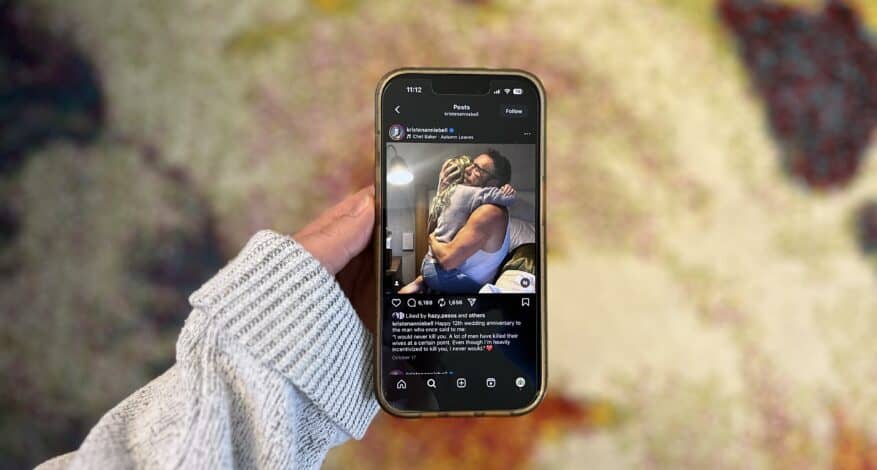
Rock Relief is a charitable event organized and founded by Ned Bellau, drummer with the band Canvas. We are grateful for the time and talent of the musicians who are volunteering to perform during the day. Hope to see you there!

READ MORE
Annual Report

Cartober

Cartober is a month to share how your used vehicle donation can support nonprofit organizations.

We partner with Charitable Adult Rides & Services (CARS) to accept donations of cars, trucks, motorcycles, RVs, and boats to our mission.

Corissa Phillips, our external relations director, recently donated her 23-year-old vehicle to CARS.

“I had an emotional connection to that old blue station wagon. It was the first car I ever purchased as an adult, and both of my kids had driven it at some point during high school and college,” she remembers.

“It had body damage, a broken tire rod, duct tape repairs to the roof. It hadn’t started for more than a year.”  

The CARS donation team assured Corissa the parts had value, so long as she had the title, even if the vehicle wasn’t roadworthy. The towing was free, and she wouldn’t be charged any fees. 

Only a week after initiating the donation, Corissa watched as her old station wagon was towed down the driveway. She was notified it sold at auction two weeks later and $223.47, equal to 70% of the sale, was being transferred to GreenHouse17. 

“I was really surprised my old car sold for that much! I should’ve done this years ago,” she says.

READ MORE
Blog

Volunteers Matter

Time & Talent

Michael Watts was first introduced to our organization when his wife discovered the farm while looking for flowers for their church’s garden exchange.

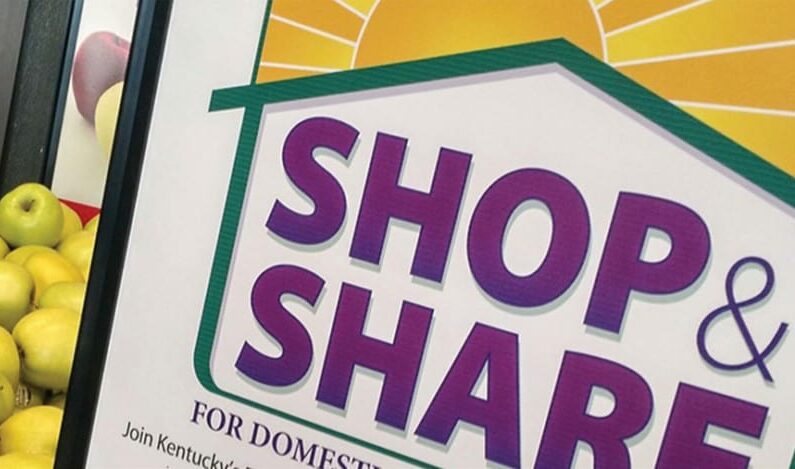
He soon began donating to the mission and volunteering to help with big community events like Shop & Share.

“I have three sisters, and women in many contexts are regarded as second class. That’s a great unfairness,” Michael says. “I volunteer to help lift up the women that come here.”

After retiring, Michael found more time to lend his hands on the farm, where his efforts have made a lasting impact. Recently he has been clearing a path and circle seating space in a wooded area on the property for residents.

“To me, taking a walk through the woods is a very calming and spiritual experience.”

Are you looking for a volunteer match for your interests? Our current opportunities, onsite and remote, are listed on our website here.

Read the Summer 2025 Issue of Bloom

This is one article from our print newsletter. Follow the link above to read the full issue!

READ MORE
person holding bears in front of bulletin boardBlog

Arlington Elementary

Sew Sweet!

Fourth and fifth graders at Arlington Elementary lovingly sewed more than 70 teddy bears for children living at our emergency shelter.

“Our students learned to hand sew, cut a pattern, stuff their bear, and were so proud of themselves with their finished product,” explains Kristen Blaker, Art Teacher and Sustainability Coordinator.

The project was supported with a grant from CHI St. Joseph Health to promote art and kindness at school. Members of our staff attended a special pep rally to accept the donation.

Each bear is as unique as the student who made it, and every bear was made with love, from the heart of one child to another.

“The students created a handwritten note to put in their heart pocket on the bear,” shares Ms. Blaker. “Some of these were tearjerkers, as we have students who know hardships firsthand.”

Read the Summer 2025 Issue of Bloom

This is one article from our print newsletter. Follow the link above to read the full issue!

READ MORE
sunflower field with person in hat standing upBlog

New Survivor Stipend Match

A new one-time grant from Lexington-Fayette Urban County Government’s Office of Homelessness Prevention and Intervention (OHPI) will support nature-based healing and stability after surviving abuse.

Survivors living at the shelter experience the benefits of nature in many ways—from farm walks to nutritious meals. Adult survivors may choose to participate in a focused six-week project that provides a stipend for their contributions to the farm’s day-to-day operations.

“The stipend was amazing for me,” shares Eboni, a past stipend project participant. “I was able to save $200, get clothes for my son and me, fix my car, and even buy a washer and dryer for our new apartment.”

Funding from OHPI will provide a dollar-for-dollar match on the value of stipends earned by survivors. Matching funds can be applied to self-identified barriers to economic stability. Examples include expenses like car repairs, rental fees, job uniforms, medical care, and savings accounts.

“Nearly every person we serve has also suffered financial abuse,” shares Diane Fleet, associate director. “Survivors often face a long list of expenses that can delay and, too often, hinder progress made toward economic stability. Removing just a few of those barriers can make all the difference.”

“For future participants receiving more, it’ll just double their chances for success,” adds Eboni.

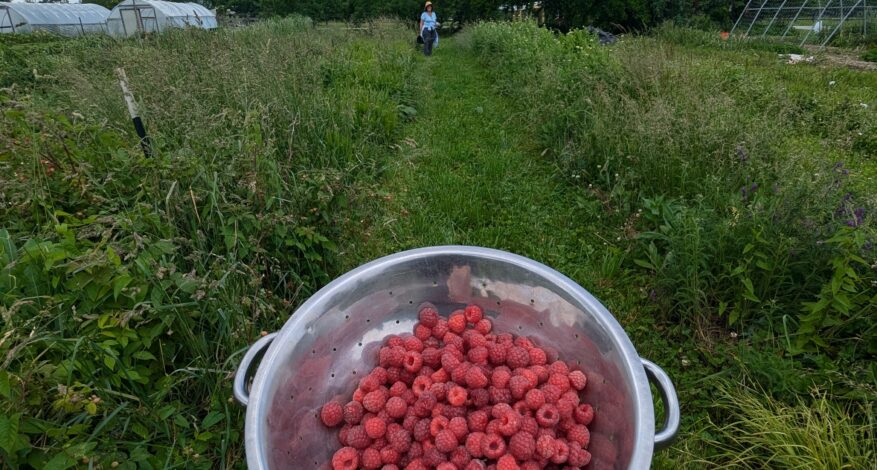
You can support survivors participating in the farm stipend program by attending a U-Pick Day on the farm in August or September! Click here to reserve your bucket for some flower picking fun.

Read the Summer 2025 Issue of Bloom

This is one article from our print newsletter. Follow the link above to read the full issue!

READ MORE
police officer holding radioBlog

Lethality Assessment Program

A new program partnership will offer support in Scott County and Frankfort.

A nationally recognized Lethality Assessment Program is expanding to Kentucky, thanks to leadership by ZeroV, the state coalition of domestic violence programs, and Merryman House in Paducah.

This evidenced-based strategy developed by the Maryland Network Against Domestic Violence reduces intimate partner homicides and serious injuries.

Equal partnership between victim service providers and law enforcement is a cornerstone of the program and the Scott County Sheriff’s Office and Frankfort City Police Department were eager to sign on.

The program equips these law enforcement offices with 11 screening questions to help identify victims at the highest risk of being killed by an intimate partner. When high risk is indicated, officers immediately call the GreenHouse17 crisis hotline from the scene.

Survivors will speak directly with an advocate about safety planning and available services.

“This program is proven to save lives,” says Darlene Thomas, our executive director. “We’re grateful for the partnership of law enforcement and sister organizations to bring the first Lethality Assessment Program to central Kentucky.”

Read the Summer 2025 Issue of Bloom

This is one article from our print newsletter. Follow the link above to read the full issue!

READ MORE
Blog

House Bill 38

Mary Ann’s Story Continues. Read the first part here.

After their phone call, Mary Ann and Representative Tipton began drafting legislation to hold abusers accountable. Their work would become known as HB 38 during this year’s Kentucky General Assembly.

She received another call from the congressman after the bill was filed. He asked Mary Ann to share her testimony with the House Standing Committee Judiciary.

Although nervous, Mary Ann remembers feeling supported from the moment she arrived at the Capitol Annex. She bravely shared her story and called for change.

“Today, I stand here with the hope that this bill will pass with essential provisions to escalate repeated domestic violence offenses to felony charges.”

The committee voted to pass the bill to the House of Representatives, which unanimously voted to approve.

This moved the bill to the Senate Standing Committee Judiciary. Mary Ann testified for a second time, inspiring the committee to move the bill to the full Senate.

She returned to Frankfort a few weeks later to witness the Senate’s vote and received a standing ovation from the crowd. Governor Beshear signed the legislation into law this March.

Per Kentucky Revised Statutes, the violation of an order of protection by a person convicted of two or more previous violations in five years is a Class D felony, if the third or subsequent violation uses or attempts to use physical force or threatens physical harm. The protected person can differ across violations.

Read the Summer 2025 Issue of Bloom

This is one article from our print newsletter. Follow the link above to read the full issue!

READ MORE
21 Years

Mary Ann’s Story

“I have reclaimed my strength and my voice.”

On the morning of December 18, 2022, I was jolted awake by my now ex-husband, only to find myself being brutally attacked.

I was hit in the head with a phone, my face busted, knocked to the ground, held down by the back of my neck, and told I was going to be killed if I said anything or moved.

I lay there, my mind racing with a single thought. I don’t want to die. The man staring at me was not the man I had married. I knew I had to run.

I broke free and sprinted out the door. I ran up the driveway, down the road, and finally ducked behind a truck. My hands were shaking as I dialed 911.

He was arrested that night, but less than two weeks later, he was released on bond with an ankle monitor. I was granted a temporary Emergency Protective Order (EPO) until our court hearing on January 10, 2023.

On that day, the court issued a three-year no contact Domestic Violence Order (DVO).

The order meant nothing to him. He wasted no time violating it, calling and leaving 23 messages within five days. The ankle monitor offered no real protection–he had already decided he was coming for me.

As a survivor of domestic violence, I continue to endure the ongoing actions of my abuser every day. My ex-husband has violated the protective order against him more than 50 times, yet each offense has been classified as a misdemeanor.

When does it stop?

I reached out to James Tipton, my state representative, and left a voicemail about my situation. He called me the next day…

Mary Ann’s phone call with Representative Tipton would make history. Her story continues here.

This is only part of Mary Ann’s story, in her own words, shared with permission.

Read the Summer 2025 Issue of Bloom

This is one article from our print newsletter. Follow the link above to read the full issue!

READ MORE
police officer holding radioBlog

The Recent Domestic Violence Mass Shooting in Lexington

The recent domestic violence mass shooting in Lexington was devastating.

We hold the families of Beverly Gumm and Christina Combs in our hearts—as well as the wounded and their faith community. We grieve and stand with you. 

In the days and weeks ahead, hard questions will be asked. How could this tragedy have been prevented? What warning signs were missed? What more could’ve been done and by whom?   

“There is also a need for self-reflection among all of us,” says Darlene Thomas, GreenHouse17 Executive Director, in an interview with Linda Blackford of the Herald-Leader. “It often feels like the people held responsible are the victims themselves, and we blame them — they should have had a safety plan, etc. — instead of focusing on the problem. We as a society need to start taking the responsibility off victims and onto batterers.” 

We owe it to the victims and each other to answer those questions while acting on what we already know: 

Domestic violence always has the potential to turn lethal. The threat is very real for the abuser’s current partner, previous partners, the children and families of those partners, law enforcement, victim advocates, and our community at large. 

Domestic violence is a pattern of power and control. The danger increases when the abuser believes that power is slipping away.  

Ending a human life is the ultimate act of control. When an abuser has access to a gun, the risk of homicide increases five-fold. A history of domestic violence or harming family and intimate partners has been found in 68% of mass shootings in the United States. 

Our hotline – 800-544-2022 – is answered 24 hours a day, every day of the year. Our specially trained advocates can help safety plan if you or someone you know is being abused, threatened, stalked, or harmed by a partner.

If you’re a survivor of domestic violence, you may be feeling triggered or more scared about your safety. Our advocates are available for you, too, whether it’s been months or years since you survived the abuse.

Read more.

Click the link above to read Linda Blackford's article.

READ MORE
two people embracing outside21 Years

Supporting Your Loved Ones

When someone you love is being abused, the dynamics can be very complicated. We sat down with our executive director, Darlene, to share advice on common questions from families of survivors on our hotline.

How should I act around an abuser?

I believe it’s important to be cordial. They’re still human beings. That doesn’t mean you have to condone their behavior or agree with it. It’s important for the survivor, because when you’re not cordial, the abuser may use that as a way to further manipulate and control their partners. 

It’s hard for family and friends. You don’t really know what to do because you don’t want to lose the person you love. 

Families also need to remember they don’t cause somebody to be abusive. The abuser is already using their tactics day in and day out on the person that you love and care about. You can’t create those dynamics, but the abuser will use those dynamics in order to excuse or justify their abuse because they’re really good at playing the victim. 

I know someone has a history of abuse or that my family member is being abused, but most of the extended family doesn’t. Is this something they need to know if they’ll be around for family events?

I think you have to weigh out the pros and cons. Ask yourself how does it benefit everybody to know? Also, sometimes it can be helpful to pull in influential folks. For example, I might not listen to my mother, but let my grandmother tell me something and it might hold more weight.  

But if something has happened, we’re worried for our loved one’s well-being, or they have fled for their safety, at that point in time, it’s important to keep family members informed.  

Sometimes family members might be upset they didn’t know before, and you can remind them that you were honoring your loved one’s request and trying to keep the peace. 

What are some things we can say to let our loved one know we’re here for them?

You can always say, “I know what’s going on. I’m worried for you. I’m worried for your safety. We are always here, and we love you. Don’t ever think you have gone so far that you can’t come out.”  

That’s really important for a survivor to hear. A lot of the time, survivors have defended and stood beside the abuser, and now to say that everybody else was right can be really hard. So, they’ll hold on tighter in many ways.  

So it’s important for family members to avoid saying, “I told you so.” Instead, do your best to communicate that you are there to support them.   

My family member is dating someone with an abusive past. Can they change?

Can people change? I have to believe on some level that yes, people can change. Do abusers change? Not much.  

I think abusers adapt based on the situation they’re in, what they can get by with, and how far they can push. It depends on the survivor, their background, their history, their strengths, and their weaknesses. It can look a little different from one victim to another. 

What most people don’t understand is just because you’re not seeing the abuse now doesn’t mean it’s not going to happen. 

Abusers don’t start to show who they are until they’re comfortable knowing they have you hooked enough. That could be living together, marriage, or your first child together. The abuser is grooming, waiting, and learning about their situation. Then they’re going to adapt to that as necessary.  

It’s very rare you see an abuser accept responsibility for their behavior and they have a tendency to blame everybody else for why it happened.  

What if they’re in therapy? Can that help them change?

When an abuser goes to therapy – whether individual or couples therapy – they’re often treated for anger issues if the therapist doesn’t understand intimate partner abuse, histories of domestic violence, power and control, and other dynamics.  

Sometimes while in therapy, abusers learn different behavioral options versus physical violence. That is not addressing the realities of intimate partner abuse, which is power-based violence.  

Domestic violence is not about anger. People who abuse their intimate partners are often able to control their anger with other family members, at work, and with friends.  

I’m not going to say somebody can’t make a decision to be different. They can, but not without some serious intervention and ownership over their behavior, with some real years showing they can do things differently. In my career, I find that a rare occasion for those that do harm. 

How does an abuser manipulate those around the survivor?

If an abuser can manipulate the loyalty or care of the family, then they’ll do that. And if that doesn’t work, they’ll turn around and undo it. But if it works, that’s the best-case scenario for the abuser.  

Survivors might think, “If everybody else likes them, then I must be crazy. Everybody else likes him, he’s a good guy. They’re all saying he’s trying, but yet these things are happening to me. So maybe it’s me, maybe I should be better.”  

Family and friends need to stay focused on behavior, not words.  

Abusers can say all the right things like, “Oh, I just love them. I’m trying my best. I’m not perfect, but she’s not perfect either.” They know what to say, how to minimize, how to charm people, how to twist the story around just enough to make people have some doubts.  

And people are imperfect. Survivors are imperfect so they will not always say the right things or do the right things or react to whatever people perceive is the right way of what they’re experiencing. 

Is there anything else you would like to share about complicated family dynamics?

I’d like to validate that it’s a difficult balancing act because it sometimes calls into question your own integrity.  

As family, sometimes we have to say to ourselves, ‘I can play this game, because I love you and I’m going to be here for you no matter what. It’s going to get difficult. This person might try to tear you from me, or try to interfere in our relationship, but I’m not going to let it happen.’  

I want to tell families it’s hard. You can’t swoop in and try to be the hero because it could further do harm to your family member or isolate them even more. 

It feels a little helpless sometimes. What we need to be careful of, though, is not to blame the victim. It’s everybody’s individual journey, and all you would hope for in the end, when they really need you, they’re going to come to find the people they feel safest with.  

I think you should be telling the people you love what you see and are worried about in a supportive way. The message should be, “I’m worried for you. You deserve better. If you’re that uncomfortable, you need to trust yourself. What do you need help with?” 

If people have questions, they should call our hotline. You don’t have to be the victim to call hotlines and get support.

READ MORE