Blog

Staff earns CFRE recertification

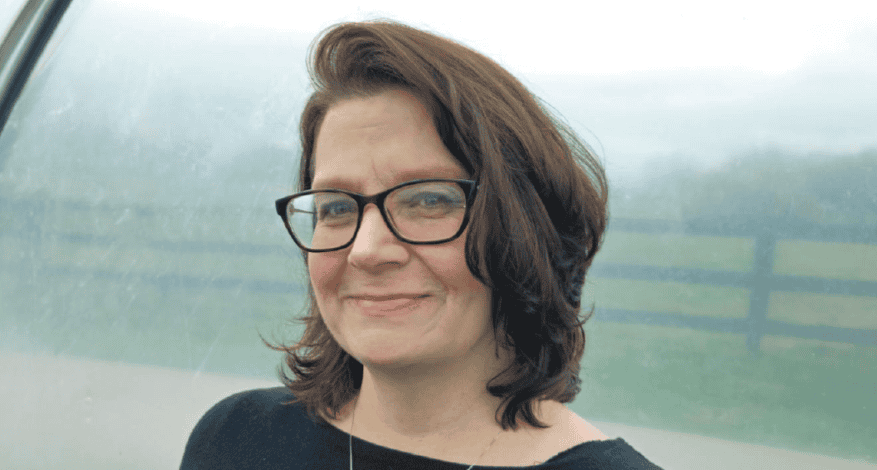
Our External Relations Director, Corissa Phillips, has been recertified as a Certified Fund Raising Executive (CFRE).

Individuals granted the CFRE credential have met a series of standards set by CFRE International, which include tenure in the profession, education, and demonstrated fundraising achievement. 

The CFRE requires a rigorous written examination proving the knowledge, skills, and abilities required of a fundraising executive. Professionals holidng the credential also pledge to uphold CFRE Accountability Standards and honor the Donor Bill of Rights. 

“I am especially proud of the credential’s focus on ethical fundraising practices,” says Corissa. “The CFRE reflects our organization’s longstanding commitment to accountability in every aspect of our mission to end intimate partner abuse.”

Corissa brings 25 years of nonprofit administration to her responsibilities for grant management, fund development, and communications at our organization. She earned her MA degree from the University of Louisville and BFA from Indiana State University.

CFRE International is accredited by the American National Standards Institute and provides the only accredited certification for fundraising professionals.


READ MORE
21 Years

20 Years of Supporting Survivors

This year marks a milestone. Twenty years ago, on February 14, 2005, we officially became a nonprofit organization.

We embrace our anniversary falling on Valentine’s Day to celebrate supportive love and healthy relationships. 

“Authentic love is the most powerful expression that genuinely shows those we serve that they are valued and worthy. It is in that love that survivors remember how to love and care for themselves again,” says Darlene, executive director.  

Two decades have passed, but she will always remember a pivotal moment in our early history. Court advocacy and supportive services were already being provided across the service area, but she faced a decision about the emergency shelter. 

“I was standing at the back door of an empty building looking out on 40 acres of rural farmland. Could this be our new home? How will survivors stay connected with other community service organizations? Can we engage supporters from this country location?”  

“Feelings of safety warmed my heart as the sun lowered in the sky. As day transitioned to night, I imagined a small group of survivors talking on the back porch, looking out to the fields where their children were playing and laughing.”  

Before the sun dipped below the horizon, she had clarity. This property should become a safe home for survivors and our new headquarters.

In the years to come, partners from near and far would help imagine opportunities for the beautiful land to foster healing. More than 65,000 adults and children have been supported during the past 20 years, including 4,600 who found safety at the shelter.

“Our mission holds thousands of stories of celebration, fear, loss, and possibility—most with happy endings and many still being told.”

image
image
image
image
image
image
image
image
image
image
image
image
image
image
image
image
image

We are here for you 24/7.

Call our hotline at 800-544-2022 to speak with a trained advocate.

READ MORE
person holding sign that reads It's a privilege to educate yourself about racism instead of experiencing itBlog

Black History Month

This month and every month, we celebrate the contributions Black advocates have made to our mission, agriculture, and those who create safe spaces for positive change. 

This post is inspired by  “Giants Among Men and Women On Whose Shoulders We Stand” from Ujima, The National Center on Violence Against Women in the Black Community and Black Soil KY‘s Black History Month Resource Guide. Click on each card to learn more.  

Umi Hankins

Activist and cofounder of the Institute on Domestic Violence in the African American Community.

Ulester Douglas

Psychotherapist, consultant, keynote speaker, and social justice advocate.

Kimberlé Crenshaw

American civil rights advocate and a leading scholar of critical race theory.

The Combahee River Collective

“As Black feminists and Lesbians we know that we have a very definite revolutionary task to perform.”

Dr. Beth Ritchie

Researcher and author of Compelled to Crime: the Gender Entrapment of Black Battered Women and more titles.

Devine Carama

Socially conscious hip hop artist, activist, motivational speaker, and director of One Lexington.

Booker T. Whatley

Tuskegee University professor who first introduced the concept of a CSA.

Farmers' Improvement Society

FIS worked to help poor farmers escape the cycle of debt caused by the share cropping and credit system

Fannie Lou Hamer

Civil and voting rights activist and founder of the Freedom Farm Cooperative.

READ MORE
Blog

UPDATE: Stop the Federal Funding Freeze

UPDATE – A memo issued by the Office of Management and Budget on Wednesday January 29, made public at approximately 1:15 pm, has rescinded the previous memo. Additional decisions and information are expected in the coming weeks.

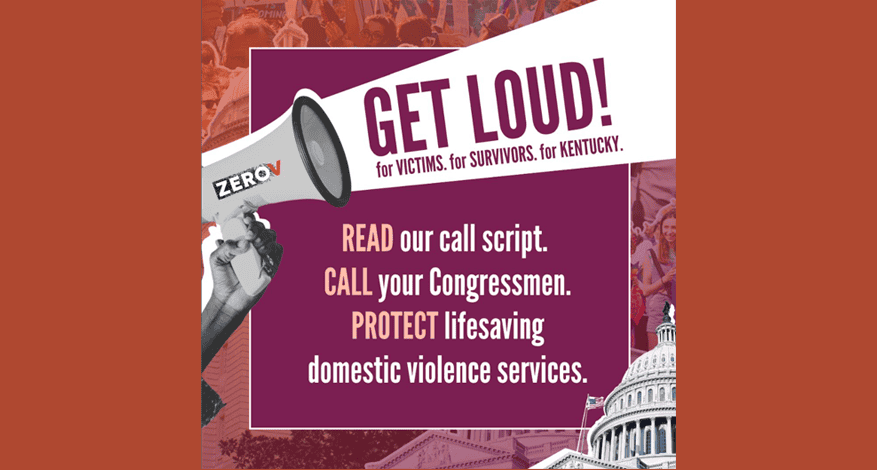
Your voice is needed for survivors. Please call on Congress to stop the federal funding pause.

On January 27, the White House’s Office of Management and Budget issued a memo directing all federal agencies to pause federal grant, loan, and financial assistance programs effective 5 p.m. ET on January 28.

Minutes before the freeze would have begun, a federal judge extended the effective date by six days. This pause would have detrimental impacts on public support services across the nation, including Kentucky’s domestic violence programs, the employees who keep them operating, and the survivors they serve.

Learn more about the memo’s potential impact from this Reuters article. Read the memo itself here.

As a member program of ZeroV, the coalition of Kentucky domestic violence programs, we are urging concerned Kentuckians to contact their Members of Congress today and insist they do everything in their power to prevent the federal funding pause. Below, you will find call scripts and email templates you can use when contacting your Members of Congress.

Call Congress NOW! The Capitol Switchboard can be reached at 202-224-3121. Prefer to send an email? Follow this link to find your Members of Congress

PHONE SCRIPT

I am calling to express my concern and dismay of the Office of Management and Budget memo M-25-13, “Temporary Pause of Agency Grant, Loan, and Other Financial Assistance Programs.”

As a constituent and concerned member of the community, I am concerned that this memo directly threatens survivors of crime. These survivors cannot wait for a pause while a federal agency analyzes the funding that enables service providers to provide them with the life-saving shelter and support they need. They need our help now, in the immediate wake of the most traumatic and difficult moments of their lives.

I urge the Representative/Senator to do everything in their power to stop this order from affecting this core, necessary funding that victim service providers rely on so they do not experience any interruption. If they are interrupted, the safety of victims and survivors will be gravely compromised, with immediate and real harm to the most vulnerable people in our communities.

EMAIL TEMPLATE

Dear Representative/Senator X,

I’m writing to express my concern and dismay for the Office of Management and Budget memo M-25-13, “Temporary Pause of Agency Grant, Loan, and Other Financial Assistance Programs.”

As a constituent and concerned member of the community, I am concerned that this memo directly threatens survivors of crime. These survivors cannot wait for a pause while a federal agency analyzes the funding that enables service providers to provide them with the life-saving shelter and support they need. They need our help now, in the immediate wake of the most traumatic and difficult moments of their lives.

As your constituent, I am asking, on behalf of survivors and their families, to do everything in your power to stop this order from affecting core, necessary funding such as this. It is essential that the federal grants on which victims’ service providers depend do not experience any interruption. If they are interrupted, the safety of victims and survivors will be gravely compromised, with immediate and real harm to the people who most desperately need our help.

With regard,
X

We thank the California Partnership To End Domestic Violence for drafting these rapid response communication tools. The featured photo is from pexels.com and used with permission.

This is a developing story.

Updates will be linked in this story as available.

READ MORE
Blog

Celebrating Dr. Martin Luther King Jr. Day

“Our lives begin to end the day we become silent about things that matter.”  

As we honor and celebrate the legacy of Dr. Martin Luther King, Jr., his powerful words from decades ago resonate deeply with our mission.  

“The time is always right to do what is right.”

“At the center of nonviolence stands the principle of love.”

“Darkness cannot drive out darkness; only light can do that. Hate cannot drive out hate; only love can do that.”

“True peace is not merely the absence of tension; it is the presence of justice.” 

    Staff members are attending the annual MLK Holiday Celebration today and joining the Freedom March, walking in solidarity with our community to honor Dr. King’s message of equality and action. 

    We were also grateful to host an incredible group of University of Kentucky volunteers for their MLK Day of Service over the weekend. They helped us organize our shelter’s basement in preparation for incoming Shop & Share donations on February 8. 

    Read more.

    Learn about the history of the MLK holiday celebration in Lexington.

    READ MORE
    Blog

    Farm Reflections

    This is a special blog contribution written by Ryan Koch, our nature-based healing advocate.

    As a person who has done some gardening and spent some hot days in a field, I have come to love and deeply appreciate dormancy. Trees shed their leaves, the last of the harvesting ends, and nature agrees that it is time for a break. Dormancy and the shortening daylengths of fall invite us to reflect on our efforts in the garden, what we successfully cultivated, and what work to prioritize for the spring. 

    This past year we began offering a twice-weekly gardening group called the “Dirt Crew” to welcome shelter residents of all ages to explore the spring and summer gardens, to assist with the maintenance, and especially to harvest some of the good stuff coming out of our growing spaces.    

    Our harvesting efforts initially focused on the mulberry tree near the garden, and eventually the spinach, radishes, carrots, kale, raspberries, tomatoes, sweet peppers, basil, and sweet potatoes. The Dirt Crew was different from our farm stipend program in the sense that all residents (and staff) were welcome, but that there was no financial incentive to participate.  

    The goals were to plant, taste, touch, smell, and experience nature in a new way. These goals encouraged playfulness, curiosity, and delight. And in a lot of ways, we achieved these goals. Families and individuals did come out to join us in the work and often reflected on other gardens they had visited or helped in previously.  

    Another happy outcome was that each week from early June until mid-November, some part of our harvest ended up in a meal prepared by and/or served to residents. Our tomatoes, peppers, and sweet potatoes were roasted and added to sauces or soups. Our berries were frozen for smoothies. It was a significant harvest, and a hyper-local farm-to-fork adventure.  

    While a bountiful garden cannot come to be without significant planning, some of the sweetest moments in the garden this year were unplanned and unexpected. I remember one morning when hummingbirds buzzed overhead trying to settle a turf disagreement. On another morning, we discovered more than one monarch butterfly chrysalis on the dill plants, their stunning gold dots highlighting the bright spring green pods.  

    All of this feels like ages ago. I am writing this on a day when a light dusting of snow is falling, a December day that will not be our darkest or our coldest. But recalling the summer past helps me plan for a new year of mulched rows and happy plants ready to welcome residents who are seeking a peaceful, healing space. A garden, even in dormancy, or maybe especially in dormancy, reminds us that we can always begin again. 

    READ MORE
    hand holding kindle version of it ends with us21 Years

    It Ends with Us

    Original publish date: 8/13/24. Updated 12/17/24 – It Ends with Us is now streaming on Netflix. Send us a message on social media and let us know your thoughts on the movie! 

    Everyone is talking about It Ends with Us. The book has sold millions of copies, and the movie had a huge opening at the box office over the weekend.

    Both tell the story of Lily Bloom, a young woman who falls in love with neurosurgeon Ryle Kincaid after meeting him on a rooftop in Boston. What happens after they fall in love has sparked conversation about intimate partner abuse. But what do the book and movie portray well, and what else can we learn from the story?  

    Spoiler Alert and Trigger Warning! This post reveals plot details from the book and movie. These details could be re-traumatizing for survivors of abuse.

    What the Book Does Well

    Ryle is portrayed as a charming and charismatic neurosurgeon. This depiction is powerful because it reflects how abusers often present themselves in a positive light, making it difficult for victims and those around them to recognize red flags. 

    The book effectively highlights several red flags, such as Ryle not being able to control his anger, rushing into the relationship, proposing marriage after a short time together, and breaking Lily’s personal boundaries by going through her journals. Additionally, his act of buying her an apartment without asking—an example of love bombing—is another red flag. 

    What the Movie Does Well

    After the first two times Ryle hurts Lily, the audience shares in her confusion and doubt. Were these really accidents? Were these purposely violent incidents? During a later scene, Ryle sexually assaults Lily. This is when the flashbacks of the past incidents are revealed to Lily and the audience to have been violent abuse.  

    The video techniques used during this scene create a powerful visual representation of how abuse can escalate over time and the mental turmoil it causes. What had once been confusing and gaslighted memories quite literally are brought into focus. The abuse was Ryle’s choice.  

    Lily learns she is pregnant and ends her romantic relationship with Ryle. The movie depicts the passage of Lily’s pregnancy through several scenes, including one specific scene in which Ryle arrives at Lily’s apartment. Although hesitant, she invites him inside to help put together the baby’s crib. After the baby is born, Lily tells Ryle she wants a divorce.  

    Both the book and movie also explore Lily’s complicated relationship with her abusive father and judgment of her mother. Lily struggled to understand why her mom stayed and often considered her weak for not leaving. When Lily faces the same decision, she vows to break the generational trauma. The title of both the book and movie come from Lily telling her daughter the cycle of abuse ‘ends with us.’ 

    What’s Missing

    While the movie brings much needed attention to intimate partner abuse, it misses deeper discussion about the complexities. 

    Marketing for the movie has framed it as a romcom and love triangle. Viewers are encouraged to wear florals to the movie and there have been pop up flower shops for promotion. Many of the marketing strategies avoid the movie’s prevalent topic of domestic violence. 

    We overheard a small group of ladies discussing the movie after it ended. One mentioned how she thought the ending was wrapped up in a perfect bow, and that’s not how these situations usually end up for the survivor. Other comments were about concern for the baby, and how Lily doesn’t seem worried that Ryle will continue to hurt her and their child. 

    This might be the most important criticism of the movie. It presents the process of escaping an abuser as a decision that can be implemented easily and quickly.  We know this isn’t reality. It takes a victim an average of seven times to escape the abuse. Attempting to flee is the most dangerous time, and abuse often escalates during pregnancy.

    Lily does not explore options for a protective order, her friends stay available to her, and she doesn’t experience risks of job loss because of the abuse. Unlike Lily, many victims are isolated through the power and control of the abuser. With no one to turn to for help and not enough money to begin again, victims often navigate a series of barriers to safety.  

    The story also ends with Lily and Ryle easily agreeing to a co-parenting relationship without meaningful discussions of the terms or consideration of the risks—and those risks are many. Abusers often use co-parenting arrangements with the survivor to continue control and intimidation. This is why safe exchange and visitation programs like ours are so important. 

    And finally, the movie doesn’t include a domestic violence hotline number until after the credits have ended. Given the anticipation and early popularity of the movie, not including a hotline number was very disappointing.  

    What’s Next

    Educate yourself on intimate partner abuse. Read this blog post about myths and truths. Learn about what a healthy relationship is. Find out how you can start conversations with young people in your life. 

    Watch other shows like Maid, which does an exceptional job at showing the hurdles survivors go through. Alex, the survivor and main character, navigates the lack of employment, childcare, and friends because her circle of support was tied with her abuser.  

    Have you wondered if your relationship is healthy? Do you have a friend you suspect could be suffering from physical or emotional abuse? Whether you just want to talk or you’re ready to initiate services, we will answer your call 24 hours a day, every day of the year. 

    800-544-2022

    24-hour Crisis Hotline

    READ MORE
    picture of four soaps on a white backgroundAnnual Report

    Heart & Craft

    “We are all handmade, we are not meant to be perfect, we are just meant to try to be our best selves possible.”

    Every product from our farm tells a story and is crafted with care by survivors reclaiming their lives.

    “I know whoever purchases our products will enjoy them as much as I’m liking being a part of making them.”

    What began as simple crafts made in microwaves at the shelter has grown to be a line of handmade products enjoyed by supporters across the nation.

    Bekah, an advocate with focus on making products, explains, “Women often neglect self-care, especially in abusive relationships where it’s discouraged. Our crafting sessions offer a safe space to rediscover and nurture creativity.”

    The first soaps created during the early years—Fresh Start, Soothing Serenity, Sweet Harmony, and Awaken Joy—are still made today. Soothing Serenity was formulated by two women who loved the scent of rosemary.

    “Survivors help every step of the way. Each product is linked to someone’s story. It’s not just about the product, but the person behind it,” Bekah says.

    Your purchase of Handmade by Survivors products supports creativity and collaboration to foster healing after abuse. And every item smells so good! They also make wonderful holiday gifts for friends near and far. Consider a Hope Box of handmade products for your corporate gift-giving this season.

    Read the Fall 2024 Issue of Bloom

    This is one article from our print newsletter. Follow the link above to read the full issue!

    READ MORE
    Annual Report

    Speak My Name

    Please join us in speaking these names out loud as the video plays. Each name is a life taken by domestic homicide related to intimate partner abuse in Kentucky from September 2023 – August 2024. We remember the victims and honor their memory for the children, family, and friends who loved them.


    Christina Fikes, 23

    Anonymous Female, 43

    Amy Skelton, 44

    Debra Meece, 47

    Joanie Campbell, 45

    Kierra Lane, 25

    Joyce O’Bannon, 56

    Devin Ellis, 35

    Kelly Black, 42

    Kim Nguyen, 52

    Doris Brock, 67

    Daryasia Wingo, 21

    Manuel Lomeli, Jr., 60

    Lorrie Hayden, 53

    Brenda Kemp, 73

    Araceli Martinez, 27

    Emily Hunt, 33

    Sabrina Potter, 51

    Delaney Eary, 19

    Marsha Israel, 71

    Shannon Dustin, 23

    Shonda Parker, 35

    Indira Martinez, 32

    Yailin Espinel, 34

    Erica Riley, 38

    Mary Andrews, 49

    Of these 26 victims, 19 were killed by gun violence.


    Speak My Name is an annual project of ZeroV, Kentucky’s state coalition of domestic violence programs. 

    For the lives and futures of all Kentuckians, we must commit ourselves to ending intimate partner violence during DVAM and beyond.

    Disclaimer: As of July 2023, per KRS 209A.122, the KY Justice and Public Safety Cabinet started producing an annual Domestic Violence Report containing anonymized data about intimate partner homicides from the previous calendar year. ZeroV will continue the tradition of humanizing and honoring the memory of those Kentuckians who lost their lives to a partner or ex-partner through this less formal Speak My Name list. ZeroV attempts to track domestic violence-related homicides in Kentucky through various sources such as reports from our member programs, news articles, and internet searches. The method is far from perfect. Please be aware that most reports come at the beginning of the law enforcement/court process, at which point an individual has been charged with homicide. We make no representation of the outcome of these cases or whether the charged individual is found guilty of criminal activity.

    We are here for you 24/7

    Call to speak with a Certified Domestic Violence Advocate at 800-544-2022

    READ MORE
    minnie mouse and bluey with two staff membersAnnual Report

    Cosplay for a Cause Foundation

    Cosplay for a Cause Foundation brings children’s favorite characters to life, providing moments of joy and inspiration.

    Founded by Elizabeth Redding, Lee Davis, and Greg Frederick in 2020, the foundation supports nonprofits through volunteering, fundraising events, and uses cosplay to uplift and support children.

    Each year members select a local organization to support. Through fundraisers and outreach efforts, including character meet and greets, Cosplay for a Cause has shown immense support for survivors.

    Member Theresa Smith says, “It is an honor and privilege for me to create joy and laughter, allowing both children and adults to forget their hardships for a brief moment. Through this process, our members find solace and healing as well.”

    The kids living at the shelter have met Bluey, Mirabel, Luisa, Cinderella, Mario, Captain America, Big Bird, and more.

    Read the Fall 2024 Issue of Bloom

    This is one article from our print newsletter. Follow the link above to read the full issue!

    READ MORE