Blog

17 Days/17 Ways – Speak Their Names

Today’s way to help is a more difficult one. Data collected by the Department of Justice Bureau of Justice Statistics finds an average of three women are murdered by an intimate partner every day in the United States. These murders represent more than a third of all female homicides.

Last year the ZeroV compiled a list of 25 Kentucky women who were murdered by an intimate partner between October 1, 2011 and September 30, 2012. We must remember their lives. Consider how many times they tried to leave, and imagine the barriers to safety and healing they might have faced. Think about the friends, family and children who are still mourning.

Speak their names, and commit to help end intimate partner abuse in families and our community in their memory.

  • Sandy Allen, 24, Oldham County
  • Tasha Campbell, 26, Kenton County
  • Karyn Michelle Carr, 38, Jefferson County
  • Katie Coomer, 28, Woodford County
  • Amy Dennison, 36, Muhlenberg County
  • Sherry Dillon, 52, Pike County
  • Mary Gilmore-Hislope, 44, Pulaski County
  • Sade Goldsmith, 28, Jefferson County
  • Lori Hall-Boswell, 35, Powell County
  • Erika L Hutchason, 43, Webster County
  • Leigh-Ann Kinder-Parsons, 35, Boone County
  • Leslie “Cricket” Lanham, 43, Greenup County*
  • Barbara Martin, 64, Powell County
  • Kathleen McGee, 30, Christian County
  • Tamlyn Nguyen, 36, Daviess County*
  • Jessica T Rawls, 27, Christian County
  • Autumn Rollings, 24, Christian County
  • Robyn Slone, 37, Boyd County
  • Valeria K Stevens, 43, Rowan County
  • Modena Sutton, 50, Anderson County
  • Danielle Thomas, 27, Boyle County
  • Angela Thurman Ervin, 34, Monroe County*
  • April Turner, 35, Gallatin County
  • Theresa Utley, 51, Gallatin County
  • Barbara Walker, 51, Larue County

*The deaths of these women occurred before September 30, 2011 but the cases were pending when the list was published. Since then someone has been charged in each case.

This post is part of this year’s 17 Days/17 Ways Campaign to end intimate partner abuse.

READ MORE
Blog

17 Days/17 Ways – Plan a Donation Drive for Survivors

By Zach Logue
Student Blogger

Note: This post was written by a freshman student at the University of Kentucky with help from GreenHouse17 staff as part of a service learning project.

Donation drives are a great way for individuals and groups to get involved in the community and help survivors of intimate partner abuse. Donations are especially important around the winter holidays. Everyone deserves to receive a gift they want or need,  and you can help make this happen for survivors.

GreenHouse17 will be the 0nly source of holiday help for about 100 adults and their children who are receiving their services or living at the emergency shelter. At any given time, about half of residents living at the agency’s shelter are children. You and your church, work, or community group can collect and donate all kinds of things to make the holidays special. Some gift ideas include robes, pajamas, slippers, board games, non-violent toys, purses, blankets, perfume, and many more.

You don’t even have to wrap the gifts because the organization’s staff  sets up “stores” in the safety of the shelter for parents to “shop” for gifts for their children and kids to “shop” for gifts for their parents. Are you someone who’s never sure what to buy for someone? You could consider purchasing gift cards to grocery or department stores in the region to help survivors during the holidays.

A complete list of gift ideas for survivors of all ages is available at this link.

Although GreenHouse17 isn’t able to accept donations of used goods at the shelter, you can donate your gently used items at area Goodwill or Habitat for Humanity on behalf of survivors. Just tell them the donation is for GreenHouse17. They will process the used items and provide vouchers for families in the shelter to shop for goods they need.

Your time and generosity will put a smile on a child’s face and help survivors to feel supported this holiday season!

This post is part of this year’s 17 Days/17 Ways Campaign to end intimate partner abuse.

READ MORE
Blog

17 Days/17 Ways – Talk to Young People About Healthy Relationships

By Jamison
Student Blogger

Note: This post is written by a freshman at the University of Kentucky with help from GreenHouse17 staff as part of a service learning project.

Relationships can be very difficult for young people, especially if they take a turn for the worse. When a healthy dating relationship ends, you’ll probably feel sad and confused, but after awhile you’ll be ready to move on, like in this song.

Ending an unhealthy relationship is more difficult. Loveisrespect.org, a project of the National Domestic Violence Hotline and Break the Cycle, reports as many as one in three teens is physically, emotionally, or sexually abused a dating partner.

Emotional violence can be difficult to spot, but it can be just as destructive as physical abuse.

  • Do your opinions matter to your dating partner?
  • Is your partner mistrustful and passive-aggressive?
  • Does s/he check your phone without permission?
  • Do you fear how your boyfriend or girlfriend will react if you talk to certain people?

Emotional abuse often starts slow and picks up momentum as the relationship continues, and it sometimes leads to physical abuse. You might see signs of aggression before physical abuse begins. Look for clenched fists and shouting during tense conversations. A friend might wear sunglasses or  long-sleeved clothing to hide the signs of physical abuse. Once someone heads down that path of physical violence, there is no easy return. No matter how sweet and loving or apologetic s/he is after the violence, chances are it will happen again.

Find a safe way to end your relationship is emotional or physical abuse is happening. Ask for help from adults you trust because an unhealthy relationship can become even more dangerous during a break up. If your friend is being abusive, tell them you suspect it’s happening and that it’s not OK to behave that way. If you’re worried about a friend who is being emotionally or physically abused, let them know you care and want to help them end the relationship safely.

Everyone deserves to be in a safe and healthy relationship. A healthy relationship is one that works. Both you and your partner are happy, and you can talk to each other about anything. You have no need to mistrust your partner and don’t feel confused by what each statement means.

Have you ever wondered if your dating relationship is healthy? Take this short quiz at loveisrespect.org to find out.

This post is part of this year’s 17 Days/17 Ways Campaign to end intimate partner abuse.


READ MORE
Blog

17 Days/17 Ways – Follow People and Organizations Doing Good

Staying up-to-date on issues and opportunities related to our mission is one way to help end intimate partner abuse. We hope you already like us on Facebook, follow us on Twitter, and re-pin us on Pinterest.

Our staff shares some really interesting information on our social media pages to advocate for survivors, honor the healing journey, and connect with supporters. You can check out the central Kentucky organizations and businesses that we like on Facebook at this link. We also maintain lists of Lexington and Kentucky nonprofit organizations on Twitter.

And we’ve pulled together this list of national and international organizations on social media for you to connect with online. Let’s see what we can learn from these thought-leaders to make our communities safer and healthier—and share some of the innovative solutions happening in our region.


Mary Byron Project
Facebook/Twitter
The Mary Byron Project is a not-for-profit organization dedicated to fostering innovations and solutions to end domestic violence.

NOMORE.org
Facebook/Twitter
NO MORE is a powerful new symbol that’s bringing together all people who want to end domestic violence and sexual assault.

Say NO – UNiTE to End Violence against Women
Facebook/Twitter
Say NO – UNiTE to End Violence against Women records what individuals, organizations and governments worldwide are doing to end violence against women. Managed by @UN_Women.

National Network to End Intimate Partner Violence
Facebook/Twitter
A leading national voice for domestic violence survivors and their allies.

National Domestic Violence Hotline
Facebook/Twitter
The National Domestic Violence Hotline provides information, resources & support to anyone affected by domestic violence. Free, confidential, 24/7/365.

National Coalition Against Domestic Violence
Facebook/Twitter
Organizing for collective power by advancing transformative work, thinking and leadership of communities and individuals working to end violence

Mentors in Violence Prevention – MVP
Facebook/Twitter
Motivates men and women to play a central role in solving problems that historically have been considered “women’s issues.”

Break the Cycle
Facebook/Twitter
BREAK THE CYCLE is the leading national voice in the education and prevention of dating violence among young people.

Love is Respect
Facebook/Twitter
A project of the National Domestic Violence Hotline & Break the Cycle, loveisrespect promotes healthy dating relationships among teens & young adults.

Futures without Violence @WithoutViolence
Facebook/Twitter
Working to prevent and end violence against women, children, and families throughout the world.


What organizations and businesses committed to ending intimate partner violence did we miss on our lists? Leave a comment to let us know.

This post is part of this year’s 17 Days/17 Ways Campaign to end intimate partner abuse.

READ MORE
Blog

17 Days/17 Ways – Read, Watch and Listen to Stories

Choosing to read, watch, and listen to stories about intimate partner violence is one way you can help end intimate partner abuse. Stories help us to process our experiences, sympathize with the experiences of others, and bond in shared experiences. Although some popular stories perpetuate myths and out-dated assumptions, so many offer insight to understanding.  Today we’ve compiled a list of stories for you to consider and contemplate.

Trigger alert: If you are a survivor, some of these stories could trigger memories. If you need to talk to someone, remember our hotline is available 24-hours a day: 800-544-2022.

Read

picture perfect - amazon
From Amazon.com: “To the outside world, they seem to have it all.  They shared childhood tales, toasted the future, and declared their love in a fairy-tale wedding. But when they return to California, something alters the picture of their perfect marriage. A frightening pattern is taking shape—a cycle of hurt, denial, and promises…”
dreamland - kindle
From Amazon.com: “Caught in a trap that is baited with love and need, Caitlin must frantically manage her every action to avoid being hit by the hands that once seemed so gentle. All around her are women who care–best friends, mother, sister, mentor–but shame keeps her from confiding in any of them…”
black and blue - amazon
From Amazon.com “For eighteen years Fran Benedetto kept her secret, hid her bruises. She stayed with Bobby because she wanted her son to have a father, and because, in spite of everything, she loved him. Then one night, when she saw the look on her ten-year-old son’s face, Fran finally made a choice—and ran for both their lives.”
thousand splendid suns - amazon
From Amazon.com: “Born a generation apart and with very different ideas about love and family, Mariam and Laila are two women brought jarringly together by war, by loss and by fate. As they endure the ever escalating dangers around them-in their home as well as in the streets of Kabul-they come to form a bond…”

Listen

Sarah McLachlan
Good Enough (Mirrorball)

Dolly Parton
Eagle When She Flies (Eagle When She Flies)

Suzanne Vega
Luka (Solitude Standing)

Ani DiFranco
Fixing Her Hair (Imperfectly)

Babyface featuring Stevie Wonder
How Come, How Long (The Day)

Watch

Waitress (PG-13)
Fox Searchlight (2007) – canistream.it

Sleeping with the Enemy (R)
20th Century Fox Films (1991) – canistream.it

This Boy’s Life (R)
Warner Bros (1993) – canistream.it

Pay It Forward (PG-13)
Warner Bros (2001) – canistream.it

What’s Love Got to Do With It (R)
Touchstone Pictures (1993) – canistream.it

This post is part of this year’s 17 Days/17 Ways Campaign to end intimate partner abuse.

READ MORE
Blog

17 Days/17 Ways – Volunteer Your Time and Talents

By Danny Schlachter
Student Blogger

Note: This post is written by a freshman student at the University of Kentucky as part of a service learning project.

One in three Kentucky women will experience intimate partner abuse in her lifetime. Think about that—one in every three! Based on that, odds are, you know someone who has been abused by an intimate partner. Survivors need all the support they can get as they are healing from abuse.

Volunteering can provide survivors of intimate partner abuse with an emotional boost, and it also might help you feel a little better, too. A  report published by Harvard Health Publications found that an adult who volunteers for at least an hour a month is happier than an adult who doesn’t volunteer.

GreenHouse17 offers many ways to give back. Donation of your time and talent to provide hands-on help is always appreciated. This list offers some ideas for individual volunteers:

  • Data entry
  • Donation delivery and pickup
  • Representing GreenHouse17 at fairs and community events
  • Building maintenance/winterization
  • Workshops related to workplace skills and business enterprise

And there’s always a long list of projects that are perfect for families and groups of friends, co-workers, or community organizations:

  • Fence painting and repairs
  • Seasonal help on the farm
  • Collecting and delivering holiday gifts
  • Sorting and organizing nonperishable groceries
  • Minor repairs on the property
  • Landscaping/yard work​

If you or your group is interested in volunteering at GreenHouse17,  complete the volunteer application available at this link and submit to Ms. Diane Fleet, Assistant Director. Her contact information is included on the form.

This post is part of this year’s 17 Days/17 Ways Campaign to end intimate partner abuse.

READ MORE
Blog

17 Days/17 Ways – Tell Your Representative

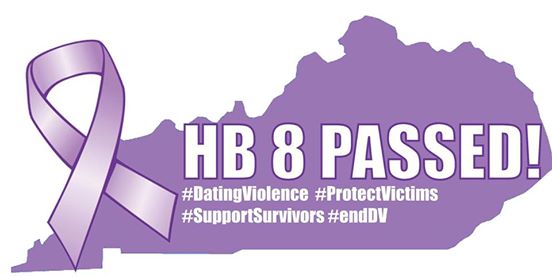
Kentucky stands out on this map, and it’s not for good reason. Every state in red or pink offers some some kind of civil protection for victims of dating violence who have not lived with or had a child with the abuser. Except Kentucky. 

Advocates and legislators have tried for years to address Kentucky’s lack of protections for dating partners. Darlene Thomas, our Executive Director,  talked about the need and efforts toward the law in this article. A bill unanimously cleared the House with the help of Judiciary Chairman John Tilley last year, but it faced an “uphill battle” in the Senate.

The Kentucky General Assembly will convene again in the new year. And advocates will again be working for dating violence protections.

Now’s the time to prepare. If you aren’t sure of the names of your state legislators, this information is available from the Kentucky Legislative Research Center website. You can also call the Legislative Message Line at 1-800-372-7181 to leave a voice mail for state officials. This line is open 8  a.m. to 4:30 p.m. Monday through Friday for most of the year. During General Assembly, the hours are longer.

This post is part of this year’s 17 Days/17 Ways Campaign to end intimate partner abuse.

READ MORE
Blog

17 Days/17 Ways – Reach Out to Someone

By Zach Logue
Student Blogger

Special note: Today’s post is written by a freshman student at the University of Kentucky who is participating in a service learning project.

One way to help end intimate partner abuse is to reach out to someone who you think might be abused. A simple “Hey, is there something wrong?” or “Is there something you want to talk about?” could do the trick.

If you suspect the abuse is escalated, more specific and drastic measures may be necessary. These could include offering a place to stay and helping someone make a plan to flee the abuse safely. You can always call the 24-hour hotline operated by GreenHouse17 for help.

Some of you are probably asking, “How will I know if someone is being abused by their partner?” This is a good question. There are many signs to be looking for that could suggest someone is being abused by a partner.

Some physical signs of abuse include bruises, cuts or scars, marks on the neck, and dental injuries. Common signs of emotional abuse are fearfulness of others, inability to sleep, and depression. A tendency to cancel plans you’ve made or becoming less engaged in your friendship could also signal something is wrong.

These are only a few examples. Every situation is unique. The National Domestic Violence Hotline offers additional suggestions to consider at this link.

Although reaching out to someone who might be experiencing partner abuse may seem like a touchy subject to talk about, it can only help. A simple question reminds them you care about their well-being and will believe them.

So, if you suspect that someone is experiencing partner abuse, just ask and be prepared with resources. Write down the GreenHouse17 24-Hour hotline number to have on hand. That’s 800-544-2022.

Additional thoughts from GreenHouse17 staff: Remember to respect decisions made by someone who his being abused, even if you don’t agree with these decisions. She or he is the only one who truly understands the level of danger faced. Someone who is being abused may leave and return to the abuser several times before permanently fleeing the abuse. Avoid judging this decision, and please don’t threaten to stop being there for someone if they choose to return. This is when they need you most.

This post is part of this year’s 17 Days/17 Ways Campaign to end intimate partner abuse.

READ MORE
Blog

17 Days/17 Ways – Speak Out

“It takes two to tango.”

“They’re having a lovers’ quarrel.”

“What did she do to provoke it?”

We’ve probably all heard friends and family say things like this before. Recent discussions related to the #WhyIStayed and #WhyILeft hashtags address the assumptions of such statements.

These sentiments blame the victim.

Speak out when you hear someone using victim-blaming language. Chances are they don’t know they’re doing it. You can say something like “Did you know the words we choose  sometimes blame victims?”  Then let explain how.

Talking about the power and control associated with intimate abuse is always a good place to start. Your discussion might address how the physical, emotional, and financial violence make it very difficult for someone to leave. Very real threats of escalated violence and harm inform the decisions victims make. Responding to well-meaning questions like “Why do they stay?” with better questions like “I wonder what barriers did they faced to leaving?” can also be effective.
w
Open a dialogue. Help someone understand how language affects perspective, and how the wrong language can be dangerous.


(Video courtesy of CNN from Youtube.)

This post is part of this year’s 17 Days/17 Ways Campaign to end intimate partner abuse.

READ MORE
Blog

17 Days/17 Ways – Think About How You’d Respond

You would call 911 if you saw a drunk driver strike a pedestrian.

You might even call the police if your neighbors are playing loud music.

What if you heard or saw intimate partner abuse?

Many people consider intimate partner abuse to be a private family matter. Bystanders and witnesses often exempt themselves from taking action with thoughts like, “It isn’t my business,” or “I don’t want to get involved.” We believe intimate partner violence is a community issue and requires a community response. This means everyone must respond in safe, constructive ways.

You should never physically intervene. This could be dangerous. Dialing 911 should always be a first response. Setting off a car or property alarm could distract the abuser until law enforcement arrives. Remember to consider your personal needs for anonymity. Many times helpers are reassured if they know their identity will remain confidential.

Take a few minutes today to really think about how you would respond in a safe way. Somebody’s life may depend on it.

(Trigger warning: this video includes a survivor’s testimony that recounts her physical abuse.)

(Video via Youtube.)

This post is part of our 17 Days/17 Ways Campaign to end intimate partner abuse.

READ MORE