del martin and phyllis lyon21 Years

Celebrating Del Martin

“Nothing was ever accomplished by hiding in a dark corner.” 

Del Martin was a feminist activist who played a crucial role in the gay rights and domestic violence movements.  

Martin co-founded multiple organizations that advanced women’s rights: 

  • Daughters of Bilitis in 1955 – the first lesbian organization in the United States 
  • National Organization for Women in 1966 – raised awareness around domestic violence and pushed for legislative changes to protect survivors 
  • Coalition for Justice in 1976 – focused on domestic violence and sexual assault rights 

Martin wrote an article for Women’s eNews in 2002 and said: 

“A lot of people forget that lesbians started the domestic violence movement. Some shelter folks get upset when I say it, but it’s true. The radical women in the 1970s were already disgusted with the system, and when this issue came up, it was something they could really get behind. Suddenly, these women who were into questioning authority became lobbyists–wanting laws changed, wanting to influence policy!” 

In 1976, Martin published ‘Battered Wives,’ an analysis of domestic violence, its seriousness, and how the legal system had failed women. 

She also chaired the Consultation on Battered Women: Issues of Public Policy in 1978, which resulted in The National Coalition Against Domestic Violence being formed and helped create the Domestic Violence Prevention and Services Act in 1984. 

She was first in line to marry her longtime partner, Phyllis Lyon, in 2004 when the mayor of San Francisco, Gavin Newsom, said marriage licenses should be issued to LGBTQ+ couples. The California Supreme Court voided those licenses two months later. 

Phyllis said, “Del is 83 years old and I am 79. After being together for more than 50 years, it is a terrible blow to have the rights and protections of marriage taken away from us. At our age, we do not have the luxury of time.” 

Del and Phyllis were again first in line to get married after the California Supreme Court ruled in favor of LGBTQ+ marriages on June 16, 2008. Mayor Newsom officiated the ceremony.  

Del passed away later that year on August 27 at age 87.  

This Pride Month, we celebrate Del Martin’s legacy and lifelong dedication to domestic violence and gay rights. She continues to inspire activists and advocates for women’s rights.

Further Reading

Click the link above to read more about Del Martin and Phyllis Lyon’s legacy from Medium’s Queer History for the People.

Cover photo credit: Phyllis Lyon and Del Martin Papers (1993-13), Courtesy of Gay, Lesbian, Bisexual, Transgender Historical Society

READ MORE

Battered Women’s Movement

Domestic violence was seldom a topic of public discourse before 1970.

Only 50 years have passed since grassroots rallies, known then as the Battered Women’s Movement, began to raise awareness and call for change. Two decades would pass before the Violence Against Women Act established domestic violence as a federal crime in 1994.  

The Women’s Liberation Movement set the stage for the Battered Women’s Movement, or Domestic Violence Movement, which began in the early 1970s. 

We Will Not Be Beaten 

In the early 1970s, there was little to no help for people who wanted to leave their partners due to intimate partner abuse. Domestic violence was often not taken seriously by law enforcement and the legal system.  

Led by feminist activists and survivors of intimate partner abuse, the Battered Women’s Movement used the slogan, “we will not be beaten.” 

They sought to raise public awareness, provide support and resources for survivors, and advocate for policy changes. The term domestic violence became more widely accepted and was seen as a more accurate and inclusive way of describing abuse in relationships. 

Early 1970s 

There were very few organizations for survivors – the first shelter was Women’s Advocates in Minnesota (est. 1972). They started as a divorce rights information line and as laws changed, raised funds to establish a permanent shelter in 1974.  

1976 

Del Martin published ‘Battered Wives,’ an analysis of domestic violence, its seriousness, and how the legal system had failed women.

In 1978, the grassroots movement evolved into something more formal. 

1978 

The United States Commission on Civil Rights held the Consultation on Battered Women: Issues of Public Policy. Del Martin chaired the meeting and two big events happened: 

  1. The National Coalition Against Domestic Violence is formed. 
  2. The Commission on Civil Rights publishes Under the Rule of Thumb: Battered Women and the Administration of Justice.  
Late 1970s 

Domestic violence shelters begin opening across the United States. Kentucky’s first shelter opened in 1977 and by 1980, there were six. The Kentucky Coalition Against Domestic Violence, recently renamed ZeroV, was founded in 1981 by staff at these shelters.  

1981 

The National Coalition Against Domestic Violence declares a national day of unity on behalf of survivors on October 17th. This eventually becomes Domestic Violence Awareness Month in 1987. 

1984 

President Ronald Reagan signed The Victims of Crime Act (VOCA) into law and established the Crime Victims Fund in 1984. Millions of federal criminal fines and penalties are deposited into the fund each year, and these dollars are granted to public and nonprofit providers for supportive services for victims of crimes. 

The Family Violence Prevention and Services Act supports victims of domestic violence and their children and is the only federal funding source dedicated to domestic violence shelters and programs. 

1981 

The National Coalition Against Domestic Violence declares a national day of unity on behalf of survivors on October 17th. This eventually becomes Domestic Violence Awareness Month in 1987. 

1984 

President Ronald Reagan signed The Victims of Crime Act (VOCA) into law and established the Crime Victims Fund in 1984. Millions of federal criminal fines and penalties are deposited into the fund each year, and these dollars are granted to public and nonprofit providers for supportive services for victims of crimes. 

The Family Violence Prevention and Services Act supports victims of domestic violence and their children and is the only federal funding source dedicated to domestic violence shelters and programs. 

1985  

Tracey Thurman wins a lawsuit that strengthens protections for domestic violence survivors.  

She endured years of physical and emotional abuse from her husband and repeatedly sought help from law enforcement.  

Tracey won the lawsuit against the Torrington Police Department, and it resulted in the Family Violence Prevention and Response Act, or Thurman Law. It required police to make an arrest in domestic violence cases. 

1994  

Congress passes the Violence Against Women Act (VAWA), which was designed to prevent gender-based violence, including domestic violence, sexual assault, and stalking. VAWA provides funding for services of victims such as hotlines, shelters, legal services, and law enforcement training. 

OJ Simpson Trial gets people talking about domestic violence. It was a shift in awareness and public willingness to discuss the issue. 

More Recent Years 

VAWA has been reauthorized a number of times. The most recent Violence Against Women Act Reauthorization Act was signed in 2022 and all current VAWA grant programs are authorized until 2027.  

In 2009, Vice President Biden, who wrote VAWA, announced Lynn Rosenthal as the new White House Advisor on Violence Against Women. 

The “me too” movement, founded by Tarana Burke, was created to highlight the violence experienced by marginalized women. Along the way, it brought international attention to the universal prevalence of sexual violence.   

Although there is increased awareness of domestic violence, better laws and policies, and lots of support services, intimate partner abuse still affects one in three women and one in four men in Kentucky.  

What Can You Do 

We all must do our part to speak out against intimate partner abuse, be active bystanders, and correct inappropriate language when we hear someone victim-blaming. Remember that your voice is powerful

READ MORE
scott with children21 Years

Teen Dating Violence Awareness – Part 2

February is Teen Dating Violence Awareness and Prevention Month.

The theme is, “Be About It,” encouraging everyone to help create a world free from relationship abuse. It’s important to start talking to your children about intimate partner abuse early and often.  

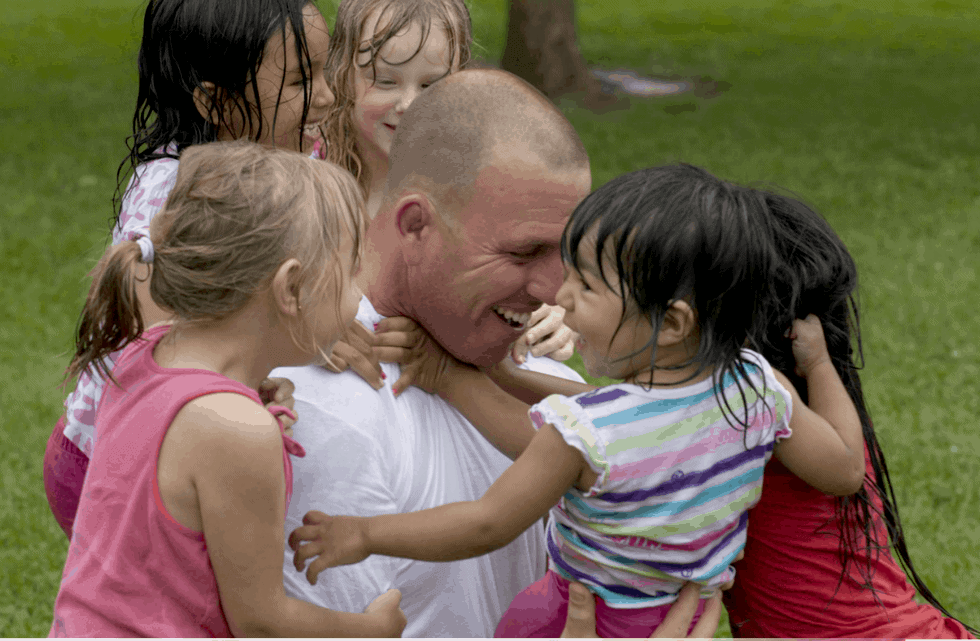
Scott, the program manager for our Children’s Safe Exchange and Visitation, shared how he discusses his work and topics surrounding intimate partner abuse with his son, who is about to turn 13. 

I have been working with traumatized youth in various residential facilities since the winter of 1995. As a parent, I feel that I have an advantage in talking to my son about intense issues since most parents’ “intense” feels like my Tuesday. That’s certainly not entirely true, but that’s how it feels sometimes when I talk to parents who aren’t social work lifers.  

My advantages are compounded by my spouse who is an Intervention Specialist working at VIP [Violence Intervention and Prevention Center] on UK’s campus. Most of her work is centered on sexual assault. 

My son will be 13 this April. He has been subjected to post-work debriefings between my wife and me for the past 12 years. There is not a lot he hasn’t heard. The good news is talking to him about intimate partner abuse, consent, sexual assault, etc. already has some built-in context.  

When we need to approach an issue with him, it usually develops organically. Most of the time he reports from YouTube, or we overhear something he is watching and try to be pretty frank with him.  

Despite the built-in context, it can still be difficult as my son is on the Autism Spectrum and does not give the cues we normally need to tell us the message is received and registered. I am direct, frank, and approach as if I’m talking to a dear friend. 

Sometimes we get cues that he is on board with what we are saying. The other day I trimmed my beard and my son says, “Hey dad, please don’t be mad…but you look like Andrew Tate.”  

I don’t at all, but I know he’s paying attention. 

Call our 24-Hour Crisis Hotline

If you or someone you know is being abused, our advocates are available every day of the year.

READ MORE
Michelle's story bloom cover21 Years

Michelle’s Story

“He would give me a lot of attention, something I wasn’t used to.”

We met in 2009, but we didn’t really start dating until the beginning of the following year. It was a bunch of love bombing at first. Then his drinking started coming out and verbal, mental, and emotional abuse started showing up.

I would try to make friends but couldn’t go anywhere alone. Any appointments, he had to be with me. I wasn’t allowed to go around my family, which I was having trouble with anyway.

They’re also abusive in their own ways. I didn’t really recognize all the stuff that he was doing because it was normalized in childhood. It felt like home.

There were a few times I tried to leave. He would buy me all kinds of jewelry and flowers—doing the whole “I‘ve changed”—until I told him I didn’t want to have sex with him.

He started accusing me of poisoning him. Turned out he was doing that to me. I would get really sleepy and wake up with him raping me. When I finally said no more to the sexual abuse, it was way worse than before.

He had linked my phone to his, so he could see all my messages. He was trying very hard to buy a gun. I feel like he was planning on killing me. He threatened to kill one of our cats right in front of the kids.

My sister found out about this place. I got a DVO (protective order) for three years, no contact. He hasn’t shown up for any court appearances.

I feel all the love for the first time ever in my whole life. I’m soaking it in.

I’m starting a work-from-home job and we’re moving into transitional housing soon. I’m 32 and like, yes, this is what I deserve.

You don’t deserve to be abused. Even if it’s not physical, if you feel like it’s wrong, even if you’re told it’s not—leave. You don’t have to stay.

This is only part of Michelle’s story, in her own words, shared with her permission.

Read the Summer 2022 Issue of Bloom 💜

This is one article from our print newsletter. Follow the link above to read the full issue!

READ MORE
21 Years

Takiyrah’s Story

“It’s not over, but I also know I’m not afraid anymore.”

I was established in Chicago. I had my own childcare facility, condo, and car. I was in college at the time and wasn’t into the whole dating scene.

He was super persistent and very handsome. He just wore me down. It was a typical relationship in the beginning. But there were little red flags.

He was very jealous. I just brushed it off because in the African American community, having a jealous boyfriend is a win. Then he started popping up at my house at 3 in the morning—popping up at my job.

I told him it’s over but found out I was pregnant. He came to my house and said, “You’re stuck with me until the child is 18.”

When I had my daughter, I moved an hour away. It was my first attempt to get away from him. Everything settled, but I began to feel like somebody was watching me.

Then I saw him one day. It was like seeing a ghost. He was living in a building across from mine. He could see my bedroom light and when I came or left.

He started showing up at my apartment. I called the police so many times. I would yell and scream. No one would help, even though my nose is busted and my eyes are black.

By the grace of God, I finally got an EPO and moved to Lexington. On lunch at work, I met this girl who told me about this place. A conversation with a stranger can change your whole life.

I got a call one day at my hotel. It was him. GreenHouse17 moved me to a different hotel and said we have a room at shelter.

They helped me heal physically and mentally. You don’t have to have all the answers. There’s still trauma and pain there. I know that I have a team of people. If I need anything, they will support me and my children. It’s not over, but I also know I’m not afraid anymore.

This is the first time I can tell my story and not cry. I want to show my son that’s not how women are treated. I want my daughter to grow up and recognize red flags. I will not let my children be victims. My strength, my faith, is about breaking the cycle – not just for my family, but for any woman and any woman of color.

This is only part of Takiyrah’s story, in her own words, shared with her permission.

Read the Winter 2022 Issue of Bloom 💜

This is one article from our print newsletter. Follow the link above to read the full issue!

READ MORE
Alex and daughter Maddy from Maid on Netflix21 Years

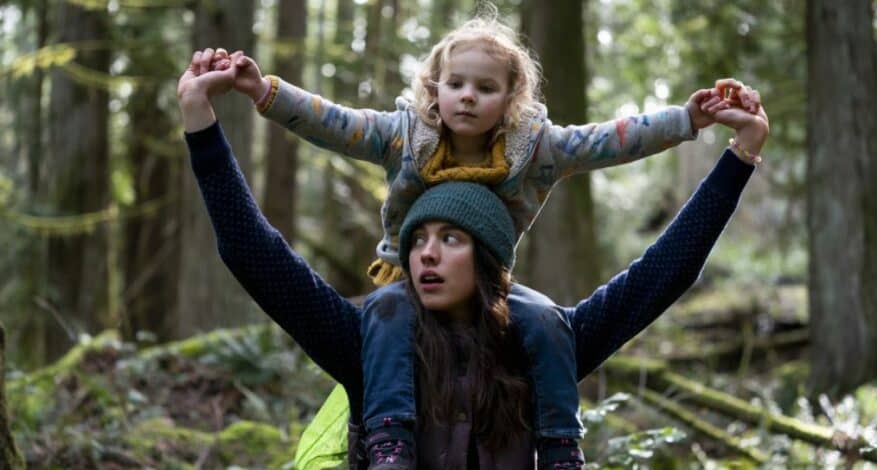
We’re watching Maid on Netflix – and you should too.

Educate yourself, bring awareness to intimate partner abuse, and support survivors.

Why is Maid on Netflix important? Because it shows the real struggles survivors go through to leave their abuser and the obstacles they face if they’re able to leave.  

Alex struggles with the label of domestic abuse and says, “I’d hate to take a bed from someone that’s been abused for real.”  

Verbal and emotional abuse is intimate partner abuse! Throwing things and punching near a partner is physical abuse. It’s terrifying. As Alex’s friend Danielle tells her – abuse escalates over time. 

This series is important because it shows how isolated Alex was when she left. She had no job, no money, no childcare, and no friends because her circle is tied in with her abuser.  

There is a stigma about people who have been abused. People may think – Why didn’t she just leave? Why did she go back?  

Maid does an exceptional job at showing the hurdles survivors go through. The gaslighting, promising he will change this time, how scary court can be, and so much more.  

So, we’re watching Maid on Netflix, and you should too. To educate yourself, to bring awareness to intimate partner abuse, and to support survivors.

Have you wondered if your relationship is healthy? Do you have a friend you suspect could be suffering from physical or emotional abuse? Whether you just want to talk or you’re ready to initiate services, we will answer your call 24 hours a day, every day of the year – 800-544-2022. 

Further Reading

Lakeisha Goedluck writes about Maid and her own experiences with intimate partner abuse.

READ MORE
21 Years

Rose’s Story

“Trauma is not always visible, and it’s easy to get lost.”  

They learn how to gain control over you, get inside your head, and make you feel less than what you really are. I don’t want nobody to ever be in that position, definitely not one of my girls.  

When things started to cave in on me, I went to a local homeless shelter, and from there my caseworker connected me with GreenHouse17. I was very humbled to realize how bad of a situation I was in with him. It helped me to realize he was a toxic person.  

I was able to transition into an apartment on the backside of the facility, and from that moment things started getting better for me.   

A door was opening, which made it possible for me to go back to school and get my Medical Administrative Assistant and EHR certificate. I’m very proud that I graduated in October.  

Though at first, there were a lot of issues because I didn’t have a car. I tried Uber for a bit, but it wasn’t working out. I was able to get a car on payments, and I just paid it off.  

The more power I get back, the more I am able to do for myself.   

Every part of the program was helpful. It is what me and my girls needed. It brings me joy to spend time with my kids. We love watching movies and going to church together. We’re now in pageants together, so we have been doing a lot of those lately.   

I really want to make a difference for anybody that’s been through domestic violence like me. 

I want people who’ve been through my struggle to know that it gets better. You deserve your happiness.  

This is only part of Rose’s story, in her own words, shared with her permission.  

Support Survivors Today

Follow the link above to donate now.

READ MORE
daisy writing21 Years

Daisy’s Story

“For the first time, I finally feel it’s over. This is the first time in 21 years that, inside of me, I know it’s done.”   

I’ve always thought, “Well, he’s gonna get better, he’s going to change, but he’s not going to change. I know this now.  

Since arriving at GreenHouse17 and being safe, it’s my apartment that has brought me the greatest joy. It’s mine. Everything in it belongs to me. On my first night, I sat on my air mattress and looked around and saw that finally this is mine.  

Now, I can have friends. That’s something I’ve not really had in the past. I would have a few girlfriends, but it would always turn into them hating him, and then trying to help me to leave him, and me not being ready to go.  

They asked me all the time, “Well, why don’t you just leave?” Even now, I don’t know. That’s a hard question to ask someone in that sort of relationship. They financially cripple you. Your self-worth is non-existent. There just isn’t any.  

The farm program here was a wonderful thing for me. Many mornings, we would sit there picking beans and just talking and getting it out. The farm is like meditation in a physical form. I loved it.  

When cutting the flowers, I once broke one, and I was devastated. Christina [farm co-manager] said, “Just throw it down, and give it back to the earth.” She convinced me to give it back to nature, and this was one of the best lessons I’ve ever learned in the garden.  

I see myself as self-sufficient, on my own, and strong when looking into the future. I don’t want anything grand like a mansion or Porsche. I just want to be and enjoy the flowers.  

This is only part of Daisy’s story, in her own words, and shared with her permission.     

Support Survivors Today

Follow the link above to donate now.

READ MORE
21 Years

What is a healthy relationship?

You deserve a healthy and loving relationship.

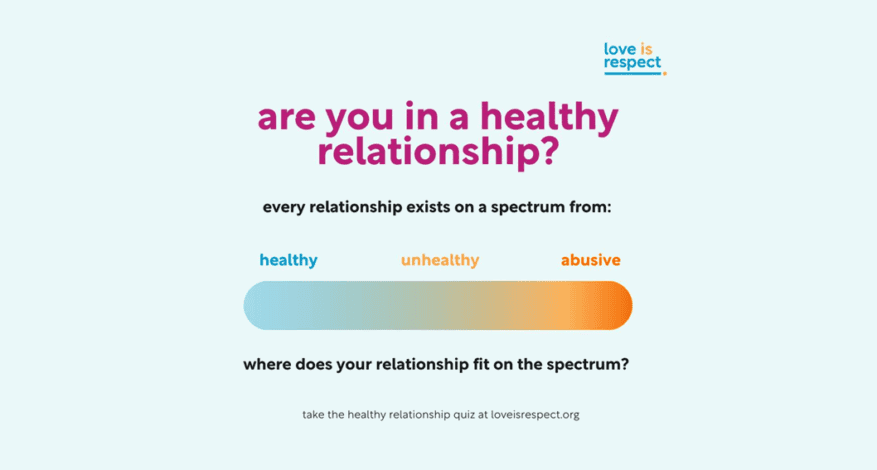
What is a healthy relationship? All relationships exist on a spectrum from healthy to abusive, with unhealthy being somewhere in the middle.

Healthy relationships are rooted in equality and respect. You actively make decisions together, especially when it comes to sex and financial decisions. Time together is enjoyable, and you enjoy your time apart.

Unhealthy relationships means one person is trying to control the other by making most of the decisions. You often spend all of your time together, and there are clear instances of miscommunication or lying.

Abusive relationships have a clear imbalance of power and control. One person is making all of the decisions, which leads to manipulation or isolation. All of your time is spent with your partner, and you don’t feel comfortable or safe discussing the relationship with others.

Do you wonder if your relationship might be unhealthy or abusive? Taking this quiz at loveisrespect.org could help you decide.

Key elements of a healthy relationship include healthy communication, healthy boundaries, mutual respect, and support for one another.
Image source: loveisrespect.org

Is your relationship unhealthy?

24-HOUR HOTLINE 800.544.2022

READ MORE
still image of the Dixie Chicks with the word gaslighter in yelllow and red21 Years

Gaslighter – The Chicks draw attention to intimate partner abuse

Gaslighter, the title track from the 2020 album by The Chicks, reached number one on the country charts and still gets lots of play time.

The song’s title and lyrics also raise important awareness about the dynamics of gaslighting. Maybe you’ve never heard the term gaslighting or wonder exactly what some of the lyric lines mean. We’ve analyzed everything here, verse by verse. Ok, here we go…

[intro]

Gaslighter, denier
Doin’ anything to get your a*s farther
Gaslighter, big timer
Repeating all of the mistakes of your father

“Gaslighting is when your emotions, words, and experiences are twisted and used against you, causing you to question your reality. Once an abusive partner has broken down your ability to trust your own perspective, you may be more vulnerable to the effects of abuse, making it more difficult to leave.” (via the National Coalition Against Domestic Violence)

[verse 1]

We moved to California and we followed your dreams
I believed in the promises you made to me
Swore that night ’til death do us part
But you lie-lie-lie-lie-lied
Hollywood welcomed you with open doors
No matter what they gave you, you still wanted more
Acting all above it when our friends divorced
What a lie-lie-lie-lie-lie
You’re such a

Moving to another town or state, away from the support of family and friends, is often “the first step an abuser uses to convince a victim that their controller is the most important person in the world. By using isolation as a method to cut off family and friends, the abusive partner has a greater amount of control in the relationship.” (via breakthesilencedv.org)

[chorus]

Gaslighter, denier
Doin’ anything to get your a*s farther
Gaslighter, big timer
Repeating all of the mistakes of your father
Gaslighter, you broke me
You’re sorry, but where’s my apology?
Gaslighter, you liar

The term gaslighting comes from the 1938 stage play Gas Light, “in which a husband attempts to drive his wife crazy by dimming the lights (which were powered by gas) in their home, and then he denies that the light changed when his wife points it out.” The movie adaptation in 1944 secured an Academy Award for Ingrid Bergman.  (via National Network To End Domestic Violence)

[verse 2]

You thought I wouldn’t see it if you put it in my face
Give you all my money, you’ll gladly walk away
You think it’s justifiable, I think it’s pretty cruel
And you know you lie best when you lie to you
‘Cause, boy, you know exactly what you did on my boat
And, boy, that’s exactly why you ain’t comin’ home
Save your tired stories for your new someone else
‘Cause they’re lie-lie-lie-lie-lies
Look out, you little

“Financial abuse, while less commonly understood, is one of the most powerful methods of keeping a survivor trapped in an abusive relationship and deeply diminishes the victim’s ability to stay safe after leaving an abusive partner. Research indicates that financial abuse occurs in 99% of domestic violence cases.” (via National Network to End Domestic Violence)

[chorus]

Gaslighter, denier
Doin’ anything to get your a*s farther (Ooh)
Gaslighter, big timer
Repeating all of the mistakes of your father
Gaslighter, you broke me
You’re sorry, but where’s my apology?
Gaslighter, you liar

“When children grow up witnessing domestic violence, they carry a lifelong burden. This early trauma may impact their development, emotional regulation, and mental health. But one of the saddest outcomes is that children who witness domestic violence grow up to have a greater risk of living in violent relationships themselves, whether as victims or as perpetrators.” (via Urban Child Institute)

[verse 3]

Just had to start a fire, had to start a fire
Couldn’t take yourself on a road a little higher
Had to burn it up, had to tear it down
Tried to say I’m crazy, babe, we know I’m not crazy, that’s you
Gaslighting
You’re a li-li-li-liar
Oh, honey, that’s you
Gaslighting
You made your bed and then your bed caught fire

“The Burning Bed” was a 1984 made-for-TV movie starring Farrah Fawcett and Paul LeMat. The movie dramatized the true story of Francine Hughes Wilson, who was found not guilty by reason of insanity after setting her abusive ex-husband on fire as he slept in 1977. The National Coalition Against Domestic Violence was founded the following year. More than a decade would pass before Congress amends the Victims of Crime Act to include victims of domestic violence.

[bridge]

Gaslighter, I’m your mirror
Standin’ right here until you can see how you broke me
Yeah, I’m broken
You’re still sorry, and there’s still no apology

“Many abusers misuse the court system to maintain power and control over their former or current partners, a method sometimes called “vexatious” litigation… to keep their victims coming back to court to face them…The process costs money and time, and can further traumatize victims of intimate-partner violence, even after they have managed to leave the relationship.” (via this article from The Atlantic)

[chorus]

Gaslighter, denier (Yeah)
Doin’ anything to get your a*s farther (Ooh)
Gaslighter, big timer
Repeating all of the mistakes of your father (Gaslighter)
Gaslighter, you broke me
You’re sorry, but where’s my apology?
Gaslighter, you liar

We’re available to talk 24 hours a day, every day of the year, if you or someone you know is being gaslighted by an intimate partner: 800-544-2022.

READ MORE