Blog

Advocate in the Workplace

44% of US adults say they have experienced the effects of intimate partner abuse at work.

Intimate partner abuse affects every part of a survivor’s life, including at work. Abusers often sabotage a survivor’s work-life as a control tactic. 

As an employer, what can you do to support survivors?  

If an employee starts suddenly missing days of work, or coming in late, not being able to concentrate, or shows signs of physical abuse – how are you going to respond? Do you have workplace policies and procedures in place?  

It’s Time Lexington has a great toolkit for employers here.

Legal Obligations 

KRS 209A require health, school, faith, law, social, and other professionals to provide resources and referrals for suspected victims of domestic violence in Kentucky. 

If you have professional interaction with someone you believe to be a victim of domestic violence, dating violence, or abuse, you must give the person educational materials related to the abuse. This information must include how the victim may access domestic violence programs and protective orders. 

Click here for resources and here to schedule a training at your workplace. 

As a coworker, what can you do to advocate for survivors? 

Ask if your workplace has a policy on intimate partner abuse. If they don’t, share this resource from It’s Time Lexington with your company.

You can help make your workplace a safe place for survivors to reach for help. We encourage you to hang these tear-off flyers somewhere in your workplace that have our 24/7 hotline number.

Create a Safe Workspace

If you have a conversation with someone you suspect is being abused:  

  • Communicate your concerns for safety. It’s important to ask what changes could be made to make them feel safer. 
  • Tell the employee that you believe them. Listening, listening, listening, is really important. 
  • Refer the employee to a local domestic violence support agency with trained staff. You can call our crisis hotline, too, to ask for help with supporting an employee. 800.544.2022 
  • Be clear that your role is to try to help and not to judge. Don’t belittle or criticize the reasons a survivor stays or returns to the abuser. 
READ MORE
tear-off sheetsBlog

Crisis Hotline Tear-Off Flyer

Raise awareness & offer support 💜

A local hospital reached out to request a crisis hotline tear-off sheet to hang in their bathrooms. We thought it was a fantastic idea and wanted to share it so other workplaces can also offer this resource. 

The Impact 

By placing these tear-off sheets in your workplace, you can: 

  • Raise Awareness: Help bring attention to intimate partner abuse and our organization’s services. 
  • Offer Support: Provide an immediate, accessible resource for those in need. The tear-off sheets contain our crisis hotline number which is answered 24/7. 
  • Show Compassion: Show your employees and visitors your commitment to their well-being. This small gesture can significantly impact someone’s life.

Download the flyer.

Click on the link above to download a flyer to print or share with others.

READ MORE
people behind table at hollergirl music festivalBlog

Advocates at Music Festivals

Our advocates are dedicated to promoting awareness, resources, and safe spaces at music festivals this summer.🎶

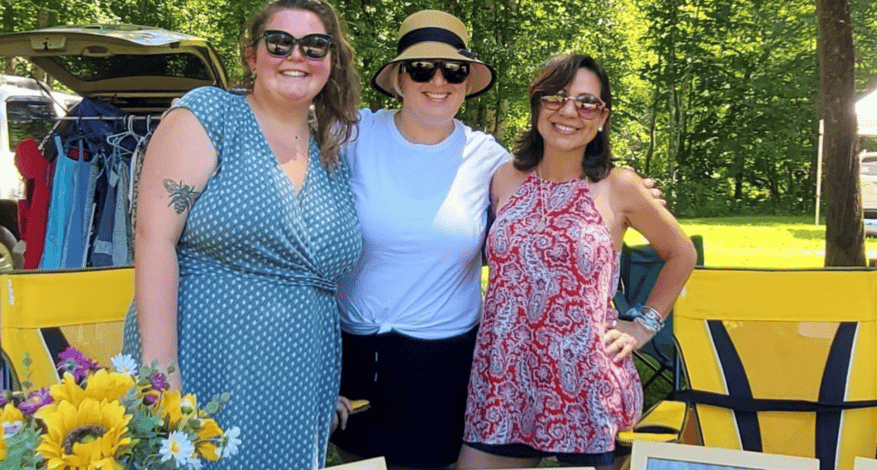
Maybe you’ve seen our booth at one of these big multiday festivals – Railbird [Lexington], Rislofest [Harrodsburg], and HollerGirl [Livingston].  

“Festivals are heightened situations with possible substance use,” explains advocate Alyssa. “By having our booth during the day, people know how to seek help. Our booth serves as a safe space.”

The effort is working.

Intervention stopped one active intimate partner abuse incident. Another festival attendee called and found shelter after the festival. More generally, information about services and support encourages discussion about the mission.

Be an Active Bystander 

August is peak music festival season and Active Bystander Awareness Month.  The Safer Spaces campaign, based in the United Kingdom, suggests the 5 Ds model for festival goers to promote safety:

  1. DIRECT: Consider directly intervening if you feel safe. Communicate that the behavior is not tolerable.
  2. DISTRACT: Take an indirect approach to deescalate the situation. Interrupt what is happening. Maybe you spill your drink or start a random conversation.
  3. DELEGATE: Get help from someone else, possibly security staff, to intervene.
  4. DOCUMENT: Take photos or videos on your phone to document the situation as it’s happening.
  5. DELAY: Find a way to check in with the person who was harmed when it’s safe.
Green Dot Lexington

Green Dot Lexington offers tips, resources, and training to harness your power as a bystander. Choose safety for someone who may be at risk for violence or abuse. Learn more on their Facebook page.

Further Reading

Refinery29 - Sexual Assault Is Still Rampant At Music Festivals. Here's How We Stop It.

READ MORE
spells choose your words with scrabble pieces21 Years

Evolving Terminology – Intimate Partner Abuse

Intimate partner abuse has been called many things over the years.

From battered women to domestic violence, as the understanding of intimate partner abuse has evolved, so has the terminology used to describe it.  

Changing Terminology 

The phrase domestic violence gained wider recognition in the 1970s with the Battered Women’s Movement, or Domestic Violence Movement.  

Historically the term domestic violence implied: 

  • Physical violence 
  • Violence against women in heterosexual relationships 
  • Residing in the same home 
  • Domestic issue 

The legal definition of domestic violence or domestic abuse includes intimate partners but can also refer to family violence, such as violence between siblings or abuse of an elderly parent. 

We know intimate partner abuse can happen in any type of relationship regardless of gender, age, or gender identity. It can be more than just violence, including emotional and financial abuse. 

Our Terminology 

As an organization, we prefer to use the term ‘intimate partner abuse.’ This distinguishes the focus of our mission and avoids historic assumptions common to the term domestic violence.  

Use of the word “abuse” rather than “violence” conveys that one person made the decision to harm another person. 

Academic research and many who advocate for survivors often use the abbreviation IPV for intimate partner violence. But our mission is still a topic that isn’t talked about publicly, and too often is still considered a private matter.  

We say the words because they need to be heard, considered, and talked about. 

Call us anytime.

24-HOUR HOTLINE 800.544.2022

READ MORE

Battered Women’s Movement

Domestic violence was seldom a topic of public discourse before 1970.

Only 50 years have passed since grassroots rallies, known then as the Battered Women’s Movement, began to raise awareness and call for change. Two decades would pass before the Violence Against Women Act established domestic violence as a federal crime in 1994.  

The Women’s Liberation Movement set the stage for the Battered Women’s Movement, or Domestic Violence Movement, which began in the early 1970s. 

We Will Not Be Beaten 

In the early 1970s, there was little to no help for people who wanted to leave their partners due to intimate partner abuse. Domestic violence was often not taken seriously by law enforcement and the legal system.  

Led by feminist activists and survivors of intimate partner abuse, the Battered Women’s Movement used the slogan, “we will not be beaten.” 

They sought to raise public awareness, provide support and resources for survivors, and advocate for policy changes. The term domestic violence became more widely accepted and was seen as a more accurate and inclusive way of describing abuse in relationships. 

Early 1970s 

There were very few organizations for survivors – the first shelter was Women’s Advocates in Minnesota (est. 1972). They started as a divorce rights information line and as laws changed, raised funds to establish a permanent shelter in 1974.  

1976 

Del Martin published ‘Battered Wives,’ an analysis of domestic violence, its seriousness, and how the legal system had failed women.

In 1978, the grassroots movement evolved into something more formal. 

1978 

The United States Commission on Civil Rights held the Consultation on Battered Women: Issues of Public Policy. Del Martin chaired the meeting and two big events happened: 

  1. The National Coalition Against Domestic Violence is formed. 
  2. The Commission on Civil Rights publishes Under the Rule of Thumb: Battered Women and the Administration of Justice.  
Late 1970s 

Domestic violence shelters begin opening across the United States. Kentucky’s first shelter opened in 1977 and by 1980, there were six. The Kentucky Coalition Against Domestic Violence, recently renamed ZeroV, was founded in 1981 by staff at these shelters.  

1981 

The National Coalition Against Domestic Violence declares a national day of unity on behalf of survivors on October 17th. This eventually becomes Domestic Violence Awareness Month in 1987. 

1984 

President Ronald Reagan signed The Victims of Crime Act (VOCA) into law and established the Crime Victims Fund in 1984. Millions of federal criminal fines and penalties are deposited into the fund each year, and these dollars are granted to public and nonprofit providers for supportive services for victims of crimes. 

The Family Violence Prevention and Services Act supports victims of domestic violence and their children and is the only federal funding source dedicated to domestic violence shelters and programs. 

1981 

The National Coalition Against Domestic Violence declares a national day of unity on behalf of survivors on October 17th. This eventually becomes Domestic Violence Awareness Month in 1987. 

1984 

President Ronald Reagan signed The Victims of Crime Act (VOCA) into law and established the Crime Victims Fund in 1984. Millions of federal criminal fines and penalties are deposited into the fund each year, and these dollars are granted to public and nonprofit providers for supportive services for victims of crimes. 

The Family Violence Prevention and Services Act supports victims of domestic violence and their children and is the only federal funding source dedicated to domestic violence shelters and programs. 

1985  

Tracey Thurman wins a lawsuit that strengthens protections for domestic violence survivors.  

She endured years of physical and emotional abuse from her husband and repeatedly sought help from law enforcement.  

Tracey won the lawsuit against the Torrington Police Department, and it resulted in the Family Violence Prevention and Response Act, or Thurman Law. It required police to make an arrest in domestic violence cases. 

1994  

Congress passes the Violence Against Women Act (VAWA), which was designed to prevent gender-based violence, including domestic violence, sexual assault, and stalking. VAWA provides funding for services of victims such as hotlines, shelters, legal services, and law enforcement training. 

OJ Simpson Trial gets people talking about domestic violence. It was a shift in awareness and public willingness to discuss the issue. 

More Recent Years 

VAWA has been reauthorized a number of times. The most recent Violence Against Women Act Reauthorization Act was signed in 2022 and all current VAWA grant programs are authorized until 2027.  

In 2009, Vice President Biden, who wrote VAWA, announced Lynn Rosenthal as the new White House Advisor on Violence Against Women. 

The “me too” movement, founded by Tarana Burke, was created to highlight the violence experienced by marginalized women. Along the way, it brought international attention to the universal prevalence of sexual violence.   

Although there is increased awareness of domestic violence, better laws and policies, and lots of support services, intimate partner abuse still affects one in three women and one in four men in Kentucky.  

What Can You Do 

We all must do our part to speak out against intimate partner abuse, be active bystanders, and correct inappropriate language when we hear someone victim-blaming. Remember that your voice is powerful

READ MORE
three women talkingBlog

Substance Use & Intimate Partner Abuse

Getting and staying sober takes courage, especially if you’re a survivor of intimate partner abuse. 

Substance use should never be a barrier to getting help. 

Women who have been abused are more likely to abuse alcohol and drugs. Some survivors begin drinking more to numb the physical and emotional pain of abuse, while others are forced to drink and use drugs by their abuser.  

A survivor from a partnering Kentucky shelter said, “The drugs are an element of control. If they can keep you on the drugs, using or addicted to the drugs, they’re in control. And it’s like strings on a puppet. They just keep you under control because you want that other hit. You want that other drink.” 

Remember you have survived the trauma of abuse the only way you could. Now, though, the substances are putting your safety at risk and making it harder for your body and mind to heal. With a plan and supportive network, you can live a safe and sober life. 

We can support you along the way with referrals to treatments, specialized support groups for survivors in recovery, and extra help to re-imagine your sober, violence-free life. 

If you need help, call us to talk about your options and days and times of support groups in your area. Our advocates are available 24 hours a day, every day of the year to answer questions, make safety plans, and offer support during your healing journey. 

24-HOUR HOTLINE

800.544.2022

READ MORE
green dot logoBlog

Green Dot

Small actions for a safer city

What is Green Dot?  

First, imagine a map of your city. Red dots are the issues. They’re incidences of things like intimate partner abuse, sexual violence, and elder abuse. Green Dots on the map represent acts of responding to the red dots.  

map with red and green dots

Green Dot works to educate, empower, and unite community members in the collective mission of cultivating a safer city through bystander intervention. It’s a nationally recognized violence prevention strategy focused on preventing power-based personal violence – sexual violence, intimate partner violence, child abuse, elder abuse, bullying, and stalking. 

Green Dot teaches community members how to intervene and cover those red dots with green ones.  

Training 

You can learn to be an active bystander through an online, interactive training led by Dawn Runyon, Green Dot Education Program Specialist at LFUCG.  

This training will teach you how to intervene by using the 3 D’s.  

  • Direct – Being direct with the person doing harm or person being harmed. Asking “are you ok?” or saying “that’s not appropriate.” 
  • Distract – Divert attention away. Start a random conversation, spill a drink, or start your car alarm. 
  • Delegate – Seek assistance from someone else to help. Tell a bartender, a teacher, or start recording a video.  

The community training provides example situations and participants brainstorm on how to Direct, Distract, or Delegate.  

The next training is on Tuesday, April 19th from 3pm to 5pm. To sign up, see the pinned post on their Facebook page 

Show Your Support

How else can you support your community and show you do not tolerate harmful acts?  

  • Wear branded gear in public to show support. You get a free t-shirt for finishing active bystander training!  
  • Share information on social media and use the hashtags #beanactivebystander #knowhow2act #greendotlex. You can find Green Dot on Facebook here and Instagram here.  

Read more!

Exciting news for Green Dot and the community!

READ MORE
anniversary heart kentuckyBlog

Our 17th Anniversary 💜

It’s our 17th anniversary! Federal designation officially naming our organization a nonprofit entity arrived on February 14, 2005. 

Services had begun a year from the old YWCA property, while earlier while matters of governance and partnerships were addressed. Darlene, our executive director, reflects on the night when the decision was made to move to our current location.

“I stood at the back door of an empty building on 40-acres of rural farmland in central Kentucky.  The grass and trees seemed to glow in the golden light of the setting sun. Feelings of safety and possibility warmed my soul as the sun lowered in the sky. 

Although a move was imminent, I was struggling with the decision to relocate our organization so far from downtown Lexington, Kentucky. How will survivors stay connected with community service organizations in the city? Can we engage supporters of the mission from this country location?

I imagined a small group of survivors sitting on the back porch and sharing their stories as day peacefully transitioned to night. This sunset was giving me answers to questions I had been asking for weeks. Before the light dipped below the horizon, the decision was made. This building would become our new home.” 

Although much has changed in the years since the move to our current beautiful 40-acre property in rural Fayette County, hope and possibility continue to inform our mission. 

Read more

Follow the link above for more anniversary stories.

READ MORE
anniversary heart kentuckyBlog

Looking back on 17 Years

It’s our anniversary! Federal designation officially naming our organization a nonprofit entity arrived on February 14, 2005. Today we’re looking back on the past 17 years and recommitting to our mission until the violence ends.

[cool-timeline layout=”default” show-posts=”20″ order=”ASC” date-format=”Y” story-content=”short” skin=”default” icons=”YES” animations=”fadeInUp”]

Read more

Follow the link above for more anniversary stories.

READ MORE