Blog

2025 Farm Reflections

This is a special blog contribution written by Ryan Koch, our nature-based healing advocate.

In January of 2024, my role at GreenHouse17 changed from Residential Program Director to Nature-Based Healing Lead. This change in roles was inspired in part by a book called The Nature Fix by Florence Williams. The big idea in the book is that the natural world is a natural healer, and that spending time in a forest or a garden can reduce stress, boost creativity, enhance interpersonal relationships, and improve cognitive functioning. 

These are some bold health claims, and I would be more critical of these claims if I didn’t feel a lot of them in my own body. I also found that I wanted these health benefits for residents and my fellow staff at GreenHouse17.  

The past two years have been an adventure in learning what helps residents of all ages feel welcome outdoors. This has included a number of experiments and wayfinding.  

For example, we have learned that little fingers are great at planting beans, but just okay at planting radishes due to the size of the seeds. We have learned that while consistency of start times is important to any successful programming at shelter, most of our residents only want to be in a garden if the temperature is between 65 and 82 degrees. We have learned that exciting discoveries can compromise a gardening effort, especially if the work crew is younger than 10 years old.  

Exciting discoveries can include worms, millipedes, spiders, hummingbirds, moths, ladybugs, tomato hornworms, beetles, and many other creatures. Another important lesson is that though these discoveries could (and should!) derail work, young people generally do great at their garden jobs.  

In my curiosity about drawing residents outside I hatched a plan to build a simple pizza oven. It is made of cob (a mixture of clay, straw and sand) and uses a wood fire to heat a cooking surface to 800 degrees for a quick thin crust pizza. So just as the growing season was wrapping up this year, I gathered materials and planned the build.  

Over the course of about six weeks, with the help of 8 residents, 11 advocates and 19 volunteers, all of whom got their hands, and sometimes their feet (cob is mixed by stomping on the ingredients with bare feet) very dirty, the oven took shape and is now ready for cooking.   

It is my vision to continue to entice folks outside through the winter to enjoy hot pizza around a fire ring and to celebrate winter’s dormancy together. 

GreenHouse17 is a safe space to be vulnerable, to grow, and even to play. In my personal recovery, the natural world has been an important teacher and occasional dance partner. I hope that through gardening, land stewardship, woods walks, and wood-fired pizza, our residents will be as moved by our 40-acre farm as I have been.   

This slideshow requires JavaScript.

READ MORE
Blog

Farm Reflections

This is a special blog contribution written by Ryan Koch, our nature-based healing advocate.

As a person who has done some gardening and spent some hot days in a field, I have come to love and deeply appreciate dormancy. Trees shed their leaves, the last of the harvesting ends, and nature agrees that it is time for a break. Dormancy and the shortening daylengths of fall invite us to reflect on our efforts in the garden, what we successfully cultivated, and what work to prioritize for the spring. 

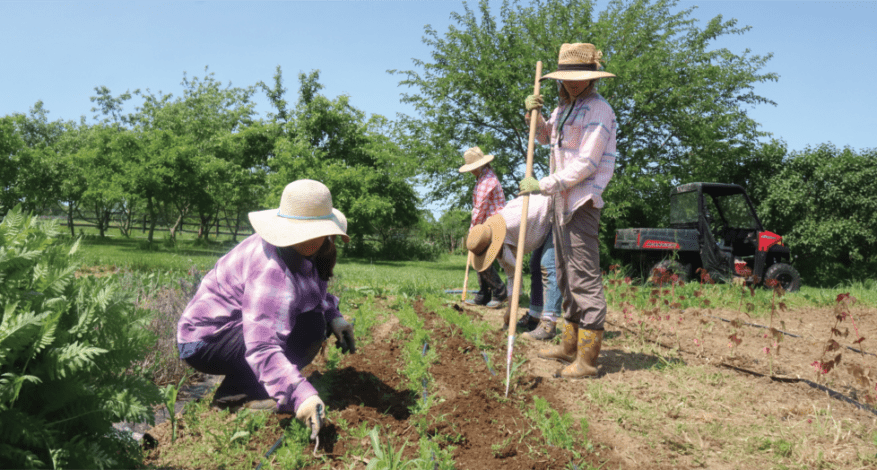
This past year we began offering a twice-weekly gardening group called the “Dirt Crew” to welcome shelter residents of all ages to explore the spring and summer gardens, to assist with the maintenance, and especially to harvest some of the good stuff coming out of our growing spaces.    

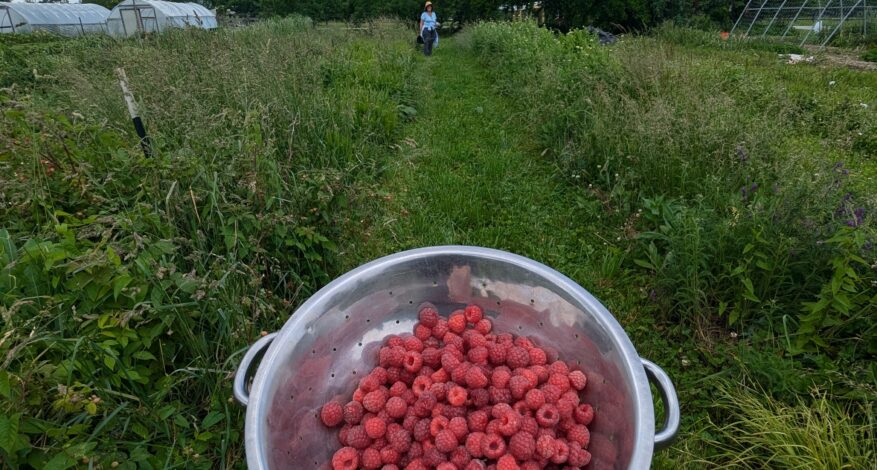
Our harvesting efforts initially focused on the mulberry tree near the garden, and eventually the spinach, radishes, carrots, kale, raspberries, tomatoes, sweet peppers, basil, and sweet potatoes. The Dirt Crew was different from our farm stipend program in the sense that all residents (and staff) were welcome, but that there was no financial incentive to participate.  

The goals were to plant, taste, touch, smell, and experience nature in a new way. These goals encouraged playfulness, curiosity, and delight. And in a lot of ways, we achieved these goals. Families and individuals did come out to join us in the work and often reflected on other gardens they had visited or helped in previously.  

Another happy outcome was that each week from early June until mid-November, some part of our harvest ended up in a meal prepared by and/or served to residents. Our tomatoes, peppers, and sweet potatoes were roasted and added to sauces or soups. Our berries were frozen for smoothies. It was a significant harvest, and a hyper-local farm-to-fork adventure.  

While a bountiful garden cannot come to be without significant planning, some of the sweetest moments in the garden this year were unplanned and unexpected. I remember one morning when hummingbirds buzzed overhead trying to settle a turf disagreement. On another morning, we discovered more than one monarch butterfly chrysalis on the dill plants, their stunning gold dots highlighting the bright spring green pods.  

All of this feels like ages ago. I am writing this on a day when a light dusting of snow is falling, a December day that will not be our darkest or our coldest. But recalling the summer past helps me plan for a new year of mulched rows and happy plants ready to welcome residents who are seeking a peaceful, healing space. A garden, even in dormancy, or maybe especially in dormancy, reminds us that we can always begin again. 

READ MORE
aerial view of farmBlog

Summer on the Farm

“The farm awakens a part of me that makes me feel strong and peaceful.”

The summer months are busy on our 40-acre property. From healthy cooking workshops using vegetables from the farm to trauma-informed yoga under the pavilion, residents reflect and find healing in lots of ways.

Although many adult survivors living in shelter and transitional housing take part in the farm’s six-week curriculum to develop job skills while earning a weekly stipend, the commitment can be too physically or emotionally intensive for survivors who have recently escaped abuse.

“The healing garden allows survivors to be even more involved with our therapeutic horticulture and farm-to-table dining programs,” explains Hattie, a farm advocate. “Residents can help tend to flowers, vegetables, and herbs that will eventually make their way into the shelter.”

This garden is a space reserved for survivors and their children to experience the benefits of nature together without worries of making mistakes. There’s something special about eating a dinner made with ingredients you helped grow and harvest.

“It’s a chance for residents of all ages to come and experience the healing powers of the farm,” adds Ryan, an advocate focused on nature-based experiences. “Going outside is important for our brains and bodies. To come out and spend just a couple hours learning a new skill or interacting with a living thing can really make a difference in a day.”

Nature-based healing on the farm is supported by grants from United Way of the Bluegrass, Lexington-Fayette Urban County Government Extended Social Resources, and BGCF365.

Read the Summer 2024 Issue of Bloom

This is one article from our print newsletter. Follow the link above to read the full issue!

READ MORE
Blog

Nature’s Nourishment

Farm-to-table – Access to nutritious food matters.

With summer in full swing on the farm, plentiful vegetables fill the fields and the shelter’s kitchen.

Hattie and Finley, advocates on our staff, work together to provide nutritious farm-to-table meals for survivors. Sweet potato enchiladas, tomato soup, and big salads are among the favorites of residents.

“Our kitchen garden allows us to incorporate fresh fruits and vegetables into our programming and start a conversation around where our food comes from,” explains Hattie Nunley, farm advocate. “But more importantly, it encourages residents to be present in nature during the healing process.”

Finley Yuttayong, dining and nutrition advocate, recently completed trauma-informed nutrition training and wants to help survivors reflect and establish a healthier connection with their bodies and food.

She says, “We want our kitchen to be a place where survivors can safely take part in the pleasure of food, shame-free, and take a step towards a healed relationship with their bodies.”

Beyond the physical and emotional wounds from intimate partner abuse, research has found long-term health complications. Increased rates of chronic pain, gastrointestinal disorders, and heart disease are common.

Read the Summer 2023 Issue of Bloom 💜

This is one article from our print newsletter. Follow the link above to read the full issue!

READ MORE
strawberry harvest from farmBlog

Autumn Farm Reflections

This is a special blog contribution written by Hattie Nunley, farm advocate.

As the days grow shorter and an autumn chill hangs in the air, now is the perfect time to reflect on this past season of beautiful blooms and fresh produce grown on our farm.

Advocate and survivor hands were busy working in the soil this season as we tended to the many flowers, fruits, and vegetables growing on the farm as part of our Summer Flower CSA and farm-to-table dining.

January began with farm advocates sowing thousands of flower seeds in our indoor growing space before eventually moving them to our greenhouses. In March, we began transplanting cold-loving flowers into our high tunnels and eventually transitioned into the field once the danger of frost had passed.

June rolled around soon enough, and our Summer Flower CSA was in full swing! The CSA saw success once again this year, marking the 10th year of our bountiful bouquets. The 130 members who supported our program enjoyed a variety of vibrant cut flowers, including sunflowers, zinnias, lisianthus, snapdragons, celosia, cosmos, eucalyptus and so much more. All in all, we estimate that over 41,500 stems were harvested and sold from the beginning of June through the end of September!

To celebrate the conclusion of another year of our CSA, we hosted a U-Pick event for the first time since 2019. This was a special occasion where we welcomed 50 community members onto our farm to explore the space and pick flowers grown by survivors.

image
image
image
Farm Programming

Of course, we could not have done any of this without the help of the 16 survivors who participated in our nature-based healing program this year. Also called our Farm Stipend Program, this opportunity connects survivors with the Earth and allows them to process their experiences in a uniquely therapeutic way while also earning money and job-skills training. Participants are involved in every aspect of flower production from seeding to harvest, and we are proud to these are homegrown by survivors.

Survivors not in the stipend program were encouraged to take part in the dozens of farm-related support groups offered this year, with over 330 residents participating in activities such as wreath making, resin art with dried flowers, paper making with pressed flowers, strawberry jam canning, pickle canning, and much more.

Expanding on last year’s goal of providing farm-to-table produce to our shelter residents, over 3,000 pounds of fresh produce were grown this year to fuel our farm-table dining program. Some of the favorite vegetables harvested and used in shelter meals included heirloom tomatoes, yellow squash, zucchini, cucumbers, onions, garlic, potatoes, sweet potatoes, kale, broccoli, and butternut squash.

Our shelter advocate with focus on food and nutrition has been working hard to ensure that we incorporate farm-fresh ingredients grown on the farm in the delicious meals she prepares to spark conversation around nutrition and mindful eating.

We are grateful that our farm programming has continued to nurture the lives of survivors during their time in shelter and raised awareness of our mission throughout the communities we serve. Until next year!

Nature Heals

Follow the link above to read more articles from the farm.

READ MORE
ryan admiring treesBlog

A Healing Canopy of Trees

“I have really sweet kid memories of laying down under a tree and looking up at the sky,” says Ryan Koch, residential program manager.

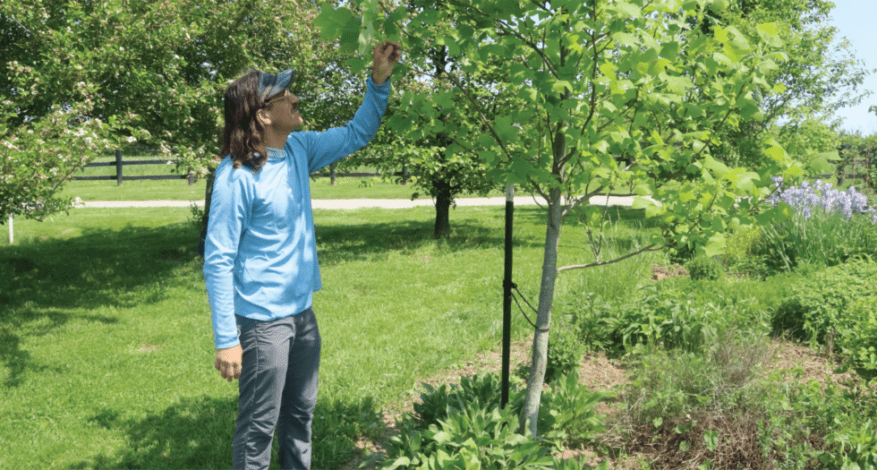
Many trees on the shelter property were planted about ten years ago with the support of a Plant the Planet grant from Kentucky Utilities.

“I like anything that helps a young person have a good, normal kind of day.”

Ryan is committed to planting more for residents to enjoy and reduce our carbon footprint.

He recently installed a big disc swing on a strong black cherry tree in the front lawn. “Moms and kids can all get on it at once and have a carefree moment.”

Michelle’s kids love playing under the trees. “They have a little mudhole out there,” she shares. “The other two really love to swing out front. They don’t like to come in sometimes.”

Volunteers help with the upkeep of the trees and cleared a path into the woods on the edge of the property for nature walks.

Read the Summer 2022 Issue of Bloom 💜

This is one article from our print newsletter. Follow the link above to read the full issue!

READ MORE
Rachel at Center for Research on Violence Against WomenBlog

Empowered by Plants

The University of Kentucky Center for Research on Violence Against Women recently completed a multi-year study of the farm’s effectiveness.

“Our mission is research,” shares Diane Follingstad, Ph.D. “If you have been a victim of violence as a woman, we would like to know the best ways to help you get better, to help you heal.”

Research considered physical, psychological, and functional benefits for survivors who participated in six weeks of programming on the farm. These outcomes were compared to those who lived at the shelter but chose not to participate in farm activities.

“I was really fascinated by the impact that this was having on women who have experienced horrible things in their lives—and their children—and the fact that they were somehow recovering more quickly,” explains Claire Renzetti, Ph.D.

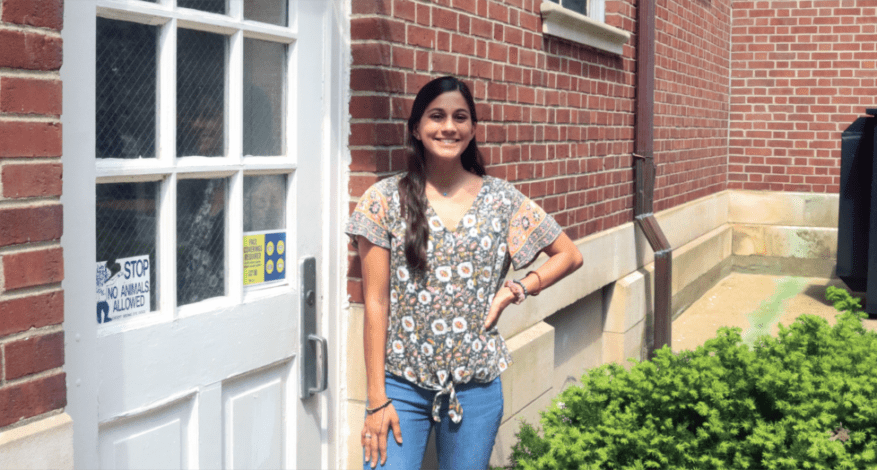
“Plant therapy has been used with lots of vulnerable populations and has shown many positive results,” says Rachel Barczak (pictured), farm research project manager. Although not widely implemented at intimate partner abuse shelters, outcomes from the research could change that.

Rachel is a Ph.D. student in the University of Kentucky Department of Sociology. Research was made possible with grant funding from the U.S. Department of Justice Office of Violence Against Women Research and Evaluation Initiative.

Consideration of the data has begun, and publication of the results is expected soon.

“We talk anecdotally about what happens on the farm, but I think to have research behind it gives us some leverage to expand the program,” says Diane Fleet, GreenHouse17 associate director.

Read the Summer 2022 Issue of Bloom 💜

This is one article from our print newsletter. Follow the link above to read the full issue!

READ MORE
four farmers harvestingBlog

Summer’s Harvest

“Our strawberries taste a whole lot better than the ones that came from the store,” said a survivor living in shelter. “They’re sweeter and juicier.”

There’s nothing better than a home-cooked meal made with food grown with your own hands.

Many meals prepared in the shelter this time of year feature fresh produce from the farm. Lunch is often a big summer salad. Tacos and salsa made with vegetables from the farm are popular, too.

“I’m all about the farm-to-table connection,” shares Hattie Nunley, farm and family advocate. “I think even being able to just supplement onions in a meal is special.”

“The farm was amazing. Getting my hands in the dirt was one of the best experiences of my life,” says Michelle.

Carrots, kale, cabbage, bok choy, broccoli, cauliflower, onions, potatoes, tomatoes, and peppers were seeded in January and planted in April. Several hoop houses on the farm will extend the harvest season through late autumn.

“I was able to be involved in planting the peppers and tomatoes and a discussion of the future planting of okra and squash,” shares a survivor.

Too many in central Kentucky experience food insecurity. Healing the physical and emotional wounds of violence becomes more difficult without access to nutritious food.

Hattie is working to expand the farm’s production to provide survivors with fresh produce even after leaving the shelter. She collaborates closely with the shelter’s dining and nutrition advocate for menu planning.

They also co-facilitate a monthly support group about healthy relationships with food.

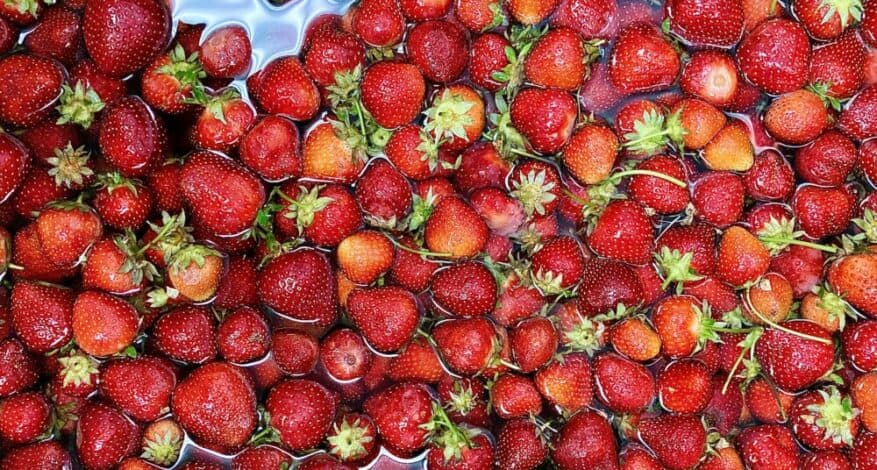
“My favorite thing so far has been harvesting strawberries,” says another survivor. “They were so sweet and delicious.”

Read the Summer 2022 Issue of Bloom 💜

This is one article from our print newsletter. Follow the link above to read the full issue!

READ MORE
Lyndsay with three horsesBlog

Moments of Magic

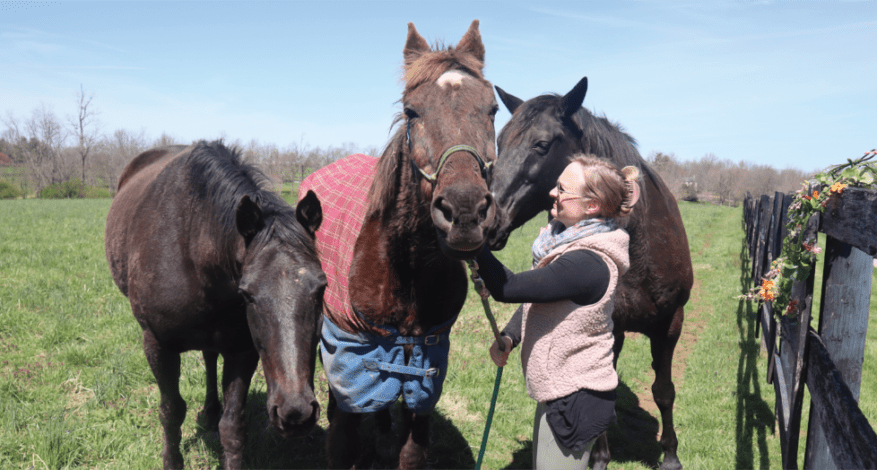
Lyndsay Deaver knows the healing love that only a horse can give.

In 2008, while a student of Midway University’s equine therapy program, she completed her practicum internship at the emergency shelter.

Lyndsay suggested that boarding her horse, JB, on the property, could be meaningful for survivors.

“People really identify with the horses. That’s their magic,” explains Lyndsay. “Horses are the perfect type of mirror. They reflect back to you what you’re experiencing.”

JB still lives on the property today. Saucy and Solo, both horses of Lyndsay’s family members, have joined her.

If a resident or staff person stops along the fence line, it doesn’t take long until one of the horses ambles over to say hello. They often wait near the gate to welcome kids back from school.

“It’s really rewarding to see how many women and kids have enjoyed just spending time with the horses,” Lyndsay adds.

Read the Summer 2022 Issue of Bloom 💜

This is one article from our print newsletter. Follow the link above to read the full issue!

READ MORE
snowy farmBlog

Winter on the Farm

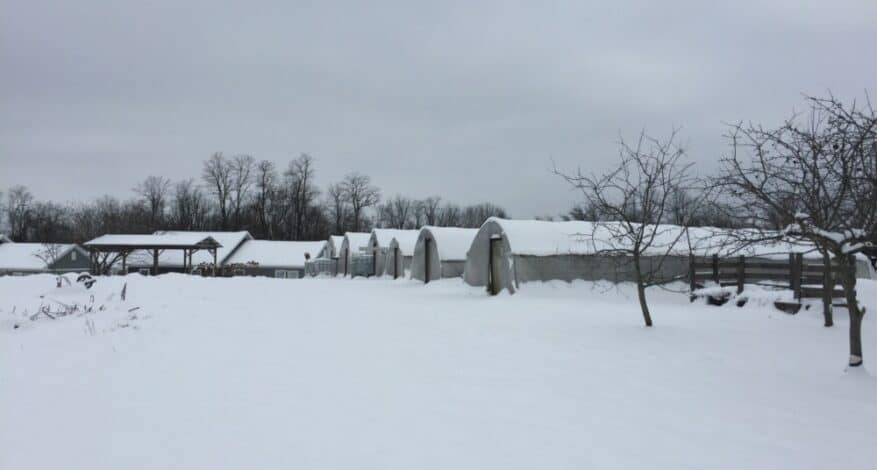
Many of the pictures you see of our farm are filled with blooming flowers in the spring and summer months, but have you wondered what goes on when the temperatures start dropping? Winter on the farm is beautiful and busy! 

Production on the farm stopped at the end of October 2021. The farm team – Christina and Hattie, along with some volunteers – cleared out all of the annual flower beds. They physically removed every stem by hand (!) and mowed the beds down. They also ordered all the flower seeds, vegetable seeds, compost, and tools needed for this upcoming season.    

At the end of the growing season, cover crop was applied to help restore soil health in beds that had been worked throughout the year. Newly-formed beds were covered with landscape fabric to kill grass and weeds and ensure that the soil is protected from erosion and retains carbon.  

In November, they dug up the dahlias to store in crates and save until winter is over. They look like sweet potatoes!

image
image

They also planted bulbs! Anemone and ranunculus, two spring favorites, were planted both in the field and in one of the high tunnels. Garlic was planted, too, and covered with straw for a big harvest in July.  

The high tunnels were cleaned out and repaired, replacing some of the old plastic siding.

image

This month farm staff seeded 14 trays – including yarrow, snapdragons, mountain mint, bupleurum, statice, rudbeckia, and dianthus.

image
image

The main focus now is planning and mapping the farm to figure out where everything will be planted. 

Keep up with the farm!

Follow us on Instagram.

READ MORE