Blog

I’ll Stand by You

“When in court I can’t act as your attorney, but I’m here for you.”

Survivors of intimate partner abuse often need to navigate the legal system for longer-term orders of protection and matters related to safety, custody, and property. This is where legal advocates come in. While the advocate’s role is to restore agency and explain processes, most importantly they stand beside survivors during one of the scariest days of the healing journey.

For many survivors, the court hearing will be the first time they see the abuser since escaping.

Morgan remembers her day in court like it was yesterday. “I instinctively look left, right, and there he is, and he’s got this look on his face that just sent a chill up my spine.”

Stephanie Love, a legal advocate serving survivors in Clark and Powell counties, says, “When in court I can’t act as your attorney, but I’m here for you. I can make sure you have what you need. I can nudge you to remember something. I can act as an extra barrier between you and the abuser.”

Advocates make sure survivors have a plan for their physical and emotional safety after court. They also provide connections to our support groups and local resources for food, clothing, and other needs.

“We get the survivor in touch with their community, so they aren’t just relying on us,” says Stephanie.“You want to have other relationships in your life. If you’ve just got the one relationship, how healthy are you as an individual? It’s the same with survivors.”

Legal advocacy and support services are made possible with federal grant funding from the Victims of Crime Act (VOCA), non-taxpayer funding generated by fines paid by federal criminals. Violence Against Women Act (VAWA) funding also provides survivors with no-cost attorney services and representation for especially difficult cases. The Kentucky Justice and Public Safety Cabinet administers both funding sources.

YOU DESERVE TO BE SUPPORTED.

800.544.2022

Our 24-hour crisis hotline is answered every day of the year. You will speak to a compassionate Certified Domestic Violence Advocate who wants to support your specific needs.

Together, we can develop a safety plan that meets the specific needs of you and your children. Find emergency shelter with us or a partner shelter. Make plans for one of our legal advocates to accompany you to upcoming court appointments. Share information about nearby support groups.

You might not be ready to leave or want to know more to support a friend. That’s ok. We are here to listen, too. Please call us if you or someone you know is being harmed.

Read the fall issue of Bloom!

This is one article from our print newsletter. Follow the link above to read the full issue!

READ MORE
members of heart of kentucky steering comitteeBlog

Heart of Kentucky Steering Committee

The Heart of Kentucky Steering Committee raises awareness & support in Boyle, Garrard, Lincoln, and Mercer counties.

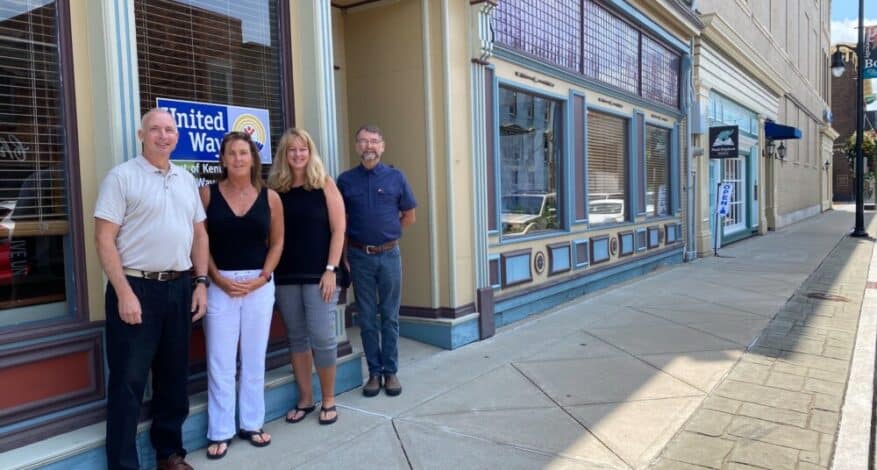
The Heart of Kentucky Steering Committee leads with a spirit of engagement. They formed in February 2019 to build awareness about services to support survivors in the region.

“It has been wonderful to have this committed group supporting our work,” says staff member and Danville resident Mary Trollinger.

Steve Lownds was an inaugural member. He works at Centre College and engaged staff from the school’s Title IX office in awareness projects on campus. “We are excited to continue to bring community members together to spread the word and support survivors,” shares Steve.

The City of Danville has issued proclamations during Domestic Violence Awareness Month the past few years, and the Advocate-Messenger has featured several articles about the mission.

“The steering committee cares about their community and has raised awareness about local services,” says Mary. “You don’t have to travel a long distance to find safety.”

Read the fall issue of Bloom!

This is one article from our print newsletter. Follow the link above to read the full issue!

READ MORE
eliminate barriers in purple speech bubble with mouth and flowersBlog

Advocating in the Workplace

44% of US adults say they have experienced the effects of intimate partner abuse at work.

Intimate partner abuse affects every part of a survivor’s life, including at work. Abusers often sabotage a survivor’s work-life as a control tactic. 

As an employer, what can you do to support survivors?  

If an employee starts suddenly missing days of work, or coming in late, not being able to concentrate, or shows signs of physical abuse – how are you going to respond? Do you have workplace policies and procedures in place?  

If not, visit Workplaces Respond for a model workplace policy and other resources to get a plan in place.

Legal Obligations 

Revisions to KRS 209A effective July 2017 require health, school, faith, law, social, and other professionals to provide resources and referrals for suspected victims of domestic violence in Kentucky. 

If you have professional interaction with someone you believe to be a victim of domestic violence, dating violence, or abuse, you must give the person educational materials related to the abuse. This information must include how the victim may access domestic violence programs and protective orders. 

Click here for resources and here to schedule a training at your workplace. 

As a coworker, what can you do to advocate for survivors? 

See if your workplace has a policy on intimate partner abuse. If they don’t, share this statistic – 44% of US adults say they have experienced the effects of intimate partner abuse at work.

It’s important to have a policy in place for survivors. Share this resource with your company. You can search for resources as a coworker, employer, and advocate. 

Safe Space 

As employers and coworkers, we need to be a safe place for survivors to reach for help. If you have a conversation with someone you suspect is being abused –  

  • Communicate your concerns for the employee’s safety. It’s important to ask what changes could be made to make them feel safer. 
  • Tell the employee that you believe them. Listening, listening, listening, is really important. 
  • Refer the employee to a local domestic violence support agency with trained staff. You can call our crisis hotline, too, to ask for help with supporting an employee. 800.544.2022 
  • Be clear that your role is to try to help and not to judge. Don’t belittle or criticize the reasons a survivor stays or returns to the abuser. 

Read more. Let's make some noise.

This is part of a series for Domestic Violence Awareness Month.

READ MORE
welcome mat in front of doorBlog

Home Safe Home

Starting over after abuse takes time. 

Survivors often leave behind more than a home. Many begin again without furniture, clothing, and a vehicle. Sometimes the abuser has maintained power and control by not allowing a survivor to work or sabotaging their employment. Housing advocates help with these challenges.

“I have no family support and had nowhere to go,” shares a survivor who asked to remain anonymous. “I couldn’t afford daycare to work full-time and provide as a single mom.” 

While beginning to heal from the physical and emotional wounds of abuse, survivors meet with housing advocates to create an individualized housing plan. Early conversations imagine possibilities and identify barriers. 

Legal advocacy, credit repair, benefit applications, and budgeting assistance begin to chip away the obstacles. Partnering organizations provide job search, childcare, and other resources to help make the transition possible. Although each survivor needs different types of housing support, most receive temporary rental and utility assistance. 

Some survivors transition to apartments in their home county or near supportive family and friends, while others move to apartments in KCADV Homes Lexington. Twelve of these units are scattered near downtown Lexington, with easy access to public transportation, and twelve cottage-style duplexes are nestled on the backside of the emergency shelter’s property. 

Our housing team partners with dozens of organizations, companies, and landlords to support survivors during the transition to safe, affordable housing. Jubilee Jobs of Lexington offers job search services; Habitat for Humanity ReStore provides vouchers for furniture purchases; and Wildcat Moving, 2 Dudes Moving, and College HUNKS Moving offer services at no cost or reduced fees. 

“I always felt supported while in the program, and my abuser never knew where to find me. I can feel safe and my children can, too.” 

Read the summer issue of Bloom

This is one article from our print newsletter. Follow the link above to read the full issue!

READ MORE
rainbow over shelter LGBTQIABlog

Intimate Partner Abuse in the LGBTQIA+ Community

You have the right to safety and support – and you deserve a healthy relationship. 

The National Intimate Partner and Sexual Violence Survey finds LGBTQIA+ people experience intimate partner violence at rates similar to, or higher than, heterosexual and cisgender people.  

Isolation is a common tactic of abusers to gain power and control in a relationship. Breaking free from this isolation can be so difficult, especially if family and friends you trusted chose to become estranged when you came out. Other tactics of power and control often include the following:

  • Outing your sexual orientation or gender identity to family and employers. 
  • Portraying the violence as mutual, consensual, or normal. 
  • Denying your gender identity and/or expression. 
  • Hiding or throwing away medications and hormones. 
  • Ridiculing style and fashion that corresponds to your gender expression. 

These threats and manipulations are compounded by a lack of community resources that understand and affirm LGBTQIA+ identities. Fear of further oppression due to intersecting identities make it harder to reach out for support.

Many on our staff are part of the LGBTQIA+ community, and everyone at our organization believes you deserve to feel safe in your intimate relationship.

Have you wondered if your relationship is healthy? Do you have a friend you suspect could be suffering from physical or emotional abuse? Whether you just want to talk or you’re ready to initiate services, we will answer your call 24 hours a day, every day of the year – 800-544-2022. 

Further Reading

For common myths about intimate partner abuse in LGBTQIA+ relationships, follow the link above for an article from the Human Rights Campaign.

READ MORE
sign that says helloBlog

24-Hour Hotline

You deserve to be supported.

Our 24-hour crisis hotline is answered every day of the year. You will speak to a compassionate Certified Domestic Violence Advocate who wants to support your specific needs.

800.544.2022

Together, we can develop a safety plan that meets the specific needs of you and your children. Find emergency shelter with us or a partner shelter. Make plans for an advocate to accompany you to upcoming court appointments. Share information about nearby support groups.

You might not be ready to leave or want to know more to support a friend. That’s ok. We are here to listen, too. Please call us if you or someone you know is being harmed.

You deserve healing.

24-HOUR HOTLINE 800.544.2022

READ MORE
Blog

Life at Shelter

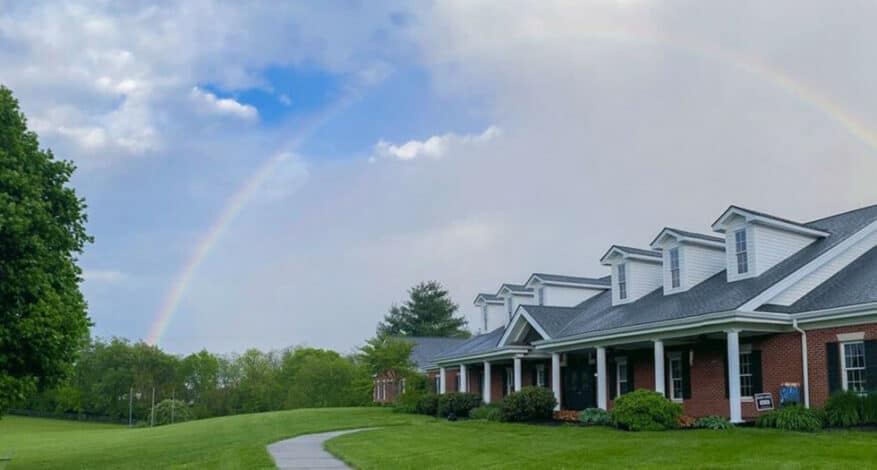
Our Emergency Shelter is surrounded by 40-acres of beautiful farmland in rural Fayette County.

The 17,000 sq ft shelter facility includes a large dining room, art room, sewing room, children’s play areas, and support group meeting rooms. A large covered front porch is lined with rocking chairs, while the back porch overlooks a playground for the children.

“No one told me how special this place is when they tell you to take your kids to a shelter. The first thing you think of is a soup kitchen with people lying all over the floor. If I had known then what I know now, I would have packed my kids up a long time ago.” – Daisy, Former Shelter Resident 

We grow produce for healthy meal preparations and lots of lovely flowers on the shelter’s farm. If you like to keep busy and enjoy nature, you can help on the farm if you choose.

Benches and seating areas are scattered about the property, with one providing a little outdoor library. We’re lucky to have two friendly horses that live in the fields on our property. And a few country cats — all named Morris — have made our property their home, too.

You deserve safety and healing.

24-HOUR HOTLINE 800.544.2022

READ MORE
Safe Scrabble LettersBlog

Safety Planning

This is a list of general safety considerations if you or someone you know is being harmed. 


Every situation is different. Trust your instincts. If something on this list seems like it could cause danger for you, don’t do it. Remember you can call our 24-hour crisis line at 800.544.2022 anytime, any day. Our advocates are available to support you. Together, we can tailor a safety plan to meet your specific needs.

  • If you are in immediate danger, call 911.
  • Use caution if you share a computer or mobile phone with the abuser. It’s impossible to completely clear your browser history. If someone wants, they can monitor the website your visit and the calls you make. If this is a concern, please consider using a computer or phone of a trusted friend.
  • Tell a trusted friend or family member. Abuse thrives in silence and isolation. Telling someone about your situation may be difficult, but taking positive action to end the abuse is easier with support.
  • If you have children, discuss an age-appropriate safety plan for when you are not with them.
  • Choose a code word to use with your children, family, friends, and neighbors so they will know when to call 911 for you.
  • If you have a protective order, keep a copy of the document with you at all times. Make a copy for a trusted friend or family member to keep for you.
  • If you don’t have a protective order, consider filing for one. We can help you with this process. Even though a protective order is not a guarantee of safety, serious consequences for the abuser can result in greater safety for you.
  • Decide and plan where you will go if you need to flee quickly. Practice how to get out of your home safely. If you are in fear for your physical safety, go to the home of a friend, relative, neighbor, or to a shelter for victims of intimate partner abuse.
  • Open a savings account in your own name. Ask a trusted friend or family member if you can use their address for mailings.
  • Prepare a bag with copies of important documents, extra medicine, clothing, and some money. Leave this bag with someone you trust.
  • Decide if you will inform your employer and colleagues at work about your abuser. If possible, provide them with a photograph of this person.
  • Consider having someone escort you to your car or wait with you at the bus stop.

Breathe in courage. Exhale Fear.

24-HOUR HOTLINE 800.544.2022

READ MORE