Blog

2025 Farm Reflections

This is a special blog contribution written by Ryan Koch, our nature-based healing advocate.

In January of 2024, my role at GreenHouse17 changed from Residential Program Director to Nature-Based Healing Lead. This change in roles was inspired in part by a book called The Nature Fix by Florence Williams. The big idea in the book is that the natural world is a natural healer, and that spending time in a forest or a garden can reduce stress, boost creativity, enhance interpersonal relationships, and improve cognitive functioning. 

These are some bold health claims, and I would be more critical of these claims if I didn’t feel a lot of them in my own body. I also found that I wanted these health benefits for residents and my fellow staff at GreenHouse17.  

The past two years have been an adventure in learning what helps residents of all ages feel welcome outdoors. This has included a number of experiments and wayfinding.  

For example, we have learned that little fingers are great at planting beans, but just okay at planting radishes due to the size of the seeds. We have learned that while consistency of start times is important to any successful programming at shelter, most of our residents only want to be in a garden if the temperature is between 65 and 82 degrees. We have learned that exciting discoveries can compromise a gardening effort, especially if the work crew is younger than 10 years old.  

Exciting discoveries can include worms, millipedes, spiders, hummingbirds, moths, ladybugs, tomato hornworms, beetles, and many other creatures. Another important lesson is that though these discoveries could (and should!) derail work, young people generally do great at their garden jobs.  

In my curiosity about drawing residents outside I hatched a plan to build a simple pizza oven. It is made of cob (a mixture of clay, straw and sand) and uses a wood fire to heat a cooking surface to 800 degrees for a quick thin crust pizza. So just as the growing season was wrapping up this year, I gathered materials and planned the build.  

Over the course of about six weeks, with the help of 8 residents, 11 advocates and 19 volunteers, all of whom got their hands, and sometimes their feet (cob is mixed by stomping on the ingredients with bare feet) very dirty, the oven took shape and is now ready for cooking.   

It is my vision to continue to entice folks outside through the winter to enjoy hot pizza around a fire ring and to celebrate winter’s dormancy together. 

GreenHouse17 is a safe space to be vulnerable, to grow, and even to play. In my personal recovery, the natural world has been an important teacher and occasional dance partner. I hope that through gardening, land stewardship, woods walks, and wood-fired pizza, our residents will be as moved by our 40-acre farm as I have been.   

This slideshow requires JavaScript.

READ MORE
two people embracing outside21 Years

Supporting Your Loved Ones

When someone you love is being abused, the dynamics can be very complicated. We sat down with our executive director, Darlene, to share advice on common questions from families of survivors on our hotline.

How should I act around an abuser?

I believe it’s important to be cordial. They’re still human beings. That doesn’t mean you have to condone their behavior or agree with it. It’s important for the survivor, because when you’re not cordial, the abuser may use that as a way to further manipulate and control their partners. 

It’s hard for family and friends. You don’t really know what to do because you don’t want to lose the person you love. 

Families also need to remember they don’t cause somebody to be abusive. The abuser is already using their tactics day in and day out on the person that you love and care about. You can’t create those dynamics, but the abuser will use those dynamics in order to excuse or justify their abuse because they’re really good at playing the victim. 

I know someone has a history of abuse or that my family member is being abused, but most of the extended family doesn’t. Is this something they need to know if they’ll be around for family events?

I think you have to weigh out the pros and cons. Ask yourself how does it benefit everybody to know? Also, sometimes it can be helpful to pull in influential folks. For example, I might not listen to my mother, but let my grandmother tell me something and it might hold more weight.  

But if something has happened, we’re worried for our loved one’s well-being, or they have fled for their safety, at that point in time, it’s important to keep family members informed.  

Sometimes family members might be upset they didn’t know before, and you can remind them that you were honoring your loved one’s request and trying to keep the peace. 

What are some things we can say to let our loved one know we’re here for them?

You can always say, “I know what’s going on. I’m worried for you. I’m worried for your safety. We are always here, and we love you. Don’t ever think you have gone so far that you can’t come out.”  

That’s really important for a survivor to hear. A lot of the time, survivors have defended and stood beside the abuser, and now to say that everybody else was right can be really hard. So, they’ll hold on tighter in many ways.  

So it’s important for family members to avoid saying, “I told you so.” Instead, do your best to communicate that you are there to support them.   

My family member is dating someone with an abusive past. Can they change?

Can people change? I have to believe on some level that yes, people can change. Do abusers change? Not much.  

I think abusers adapt based on the situation they’re in, what they can get by with, and how far they can push. It depends on the survivor, their background, their history, their strengths, and their weaknesses. It can look a little different from one victim to another. 

What most people don’t understand is just because you’re not seeing the abuse now doesn’t mean it’s not going to happen. 

Abusers don’t start to show who they are until they’re comfortable knowing they have you hooked enough. That could be living together, marriage, or your first child together. The abuser is grooming, waiting, and learning about their situation. Then they’re going to adapt to that as necessary.  

It’s very rare you see an abuser accept responsibility for their behavior and they have a tendency to blame everybody else for why it happened.  

What if they’re in therapy? Can that help them change?

When an abuser goes to therapy – whether individual or couples therapy – they’re often treated for anger issues if the therapist doesn’t understand intimate partner abuse, histories of domestic violence, power and control, and other dynamics.  

Sometimes while in therapy, abusers learn different behavioral options versus physical violence. That is not addressing the realities of intimate partner abuse, which is power-based violence.  

Domestic violence is not about anger. People who abuse their intimate partners are often able to control their anger with other family members, at work, and with friends.  

I’m not going to say somebody can’t make a decision to be different. They can, but not without some serious intervention and ownership over their behavior, with some real years showing they can do things differently. In my career, I find that a rare occasion for those that do harm. 

How does an abuser manipulate those around the survivor?

If an abuser can manipulate the loyalty or care of the family, then they’ll do that. And if that doesn’t work, they’ll turn around and undo it. But if it works, that’s the best-case scenario for the abuser.  

Survivors might think, “If everybody else likes them, then I must be crazy. Everybody else likes him, he’s a good guy. They’re all saying he’s trying, but yet these things are happening to me. So maybe it’s me, maybe I should be better.”  

Family and friends need to stay focused on behavior, not words.  

Abusers can say all the right things like, “Oh, I just love them. I’m trying my best. I’m not perfect, but she’s not perfect either.” They know what to say, how to minimize, how to charm people, how to twist the story around just enough to make people have some doubts.  

And people are imperfect. Survivors are imperfect so they will not always say the right things or do the right things or react to whatever people perceive is the right way of what they’re experiencing. 

Is there anything else you would like to share about complicated family dynamics?

I’d like to validate that it’s a difficult balancing act because it sometimes calls into question your own integrity.  

As family, sometimes we have to say to ourselves, ‘I can play this game, because I love you and I’m going to be here for you no matter what. It’s going to get difficult. This person might try to tear you from me, or try to interfere in our relationship, but I’m not going to let it happen.’  

I want to tell families it’s hard. You can’t swoop in and try to be the hero because it could further do harm to your family member or isolate them even more. 

It feels a little helpless sometimes. What we need to be careful of, though, is not to blame the victim. It’s everybody’s individual journey, and all you would hope for in the end, when they really need you, they’re going to come to find the people they feel safest with.  

I think you should be telling the people you love what you see and are worried about in a supportive way. The message should be, “I’m worried for you. You deserve better. If you’re that uncomfortable, you need to trust yourself. What do you need help with?” 

If people have questions, they should call our hotline. You don’t have to be the victim to call hotlines and get support.

READ MORE
february is tdvam love is respectBlog

Teen Dating Violence Awareness Month

1 in 3 teens will experience physical, sexual, or emotional abuse by someone they are in a relationship with before they become adults.

February is Teen Dating Violence Awareness Month and this year’s theme is, “Respect That.”  

Action Guide 

Love is respect has shared an Action Guide which includes information about: 

  • Respect in a relationship 
  • Respecting differences 
  • Addressing stigma 
  • Identifying disrespectful behavior 
Talk to Young People 

Having conversations now can help young people in your life identify red flags when it’s time to start dating. Share and model what a healthy relationship looks like – talk about respect, equality, safety, and trust. 

Suggest this quiz from love is respect for a relationship checkup. Discuss these warning signs from a partner.       

Make sure they know dating abuse is not just physical. Dating abuse is a pattern of behavior used to gain or maintain power and control over a partner. Read about the different types of abuse  

Share This Number 

Share this number – 22522 – and let them know they can text “loveis” to check in with a peer advocate about their relationship. 

We are here for you 24/7.

Call our hotline at 800-544-2022 to speak with a trained advocate.

READ MORE
national stalking awareness month 2025Blog

January is National Stalking Awareness Month

Stalking often co-occurs with intimate partner violence and can be an indicator of other forms of violence.  

All stalkers can be dangerous. Intimate partner stalkers, compared to acquaintance and stranger stalkers, are more likely to threaten and physically assault the victim and their friends and family.   

Diane’s Story 

Our associate director shares her story about an ex-partner who stalked her in college. 

Learn More 
  • Call our 24-hour Crisis Hotline to speak with an advocate: 800-544-2022.   
  • Follow SPARC – Stalking Prevention, Awareness & Resource Center.   
  • Use SHARP (Stalking and Harassment Assessment and Risk Profile) to get a narrative of a situation and safety strategies. 
For Employers 

44% of US adults say they have experienced the effects of intimate partner abuse at work. Raise awareness and offer support by placing these tear-off sheets in your workplace. Read this blog post about creating a safe workspace.

Call us 24/7 at 800-544-2022

If you or someone you know is being stalked, reach out to a trained advocate.

READ MORE
Blog

Farm Reflections

This is a special blog contribution written by Ryan Koch, our nature-based healing advocate.

As a person who has done some gardening and spent some hot days in a field, I have come to love and deeply appreciate dormancy. Trees shed their leaves, the last of the harvesting ends, and nature agrees that it is time for a break. Dormancy and the shortening daylengths of fall invite us to reflect on our efforts in the garden, what we successfully cultivated, and what work to prioritize for the spring. 

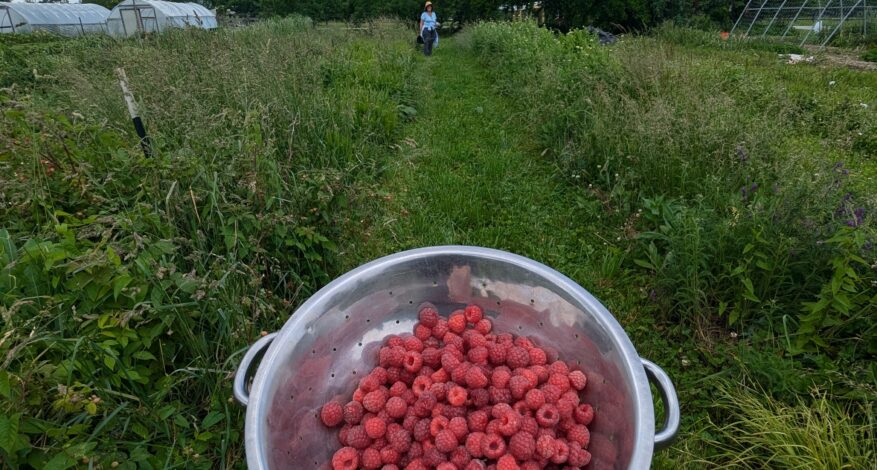
This past year we began offering a twice-weekly gardening group called the “Dirt Crew” to welcome shelter residents of all ages to explore the spring and summer gardens, to assist with the maintenance, and especially to harvest some of the good stuff coming out of our growing spaces.    

Our harvesting efforts initially focused on the mulberry tree near the garden, and eventually the spinach, radishes, carrots, kale, raspberries, tomatoes, sweet peppers, basil, and sweet potatoes. The Dirt Crew was different from our farm stipend program in the sense that all residents (and staff) were welcome, but that there was no financial incentive to participate.  

The goals were to plant, taste, touch, smell, and experience nature in a new way. These goals encouraged playfulness, curiosity, and delight. And in a lot of ways, we achieved these goals. Families and individuals did come out to join us in the work and often reflected on other gardens they had visited or helped in previously.  

Another happy outcome was that each week from early June until mid-November, some part of our harvest ended up in a meal prepared by and/or served to residents. Our tomatoes, peppers, and sweet potatoes were roasted and added to sauces or soups. Our berries were frozen for smoothies. It was a significant harvest, and a hyper-local farm-to-fork adventure.  

While a bountiful garden cannot come to be without significant planning, some of the sweetest moments in the garden this year were unplanned and unexpected. I remember one morning when hummingbirds buzzed overhead trying to settle a turf disagreement. On another morning, we discovered more than one monarch butterfly chrysalis on the dill plants, their stunning gold dots highlighting the bright spring green pods.  

All of this feels like ages ago. I am writing this on a day when a light dusting of snow is falling, a December day that will not be our darkest or our coldest. But recalling the summer past helps me plan for a new year of mulched rows and happy plants ready to welcome residents who are seeking a peaceful, healing space. A garden, even in dormancy, or maybe especially in dormancy, reminds us that we can always begin again. 

READ MORE
tear-off sheetsBlog

Crisis Hotline Tear-Off Flyer

Raise awareness & offer support 💜

A local hospital reached out to request a crisis hotline tear-off sheet to hang in their bathrooms. We thought it was a fantastic idea and wanted to share it so other workplaces can also offer this resource. 

The Impact 

By placing these tear-off sheets in your workplace, you can: 

  • Raise Awareness: Help bring attention to intimate partner abuse and our organization’s services. 
  • Offer Support: Provide an immediate, accessible resource for those in need. The tear-off sheets contain our crisis hotline number which is answered 24/7. 
  • Show Compassion: Show your employees and visitors your commitment to their well-being. This small gesture can significantly impact someone’s life.

Download the flyer.

Click on the link above to download a flyer to print or share with others.

READ MORE
a black dog smiling with eyes closedAnnual Report

Pawsome Pets

Imagine facing the difficult decision to escape abuse and leave your beloved animal behind. It can be an impossible choice.

The National Coalition Against Domestic Violence estimates 40% of victims delay leaving an abusive partner because they’re worried about the well-being of their pets.

Sweet dogs and cats with their humans are a familiar sight at our shelter, but the facility isn’t a good fit for every pet. Our advocates are committed to safety planning for animals and providing options for furry friends to thrive.

Partnerships with the Humane Society, Animal Care & Control, and regional veterinarians help with medical needs. Confidential fosters can often care for pets while the lives of their humans stabilize after surviving abuse. Love for your animals should never be a barrier to fleeing abuse.

Read the Spring 2024 Issue of Bloom

This is one article from our print newsletter. Follow the link above to read the full issue!

READ MORE
Annual Report

Safe Visits & Exchanges

Community gathered to celebrate the expansion of children’s safe exchange and visitation to Boyle, Garrard, Lincoln, and Mercer counties.

Safe exchange and visitation services reduce risks for violence while encouraging healing and healthy parent-child connections.

Members of Grace Church have generously provided secure space for services to be delivered in the children’s wing of their facility in Danville. A partnership with the Danville Police Department promotes additional safety during service operation hours.

“Our goal is for visitations and exchanges to be predictable, reliable, and positive for children and youth.” says Darlene Thomas, executive director. “Safety and confidentiality are critically important for best practice.”

Remarks from Grace Church Lead Pastor Shane Terrell, Danville Mayor J.H. Atkins, The Honorable Bruce Petrie, and The Honorable Trille Bottom offered evidence for the need and support of the services.

”When we come together as a community, it speaks volumes to survivors and their children,” says Darlene. “It tells survivors and their children that they have value, they have worth, they deserve safety.”

Expansion of services was made possible through the support of Grace Church, Heart of Kentucky United Way, the Hudson-Ellis Fund at Blue Grass Community Foundation, The City of Danville, Boyle County Fiscal Court, Mercer County Fiscal Court, and other state and federal funding.

Up to 30 weekly visits and exchanges can be facilitated from the new Danville service location. Children’s safe exchange and visitation services are also offered in Lexington and Georgetown. Click here for more information.

Read the Spring 2024 Issue of Bloom

This is one article from our print newsletter. Follow the link above to read the full issue!

READ MORE
baby laying on back in bedAnnual Report

Supporting Young Survivors

Fleeing intimate partner abuse is always scary, especially with children or while pregnant.

Beyond the risk for increased violence, parenting survivors leave behind their home and necessities to care for their children. More than a hundred children of survivors live at the shelter each year.

Although every child responds differently to violence, research finds common age-specific responses that advocates can help parents navigate. Services include healing play, school advocacy, and support groups for parents and kids. Advocates also help with birth plans for pregnant survivors and, if asked, are by their sides at the hospital when it’s time.

The International “We Serve” Foundation has contributed almost $20,000 to support the needs of parenting survivors and children. Funds have provided essential items including cribs, beds, car seats, and more.

Dr. Melappalayam Vijayaraghavan, founder of the International “We Serve” Foundation, passed away last year. Dr. Viji’s legacy of kindness and generosity for survivors will be remembered.

Read the Spring 2024 Issue of Bloom

This is one article from our print newsletter. Follow the link above to read the full issue!

Photo by Emma Bauso from Pexels

READ MORE
grace churchBlog

Children’s Safe Exchange and Visitation Expansion

Children’s safe exchange and visitation services reduce risks for violence while encouraging safety, healing, and healthy parent-child connection.

Community members gathered on November 10th to support the launch of children’s safe exchange and visitation services for residents of Boyle, Garrard, Lincoln, and Mercer counties. Grace Church provides space for services in the children’s wing of their facility in Danville.  

“As a church, we are committed to helping the families and children of our community flourish,” says Director of Ministries Kevin Dilbeck. “We are excited to open some of our space to help meet this need.” 

More than 400 petitions for orders of protection are filed in the region each year. Escalation of violence is common when victims separate from abusive partners, and many survivors and their children risk harm while fulfilling custody agreements.  

When visitation between child(ren) and the non-custodial parent/guardian must be supervised, for example by court order, a specially trained monitor is present to document observations during the visitation. Safe exchanges oversee the transition of child(ren) between parents/ guardians if off-site visitation is allowed. 

No contact occurs between custodial and non-custodial parties during visitations or exchanges. Up to 30 weekly visitations and exchanges will be facilitated when the program reaches operational capacity.  

Shannon Weer coordinates the newest location. Shannon is a former professor in the criminal justice department at Eastern Kentucky University, where she taught domestic violence issues. 

“We provide a space for families where children are kept safe,” Shannon says. 

We commit to prioritizing the safety of children and adults; honoring the nature, dynamics, and impact of intimate partner abuse; and treating participants with fairness and respect. 

READ MORE