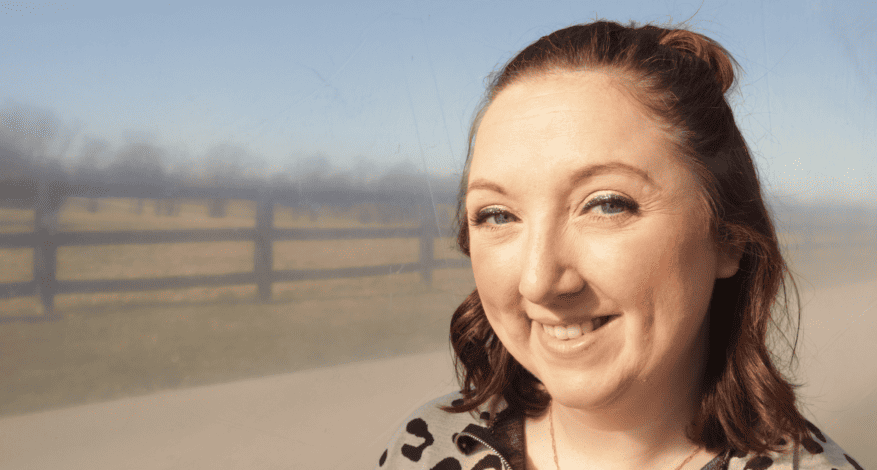
chelsea standing in front of shelter doorsBlog

Chelsea’s Story

“My life and stability were up in the air.”

“I was scared and trying to leave this relationship, trying to get my ducks in a row.”

A childhood friend recommended she reach out to ask for our support. Chelsea was pregnant when she and her two-year-old arrived at the emergency shelter.

“I would spend hours walking back and forth on the front porch with him in the stroller. I couldn’t get him to sleep and didn’t want to disturb anyone else.”

Those first few weeks living at the shelter weren’t easy. “I was hyper-focusing and overthinking everything. It was really hard on me, being pregnant. My life and stability were up in the air.”

She stayed busy on purpose. “I was meeting with my advocates, doing therapy, or doing groups. We would talk about boundaries and red flags, green flags, even yellow flags.”

During one group activity, Chelsea remembers writing a note to her younger self and a note to the abuser to burn in the fire pit.

“We talked about boundaries and coping techniques. I always did the mommy and me groups. We did pottery and yoga under the pavilion.”

Although put on bed rest during the final weeks of her pregnancy, Chelsea was able to move into a transitional apartment with her son before the baby was born.

“I was in a different elementary school each grade of the year, so stability was always a real big thing for me. When I had kids, I knew that I needed stability because I never had it.”

When asked what she would tell someone coming into shelter, Chelsea said, “You’re here to heal. If you come with that mindset, you’re going to feel like a totally different person. But remember not everybody is going to understand what you went through, so not everybody deserves your story.”

This is only part of Chelsea’s story, in her own words, shared with permission.

Read the Summer 2024 Issue of Bloom

This is one article from our print newsletter. Follow the link above to read the full issue!

READ MORE
Shannon standing in hoop houseBlog

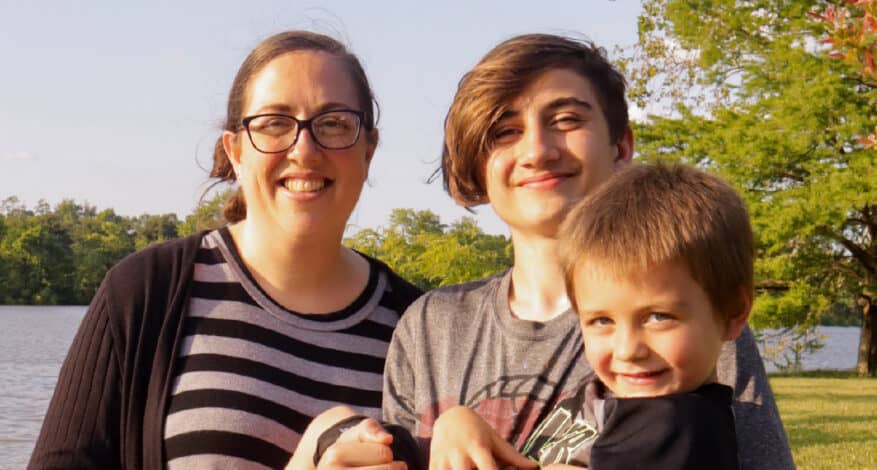
Shannon’s Story

“This was someone I let into my heart, my home, and around my son.”

I met this guy who seemed like a southern gentleman, and he made me feel like the luckiest girl in the world. It truly seemed like a dream come true.

Until it all changed in the blink of an eye. One night, he was going through my messages on my phone without my consent.

When I asked what he was doing and why, his demeanor and tone changed. He turned into a completely different person.

He gets in my face and says, ‘You need to delete all social media right now. You’re not allowed to talk to anybody.’

I was in shock. I wasn’t sure how to respond and said, ‘You need to pack your stuff and leave.’ I wanted to defuse the situation before it got any worse.

Over the next couple of days, we talked on and off. One moment the conversation would be, ‘I’m so sorry, I’ll change,’ and the next he would say, ‘You’re a whore, you’re a slut.”

It only got worse from there. It started with a property complaint, and two officers showed up.

I got a restraining order. That made him even more mad. He told me to watch out because he had connections that would come after me.

He was also texting my family members and reaching out to my friends on Facebook, saying none of this was his fault. He placed all the blame on me.

He got ahold of my child’s father. They collaborated to file an emergency protective removal order, trying to take my son away from me.

We had to go to court multiple times, and everything got dismissed. The judge ordered my abuser to get help and mandated he take classes.

I still can’t say I feel safe, but it does get better. My chapter ends with my advocates staying by my side and guiding me through all of this.

I hope that my story will help just one person. What scares me the most is the unknown and the thought of this happening to somebody else.

I want to share my story. The more we talk about our experiences and share our stories, the more we get to spread awareness.

Don’t be afraid to ask for help. Reach out before it’s too late.

This is only part of Shannon’s story, in her own words, shared with permission.

Read the Spring 2024 Issue of Bloom

This is one article from our print newsletter. Follow the link above to read the full issue!

READ MORE
shelby and her two kidsBlog

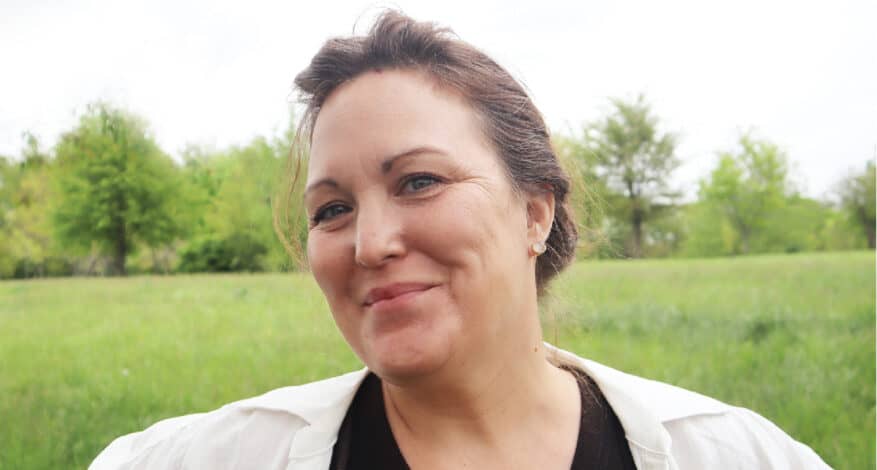
Shelby’s Story

“Once you see that red flag, you can’t change the color of it.”

He was in recovery and was already one year sober when I met him. We were doing great. Then he slipped up and that’s when I saw his worst demons.

When he put his hands on me the first time, and my children were standing there, I just couldn’t do it.

I watched my mom go through it with her second husband and I didn’t ever want my kids to have those memories of watching their mom be hurt by someone who supposedly loves them.

I went to my friend’s house and looked up shelters. That’s when I came across GreenHouse17. They immediately got a room for me. I was there for six months about five years ago.

At first it was really scary. I’m a single mom with two children. The women across the hall were open-armed and welcoming and so were the staff. It was nice because the transition was hard.

I started going to the groups as much as I could. I learned about self-care and how important that is. Meditation classes helped relieve so much anxiety. I learned about healthy relationships, how to set boundaries, and knowing what red flags look like. And understanding once you see that red flag, you can’t change the color of it. It’s never going to go away.

I utilized everything I could. I started a car savings account. I heard about transitional housing and asked how to apply. It took me some time because I didn’t have my birth certificate.

I finally got the news it was moving day. It was right before the big [shelter] remodel, so I asked if I could have the dresser from my room. I still have it in my new apartment.

They gave me a basket with household supplies and a gift card to ReStore where I found a couch. My church furnished the rest of my apartment.

It’s ok to ask for help because you never know where it’s going to get you. If I hadn’t asked for help, if I hadn’t reached out to GreenHouse17, I wouldn’t be where I am today. I can say they saved my life.

This is only part of Shelby’s story, in her own words, shared with her permission.

Read the Fall 2023 Issue of Bloom

This is one article from our print newsletter. Follow the link above to read the full issue!

READ MORE
Kristen McClureBlog

HollerGirl – Healing Harmonies

“Women need to be heard.”

The second annual HollerGirl festival happens later this summer. The female-forward weekend highlights Kentucky music, workshops, and art to promote healing.

“I wanted to combine the idea of highlighting female musicians with raising awareness for domestic violence survivors,” explains Kristen McClure, festival founder. “I am a survivor myself, and my grandmother was also a survivor.”

The lineup includes Senora May, Bee Taylor, Mama Said String Band, Possum Queens, and many more. The festival also features family-friendly activities for kids of all ages.

“It’s super important to me that my children, they’re 8 and 10, are surrounded by this sort of atmosphere where women are empowered,” shares Kristen. “The festival encourages kids to be strong and understand their place on this earth and what it means to be a good person.”

kristen and her kids

Workshops will be offered on music and writing. Local women artisans, vendors, and food trucks will join the event, and a silent auction will raise funds for our mission.

Alyssa, an advocate on our staff, hosted an informational table at last year’s event. “The festival was a safe and comfortable space for people to ask for resources and share their stories, experiences, hopes, and dreams,” she shares. “This year, we plan to bring more advocates, more resources, and our brand-new loom to create a community art project.”

alyssa on bench

HollerGirl takes place August 11 – 13 at Rockcastle Riverside in Livingston, KY. Tickets include tent and car camping for the weekend. Find all the details and purchase tickets on their website – HollerGirl.live

Read the Summer 2023 Issue of Bloom 💜

This is one article from our print newsletter. Follow the link above to read the full issue!

READ MORE

Battered Women’s Movement

Domestic violence was seldom a topic of public discourse before 1970.

Only 50 years have passed since grassroots rallies, known then as the Battered Women’s Movement, began to raise awareness and call for change. Two decades would pass before the Violence Against Women Act established domestic violence as a federal crime in 1994.  

The Women’s Liberation Movement set the stage for the Battered Women’s Movement, or Domestic Violence Movement, which began in the early 1970s. 

We Will Not Be Beaten 

In the early 1970s, there was little to no help for people who wanted to leave their partners due to intimate partner abuse. Domestic violence was often not taken seriously by law enforcement and the legal system.  

Led by feminist activists and survivors of intimate partner abuse, the Battered Women’s Movement used the slogan, “we will not be beaten.” 

They sought to raise public awareness, provide support and resources for survivors, and advocate for policy changes. The term domestic violence became more widely accepted and was seen as a more accurate and inclusive way of describing abuse in relationships. 

Early 1970s 

There were very few organizations for survivors – the first shelter was Women’s Advocates in Minnesota (est. 1972). They started as a divorce rights information line and as laws changed, raised funds to establish a permanent shelter in 1974.  

1976 

Del Martin published ‘Battered Wives,’ an analysis of domestic violence, its seriousness, and how the legal system had failed women.

In 1978, the grassroots movement evolved into something more formal. 

1978 

The United States Commission on Civil Rights held the Consultation on Battered Women: Issues of Public Policy. Del Martin chaired the meeting and two big events happened: 

  1. The National Coalition Against Domestic Violence is formed. 
  2. The Commission on Civil Rights publishes Under the Rule of Thumb: Battered Women and the Administration of Justice.  
Late 1970s 

Domestic violence shelters begin opening across the United States. Kentucky’s first shelter opened in 1977 and by 1980, there were six. The Kentucky Coalition Against Domestic Violence, recently renamed ZeroV, was founded in 1981 by staff at these shelters.  

1981 

The National Coalition Against Domestic Violence declares a national day of unity on behalf of survivors on October 17th. This eventually becomes Domestic Violence Awareness Month in 1987. 

1984 

President Ronald Reagan signed The Victims of Crime Act (VOCA) into law and established the Crime Victims Fund in 1984. Millions of federal criminal fines and penalties are deposited into the fund each year, and these dollars are granted to public and nonprofit providers for supportive services for victims of crimes. 

The Family Violence Prevention and Services Act supports victims of domestic violence and their children and is the only federal funding source dedicated to domestic violence shelters and programs. 

1981 

The National Coalition Against Domestic Violence declares a national day of unity on behalf of survivors on October 17th. This eventually becomes Domestic Violence Awareness Month in 1987. 

1984 

President Ronald Reagan signed The Victims of Crime Act (VOCA) into law and established the Crime Victims Fund in 1984. Millions of federal criminal fines and penalties are deposited into the fund each year, and these dollars are granted to public and nonprofit providers for supportive services for victims of crimes. 

The Family Violence Prevention and Services Act supports victims of domestic violence and their children and is the only federal funding source dedicated to domestic violence shelters and programs. 

1985  

Tracey Thurman wins a lawsuit that strengthens protections for domestic violence survivors.  

She endured years of physical and emotional abuse from her husband and repeatedly sought help from law enforcement.  

Tracey won the lawsuit against the Torrington Police Department, and it resulted in the Family Violence Prevention and Response Act, or Thurman Law. It required police to make an arrest in domestic violence cases. 

1994  

Congress passes the Violence Against Women Act (VAWA), which was designed to prevent gender-based violence, including domestic violence, sexual assault, and stalking. VAWA provides funding for services of victims such as hotlines, shelters, legal services, and law enforcement training. 

OJ Simpson Trial gets people talking about domestic violence. It was a shift in awareness and public willingness to discuss the issue. 

More Recent Years 

VAWA has been reauthorized a number of times. The most recent Violence Against Women Act Reauthorization Act was signed in 2022 and all current VAWA grant programs are authorized until 2027.  

In 2009, Vice President Biden, who wrote VAWA, announced Lynn Rosenthal as the new White House Advisor on Violence Against Women. 

The “me too” movement, founded by Tarana Burke, was created to highlight the violence experienced by marginalized women. Along the way, it brought international attention to the universal prevalence of sexual violence.   

Although there is increased awareness of domestic violence, better laws and policies, and lots of support services, intimate partner abuse still affects one in three women and one in four men in Kentucky.  

What Can You Do 

We all must do our part to speak out against intimate partner abuse, be active bystanders, and correct inappropriate language when we hear someone victim-blaming. Remember that your voice is powerful

READ MORE
Blog

Remembering Lydia

“There is no normal anymore. You’ve got to find the new normal.”

Early last year Lydia Cassady, a devoted mother of two teenagers and a certified clinical medical assistant, was preparing to flee the abuse of her longtime partner and father of her children. He shot and killed her in their home before she could escape.

“She was my younger sister, 12 years younger, so I kind of raised her,” shares Carolyn Hundley. “She was so creative. If you needed something fixed, an outfit made, a wreath for your door, she could do it. Lydia’s middle name was Blanche, so everyone called her Aunt B. She had tons of stuff with bumblebees on it.”

After Lydia’s death, Carolyn received a call from an advocate at our shelter offering support. Darlene, our executive director, attended Lydia’s funeral service, an act of kindness that touched the family.

With every tragic loss, loved ones are left to grieve while trying to understand the violence.

I think with anyone close to these situations, there’s guilt,” shares Carolyn. “My grief group tells me all the time, ‘you can go there, but you can’t stay there.’”

“We find the strength to continue without her by working to help others.”

The Kentucky Coalition Against Domestic Violence estimates domestic homicides related to intimate partner abuse increased 86% last year. Please reach out to our 24-hour hotline if you or someone you know is being abused: 800.544.2022.

image
image
image
READ MORE
scott with children21 Years

Teen Dating Violence Awareness – Part 2

February is Teen Dating Violence Awareness and Prevention Month.

The theme is, “Be About It,” encouraging everyone to help create a world free from relationship abuse. It’s important to start talking to your children about intimate partner abuse early and often.  

Scott, the program manager for our Children’s Safe Exchange and Visitation, shared how he discusses his work and topics surrounding intimate partner abuse with his son, who is about to turn 13. 

I have been working with traumatized youth in various residential facilities since the winter of 1995. As a parent, I feel that I have an advantage in talking to my son about intense issues since most parents’ “intense” feels like my Tuesday. That’s certainly not entirely true, but that’s how it feels sometimes when I talk to parents who aren’t social work lifers.  

My advantages are compounded by my spouse who is an Intervention Specialist working at VIP [Violence Intervention and Prevention Center] on UK’s campus. Most of her work is centered on sexual assault. 

My son will be 13 this April. He has been subjected to post-work debriefings between my wife and me for the past 12 years. There is not a lot he hasn’t heard. The good news is talking to him about intimate partner abuse, consent, sexual assault, etc. already has some built-in context.  

When we need to approach an issue with him, it usually develops organically. Most of the time he reports from YouTube, or we overhear something he is watching and try to be pretty frank with him.  

Despite the built-in context, it can still be difficult as my son is on the Autism Spectrum and does not give the cues we normally need to tell us the message is received and registered. I am direct, frank, and approach as if I’m talking to a dear friend. 

Sometimes we get cues that he is on board with what we are saying. The other day I trimmed my beard and my son says, “Hey dad, please don’t be mad…but you look like Andrew Tate.”  

I don’t at all, but I know he’s paying attention. 

Call our 24-Hour Crisis Hotline

If you or someone you know is being abused, our advocates are available every day of the year.

READ MORE
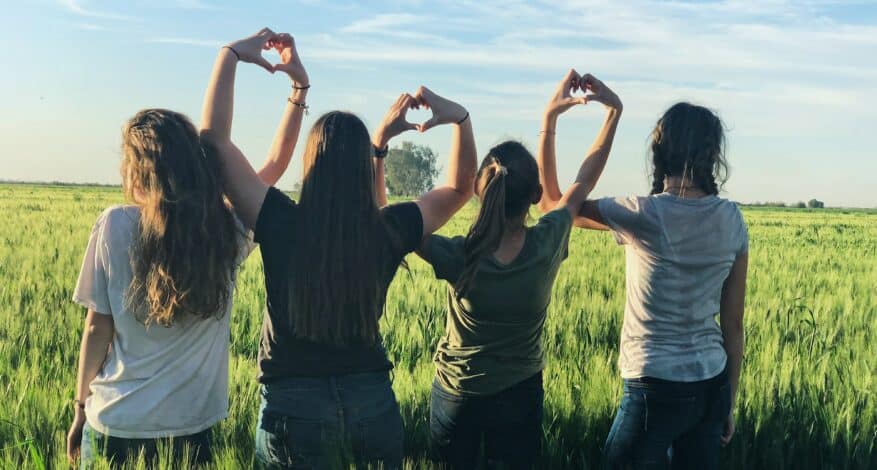
teenagers field making hearts with handsBlog

Teen Dating Violence Awareness – Part 1

February is Teen Dating Violence Awareness and Prevention Month.

TDVAM has me thinking about my past and my daughter’s future.  

It wasn’t until I started working at GreenHouse17 that I really reflected on my first high school relationship. And even more so after having my daughter in September.  

Although the details are fuzzy now, I remember enough to know I should’ve left my boyfriend when I was a sophomore/junior in high school. He showed many signs of abuse, even though he never hit me.  

He would physically restrain me by holding my wrists and yell at me in the halls of school. He also went on a hunger strike when I broke up with him at one point and convinced our friends it was a romantic gesture until I gave up and returned to the relationship. 

When I take this quiz about my high school relationship – Is your relationship healthy? – from love is respect, I get this response – 

 “If you scored 5 or more points, you are definitely seeing warning signs and may be in an abusive relationship. Remember the most important thing is your safety — consider making a safety plan. You don’t have to deal with this alone. Contact us at loveisrespect.org” 

I don’t want my daughter to end up in an unhealthy relationship. I want her to be knowledgeable about red flags and feel comfortable discussing these things with trusted people in her life. 

Start Early 

I plan to start talking to my daughter early. Starting discussions about bodily autonomy is important to prevent sexual abuse and later intimate partner abuse. This article from Rady Children’s Hospital discusses seven steps to teach your children about bodily autonomy. 

This parent guide from love is respect is a good resource to get conversations started with your teenager. 

Conversations 

I asked Scott, the program manager for our Children’s Safe Exchange and Visitation, how he discusses topics surrounding intimate partner abuse with his son, who is about to turn 13. 

Read what he shared here. 

Call our 24-Hour Crisis Hotline

If you or someone you know is being abused, our advocates are available every day of the year.

Photo by Melissa Askew on Unsplash

READ MORE
Blog

Handmade Experiences

“I know whoever purchases our products will enjoy them as much as I’m liking being a part of making them.”

These words were written by a survivor who participated in handmade programming on the farm that surrounds our emergency shelter. The process of making products encourages healing and economic opportunity in a safe and caring environment.

“It was a lifeline,” shares Jewell. She received a weekly stipend while working to develop, make, package, and label handmade products. “This program gave me some kind of purpose, or drive, or reason to get up. There were a lot of days that I contemplated not coming and realized this is where I needed to be.”

Another survivor who prefers to remain anoymous shares how the process is helping her: “I’m making new friends and getting outside of my comfort zone—and really starting to enjoy myself again.”

Your purchase of Handmade by Survivors products makes these stories possible. Every product we make is natural, nourishing, and creates hope for brighter tomorrows.

“I feel peaceful and my mind feels clear,” shares LaTonya, who helped develop, test, and make the Benevolence variety of cold-process soap. She describes the experience as very therapeutic.

“Whatever the task may be, I feel empowered to take on that task, and that is so uplifting for me.”

Shop Handmade by Survivors

Follow the link above to shop now.

READ MORE
Blog

Christy’s Story

“I felt like there wasn’t a way out.”

Nine years ago, I was being physically, sexually, and psychologically abused. I felt like there wasn’t a way out.  

I never thought I would experience domestic violence. I remember saying, “I dare someone to put their hands on me,” and I often judged women who stayed in abusive relationships by saying, “Why don’t they just leave!” But here I was feeling trapped in the very same situation I had judged others. 

I felt as if I didn’t have a way to get help after physical assaults. I was too afraid to call the police because, sadly, both partners in a same-sex relationship are often arrested during domestic violence situations.  

Unfortunately, LGBTQ+ survivors experience additional barriers to getting the help needed to leave an abusive relationship. They’re often met with victimizing legal services, so there is a hesitancy to use them. 

I have a teaching license and was pursuing ordination within a Christian denomination to become a minister, so an arrest on my record would put my career hopes in jeopardy.  

Thankfully I had friends who helped me leave the relationship and begin the process of healing. One of my friends connected me with an agency that would help me deal with my sexual assault.  

I was afraid at first to disclose to the crisis counselor that my partner was another woman. I was so afraid that I would encounter homophobia and that this organization only helped heterosexual persons. Fortunately, the counselor was amazing, and my fears never materialized.  

Today I am an outreach advocate at GreenHouse17 helping others find healing and hope. I facilitate our weekly LGBTQ+ domestic violence support group. I believe everyone deserves to live a life free from abuse.

I’m a certified Spiritual Director. I’ve also published a collection of poetry called Hanging Onto Jesus: A Gay Christian’s Journey of Reclaiming Faith. I share poems from each stage of my life – childhood and teenage shame, ex-gay years, and final acceptance of my identity as a queer woman of faith.

This is only part of Christy’s story, in her own words, shared with permission. 

Read the Fall 2022 Issue of Bloom

This is one article from our print newsletter. Follow the link above to read the full issue!

READ MORE