vine and branch sign with flowersBlog

Vine & Branch

Celebrating our newest Summer Flower CSA pickup partner!

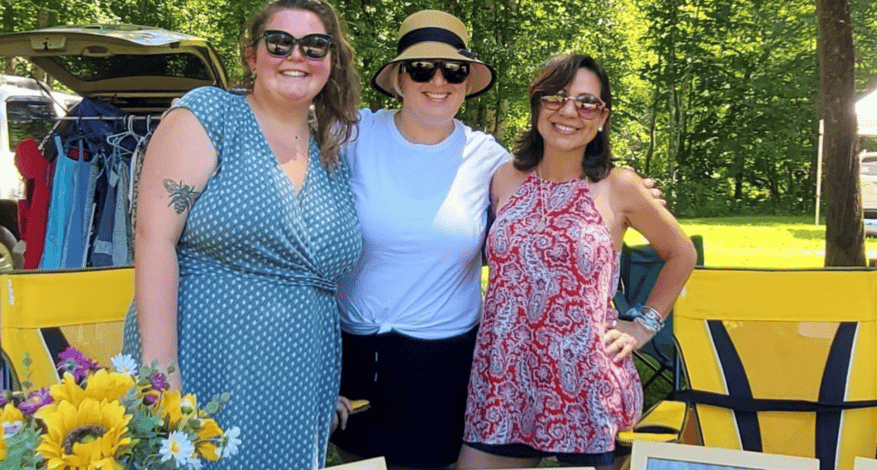
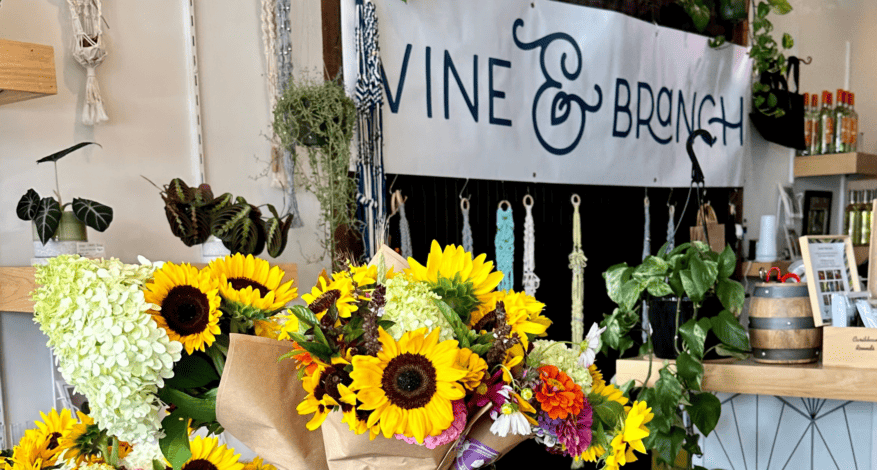
Every week from June to September, CSA members can pick up their flower shares from five locations. Vine & Branch, a wine and plant shop on Southland Drive in Lexington, is our new pickup partner. 

Owner Ally Hanna was familiar with us before our partnership. She is a survivor of intimate partner abuse. Although Ally never used our services, her therapist shared the emergency shelter address in case she needed a safe space.    

Vine & Branch celebrated its two-year anniversary in December 2022. Ally offers Free Friday Wine Tastings from 4:30 – 6:30. She will also help you pick the perfect wine. I was recommended a Mosketto Delicate Sweet Red, which was bubbly, fruity, and delicious!   

Check out this video on our Instagram for a mini tour of the shop!  

READ MORE
dv8 tableBlog

Creative Partnership – DV8 Kitchen

DV8 Kitchen serves more than delicious baked breads and meals. They provide second-chance employment opportunities for people who are in substance abuse recovery.

The restaurant’s dining tabletops at the Broadway and East End locations in Lexington feature lovely artwork related to the missions of nonprofit organizations in the recovery community.

Hope Center, Chrysalis House, New Vista, and many more of our community partners have painted tables. By featuring these missions, DV8 Kitchen raises awareness about the variety of services available in Lexington to everyone who visits their restaurants.

You can dine at a table designed and painted by Kristin Carpenter, our communications specialist, at both locations.

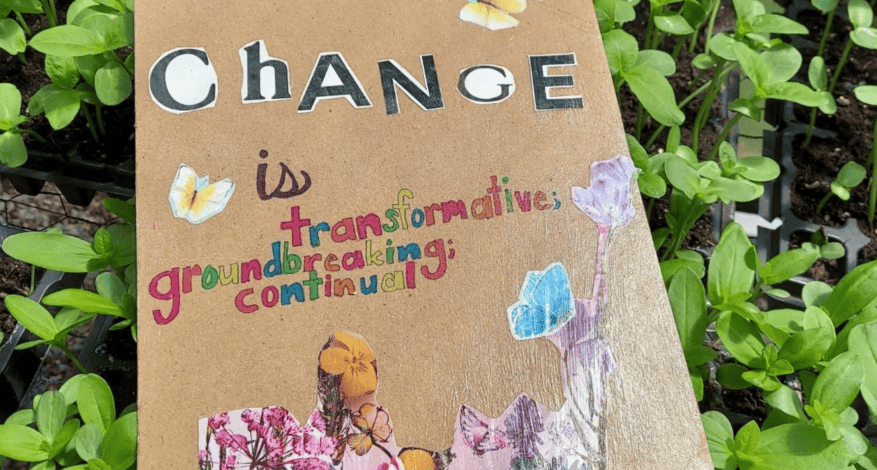
“Our tables show greenhouses, a place to grow and start fresh, surrounded by flowers and vegetables we grow on our farm to represent nourishment, growth,
and change,” shares Kristin.

“Conversations need to happen more often about intimate partner abuse, and I hope they happen around these tables.”

Getting and staying sober takes courage, especially if you’re a survivor of intimate partner abuse. National research finds that 67% of women accessing substance use treatment services have suffered intimate partner abuse during the previous six months.

Read the Summer 2023 Issue of Bloom 💜

This is one article from our print newsletter. Follow the link above to read the full issue!

READ MORE
Blog

It’s Time.

“I’m a visible advocate for survivors. It’s time for you to be too.”

Lexington Mayor Linda Gorton speaks this call to action in the “It’s Time” awareness campaign organized by the Domestic and Sexual Violence Prevention Coalition.

Featuring dozens of Lexington leaders, the campaign began last year in response to an increase in the city’s domestic violence homicides.

“It’s time for all of us to make sure we speak up, step in, and stand up for victims of domestic abuse,” says Chief Lawrence Weathers, Lexington Police.

Vice Mayor Dan Wu, Judge Melissa Moore Murphy, and Sheriff Kathy Witt lend their voice to the campaign. Several of our organization’s board members, staff, and partners are also featured.

“It’s time to believe survivors of all ages,” says Tanya Torp, executive director of Step By Step. “Those at the greatest risk for violence are between the ages of 14 and 24.”

The campaign debunks the myth that domestic violence is a private issue. It’s our responsibility to have open conversations, model ways people can support survivors, and hold people who abuse accountable.

“It’s time for us to acknowledge that victim blaming and shaming does nothing but harm us all,” says Sam Fore of Tuk Tuk Sri Lankan Bites.

“Acknowledging the realities of abuse shouldn’t be limited to when it’s convenient or when it’s someone you don’t know.”

“It’s time to know that your words matter,” says Pat Gerhard, owner of Third Street Stuff & Coffee. “Respect is super important. We are all one community.”

Look for the campaign across social media and visit the website for information about services, support, conversations, and prevention.

Read the Summer 2023 Issue of Bloom 💜

This is one article from our print newsletter. Follow the link above to read the full issue!

READ MORE
Laurie at St. Michael'sBlog

Faith & Flowers – St. Michael’s

Every summer Sunday, the altar of St. Michael the Archangel Episcopal Church displays flowers grown by survivors on our farm.

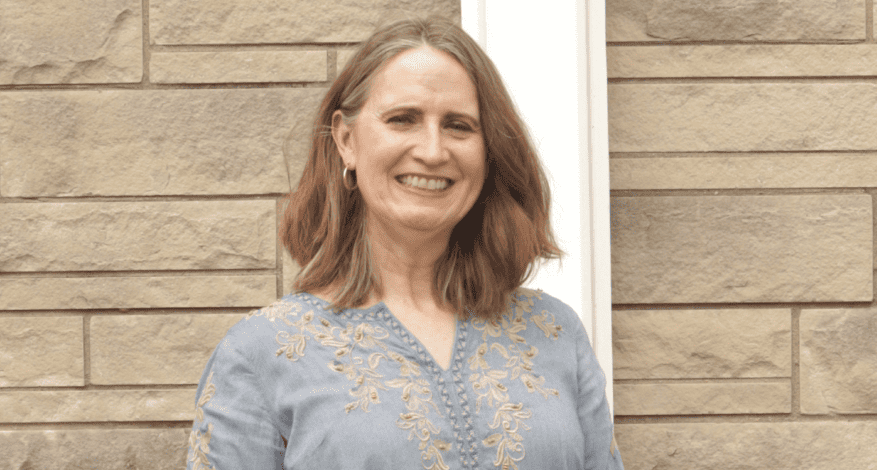
Reverend Laurie Brock, Rector, is also an attorney who helped write domestic violence laws in her home state of Alabama. When she came to St. Michael’s in 2010, supporting local survivors was a priority.

“If you have a Sunday morning attendance of 100, 25 of those people are experiencing some kind of intimate partner violence,” explains Laurie.

“Domestic violence is in many ways the silent pandemic because there’s so much shame wrapped up in it.”

Laurie, on behalf of the church, has been a member of our Summer Flower CSA for many years, and she is proud to spread the word to her parishioners and the community.

“I would rather get flowers locally, and we know it’s more than just flowers,” she shares. “They represent people finding out that they are worth living a life of safety.”

“It is an investment in people’s dignity. I think that as faith communities we are called to prioritize our funds for that. I would love to see more churches and community organizations participate.”

Faith-based partnerships recently have helped us to expand programming, provide holiday food to survivors living in transitional housing, and maintain the emergency shelter property.

Read the Summer 2023 Issue of Bloom 💜

This is one article from our print newsletter. Follow the link above to read the full issue!

READ MORE
Blog

Nature’s Nourishment

Farm-to-table – Access to nutritious food matters.

With summer in full swing on the farm, plentiful vegetables fill the fields and the shelter’s kitchen.

Hattie and Finley, advocates on our staff, work together to provide nutritious farm-to-table meals for survivors. Sweet potato enchiladas, tomato soup, and big salads are among the favorites of residents.

“Our kitchen garden allows us to incorporate fresh fruits and vegetables into our programming and start a conversation around where our food comes from,” explains Hattie Nunley, farm advocate. “But more importantly, it encourages residents to be present in nature during the healing process.”

Finley Yuttayong, dining and nutrition advocate, recently completed trauma-informed nutrition training and wants to help survivors reflect and establish a healthier connection with their bodies and food.

She says, “We want our kitchen to be a place where survivors can safely take part in the pleasure of food, shame-free, and take a step towards a healed relationship with their bodies.”

Beyond the physical and emotional wounds from intimate partner abuse, research has found long-term health complications. Increased rates of chronic pain, gastrointestinal disorders, and heart disease are common.

Read the Summer 2023 Issue of Bloom 💜

This is one article from our print newsletter. Follow the link above to read the full issue!

READ MORE

Safe at Home Act

The Safe at Home Act to encourage confidentiality for survivors of intimate partner abuse in Kentucky became effective June 29, 2023. 

This new Kentucky law allows victims fleeing domestic abuse to shield their new addresses from public records, mask their addresses on publicly available government records, and register to vote without their address being public. 

No special court order will be required, and the program is administered at no fee to participants. 

You are eligible for the program if able to provide a sworn statement that you are a victim of domestic violence, sexual assault, or human trafficking and believe address confidentiality will improve your safety. 

Call our 24-hour hotline for help completing the Safe at Home application form: 800-544-2022  

Submission of a complete and notarized application is required. Upon approved participation for the program, you will receive a participant card and packet of additional information. 

Participants may use the Secretary of State’s address on most public records instead of their own. The Secretary of State’s office will forward mail received to the participant’s confidential address. 

Approved participation remains valid for four years and can be renewed upon expiration. Most other states provide similar programs, and victims may be eligible for similar address confidentiality if they relocate. 

READ MORE
person holding cell phoneBlog

Technology & Intimate Partner Abuse

Although intimate partner abuse takes many forms, power and control are at the root of the violence—and abusers are using technology more than ever before. 

Technology meant to improve general safety, like “find my phone” and family-locator functions, is being used to monitor survivors before, during, and after fleeing abuse.  Spyware and stalkerware are available from mobile app stores.  

Portable GPS tracking devices seem to get smaller every year and keep battery power for more than a year. Hidden in a car seat pocket or lining of a purse, these devices can be nearly impossible to find. 

Internet of Things  

The ever-growing Internet of Things, often abbreviated IoT, presents added safety concerns for survivors. IoT devices include things like these: 

  • Doorbell cameras 
  • Voice-activated help devices (Alexa, for example) 
  • Smart locks  
  • Smart thermostats 
  • Smart TVs 
  • Smartwatches 

This New York Times article shares stories of survivors who suffered increased abuse through technology during the pandemic. The stories include abusers controlling smart devices while not even in the home.  

Thermostats set to 100 degrees, the heat being turned off during bitter winter months, and music blaring through smart speakers for hours are common tactics. Hotline advocates also report increased use of smart locks to control when a victim could leave home. 

Even five years ago, staying offline could be helpful for survivors while trying to flee the abuser.  

“But the solution simply cannot be for survivors to disengage,” says Corbin Street, NNEDV Technology Safety Specialist. “Survivors have a right to use technology, to participate in life both online and off, and to live a life free of harassment, abuse, and stalking.”  

Recent Kentucky legislation could help. 

The unlawful use of tracking devices on motor vehicles will become a Class A misdemeanor effective June 30.  

A person could be found guilty if they’ve installed or arranged for installation of a tracking device in or on a motor vehicle or have tracked the location of a vehicle with a tracking device, without the knowledge and consent of the owner or lessee of the vehicle.  

Darlene Thomas, our executive director, recently spoke with WKYT News about the law’s specific inclusion of intimate partner abuse. The use of tracking devices by a restrained party under a protective order to track the location of a motor vehicle operated or occupied by an individual who is protected by the order is against the law. 

More Resources 

The NNEDV Tech Safety App is a collection of information and resources for survivors who suspect abuse through technology. Information is organized by device and type of abuse, including harassment, impersonation, and location tracking. 

READ MORE
Kristen McClureBlog

HollerGirl – Healing Harmonies

“Women need to be heard.”

The second annual HollerGirl festival happens later this summer. The female-forward weekend highlights Kentucky music, workshops, and art to promote healing.

“I wanted to combine the idea of highlighting female musicians with raising awareness for domestic violence survivors,” explains Kristen McClure, festival founder. “I am a survivor myself, and my grandmother was also a survivor.”

The lineup includes Senora May, Bee Taylor, Mama Said String Band, Possum Queens, and many more. The festival also features family-friendly activities for kids of all ages.

“It’s super important to me that my children, they’re 8 and 10, are surrounded by this sort of atmosphere where women are empowered,” shares Kristen. “The festival encourages kids to be strong and understand their place on this earth and what it means to be a good person.”

kristen and her kids

Workshops will be offered on music and writing. Local women artisans, vendors, and food trucks will join the event, and a silent auction will raise funds for our mission.

Alyssa, an advocate on our staff, hosted an informational table at last year’s event. “The festival was a safe and comfortable space for people to ask for resources and share their stories, experiences, hopes, and dreams,” she shares. “This year, we plan to bring more advocates, more resources, and our brand-new loom to create a community art project.”

alyssa on bench

HollerGirl takes place August 11 – 13 at Rockcastle Riverside in Livingston, KY. Tickets include tent and car camping for the weekend. Find all the details and purchase tickets on their website – HollerGirl.live

Read the Summer 2023 Issue of Bloom 💜

This is one article from our print newsletter. Follow the link above to read the full issue!

READ MORE
Blog

Endow Kentucky Tax Credit Opens Soon!

The Endow Kentucky Tax Credit can support survivors and offers a great tax incentive.

Endow Kentucky Tax Credit season is quickly approaching! Tax credits totaling $1 million will become available on July 1. But these tax credits are often gone in the first week, so now is the time to start planning!  

Individuals and businesses can receive a credit on Kentucky state taxes of up to 20% of a gift to our endowed fund held at Blue Grass Community Foundation. The credit is in addition to your federal and state charitable tax deduction. 

Is there a minimum or maximum gift amount for the tax credit?  

There is no minimum gift size required to receive the tax credit. Unlike tax deductions, tax credits are subtracted from a donor’s tax bill, dollar for dollar. A gift of $5,000 can reduce what you owe in state taxes by $1,000. A gift of $50,000 can reduce your tax bill by $10,000. The maximum gift amount is $50,000.  

Not itemizing your charitable donations this year?  

You can likely still take advantage of the Endow Kentucky Tax Credit. This is a state tax credit, not a deduction. A tax credit reduces your Kentucky state tax liability dollar-for-dollar, regardless of your ability to itemize.   

Are donations of non-cash assets eligible for the tax credit? 

Yes, here is the list of non-cash assets that could be eligible:

  • stocks, 
  • mutual funds, 
  • tangible property, 
  • donations of life insurance, and 
  • donors 70 ½ and older can make a qualified charitable distribution from qualifying IRAs (QCDs can be made to any endowed funds other than donor advised funds).  
How do I make an endowment gift eligible for the credit? 
  1. The first step is to complete the Application for Preliminary Authorization.
  2. The completed form should be mailed or emailed to the Kentucky Department of Revenue in Frankfort. Addresses are included in the application, but if you’d rather just drop it off at the Blue Grass Community Foundation office, they’ll mail it for you.
  3. Next steps and additional resources, including contacts at the Blue Grass Community Foundation, are linked at the bottom of this page. 
How can I learn more about your endowment? 

Send a note to Corissa Phillips, Certified Fund Raising Executive on staff. She looks forward to sharing more about how our permanent endowment supports the mission in perpetuity–through times of crisis and opportunity. 

This post was written with information provided by the Blue Grass Community Foundation. We always encourage you to consult your accountant or professional advisor to learn about the personal impact of receiving your tax credit.

READ MORE
Blog

Let’s Talk About Septic Systems

We never expected to type these five words on our blog. Let’s talk about septic systems. 

Septic systems aren’t top of mind when you think about our mission. But the disposal of septic waste is critically important to any home or facility, especially an emergency shelter with 42 adult and child residents each night. 

Our large 19,326-square-foot shelter facility requires two septic systems.

Waste from the shelter is pumped into two tanks, each connected to a separate leach bed. These leach beds are formed by hundreds of feet of underground perforated pipe meandering through our front lawn. Liquid waste seeps through holes in the pipes to be naturally filtered by the soil.   

Something’s not right 

The standard lifecycle for a septic system is about 25 to 30 years. Our systems were built during the facility’s original construction 25 years ago.  

During the pandemic response, we noticed slow drainage from shelter sinks, showers, tubs, and toilets. The grass on the property’s front lawn felt a little mushy, even though it hadn’t rained for days. From time to time, when the weather was just right, a faint unpleasant smell would blow across the shelter’s front porch. 

It was time to call in the professionals.  

Inspection of shelter’s septic systems found our tanks in good condition, but an expedited need for replacing the septic system’s aged leach lines was identified. The cost to replace the leach lines was estimated to be more than $60,000.
 

One-time opportunity 

Although our annual operating budget includes funds for emergency repairs at the shelter, we had not anticipated the need for such a large-scale project during the pandemic response. 

Just weeks later, there was a possible solution.  

The City of Lexington announced a call for proposals from the community’s nonprofit organizations for one-time capital investment grants to be funded by the American Rescue Plan Act (ARPA).  We began to prepare our application in haste, learning more than we could’ve imagined about septic systems and leach fields.  

It’s more interesting than one might think! Did you know good bacteria in septic tanks feast on solid waste, breaking them down through digestion into gases? 


Award notification 

Following the city’s review of 138 project proposals, we received notification of funding to support the full cost of our leach line replacement project.  

We had to wait a few months for the weather and ground to warm after winter, but the project begins today! Crews are onsite to replace 1600 total feet of leach lines to better dispose of liquid and solid waste generated at our emergency shelter. 

More than 20 social service agencies in Fayette County are making much needed facility renovations, improving accessibility to facilities for those with disabilities, and more with support from the city’s ARPA funds. 

READ MORE