holding up phone showing instagram post21 Years

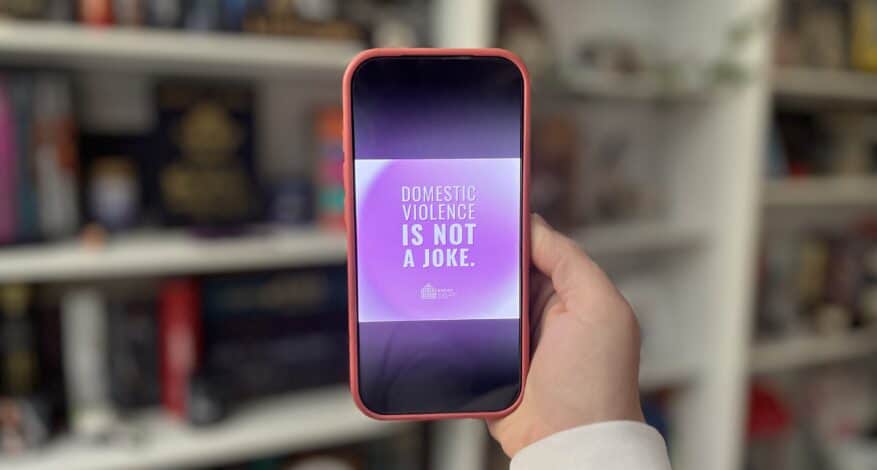
Domestic Violence is Not a Joke

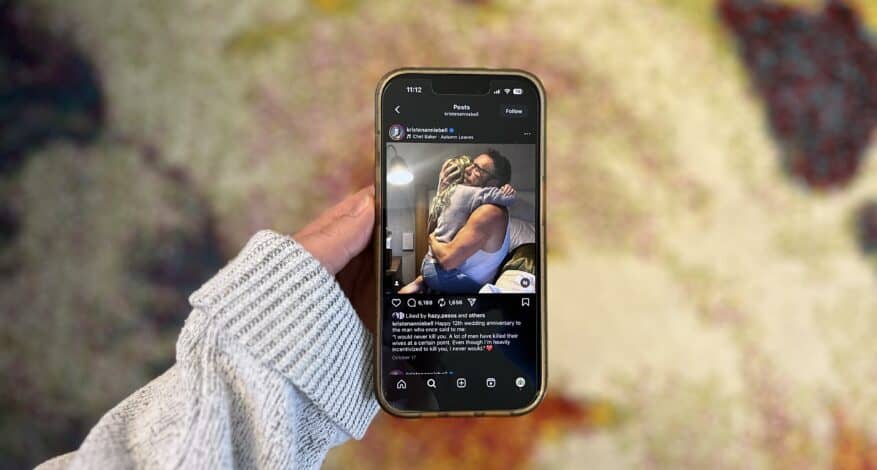
An Instagram post by Kristen Bell caused controversy and made headlines during Domestic Violence Awareness Month.

Bell recently celebrated her 12th wedding anniversary with husband Dax Shepard by posting a photo on Instagram of the couple embracing. The photo caption reads:

“Happy 12th wedding anniversary to the man who once said to me: ‘I would never kill you. A lot of men have killed their wives at a certain point. Even though I’m heavily incentivized to kill you, I never would.’”

Comments on the post have been mixed.

Some have called out the post as offensive, especially during Domestic Violence Awareness Month. Others contend the post is an inside joke shared between two people who are in love.

Dateline, the true-crime news magazine show, commented with one word: “Screenshotted.”

“Heavily Incentivized”

Also a celebrity and actor, Shepard is more recently known as the co-host of Armchair Expert, a popular podcast that is self-described as celebrating the “messiness of being human.”

He often weaves his academic background in anthropology throughout discussions on the podcast. With that slant in mind, Shepard’s remark is not wrong. Most societies have incentivized violence against women for centuries.

Under English common law, for example, “coverture” meant a woman’s identity merged with her husband’s upon marriage. Husbands were legally allowed to “chastise,” a term that allowed physical violence to maintain the obedience of wives.

In recent centuries, laws began to change, but culture didn’t catch up as quickly.

Courts often excused men who killed their wives as victims of passion rather than perpetrators of murder. Media equated possessiveness with love, and advertisers built entire campaigns on the idea that a woman’s role was to please or risk punishment.

An acceptance of dominance has continued to shape expectations of love and marriage in recent generations. Domestic violence was not even defined as a distinct crime in most of the United States until the 1970s.

Concerns

Bell’s decision to share Shepard’s statement in the context of a marriage milestone reveals a spectrum of concern.

An intimate partner’s proclamation that they won’t kill you, even though they could, must be considered a red flag in our mission.

Many commenters contend the photo caption echoes the couple’s dark humor. A resurfaced promotional interview for “Hit & Run,” a 2012 film that co-starred both actors, reveals a history of joking about domestic violence and homicide.

But domestic violence is not a joke, and the threat of lethal violence is not a funny Instagram caption.

The Risk is Real, Scary & Difficult to Escape

Intimate partner violence results in nearly 1,300 deaths and more than two million injuries in our nation annually.

Three women are killed by their husbands or boyfriends in the United States every day. More than 20 domestic violence homicides occur in Kentucky every year.

The risk for lethal harm increases when a victim attempts to escape because the abuser losing power, control, and dominance.

How would you respond if a friend or family member told you their intimate partner said this? Would you dismiss the statement as humor or consider the statement as cause for concern?

Further Reading

Read an article from writer Yvonne Liu. Trigger Warning - these details could be re-traumatizing for survivors of abuse.

READ MORE
hand holding kindle version of it ends with us21 Years

It Ends with Us

Original publish date: 8/13/24. Updated 12/17/24 – It Ends with Us is now streaming on Netflix. Send us a message on social media and let us know your thoughts on the movie! 

Everyone is talking about It Ends with Us. The book has sold millions of copies, and the movie had a huge opening at the box office over the weekend.

Both tell the story of Lily Bloom, a young woman who falls in love with neurosurgeon Ryle Kincaid after meeting him on a rooftop in Boston. What happens after they fall in love has sparked conversation about intimate partner abuse. But what do the book and movie portray well, and what else can we learn from the story?  

Spoiler Alert and Trigger Warning! This post reveals plot details from the book and movie. These details could be re-traumatizing for survivors of abuse.

What the Book Does Well

Ryle is portrayed as a charming and charismatic neurosurgeon. This depiction is powerful because it reflects how abusers often present themselves in a positive light, making it difficult for victims and those around them to recognize red flags. 

The book effectively highlights several red flags, such as Ryle not being able to control his anger, rushing into the relationship, proposing marriage after a short time together, and breaking Lily’s personal boundaries by going through her journals. Additionally, his act of buying her an apartment without asking—an example of love bombing—is another red flag. 

What the Movie Does Well

After the first two times Ryle hurts Lily, the audience shares in her confusion and doubt. Were these really accidents? Were these purposely violent incidents? During a later scene, Ryle sexually assaults Lily. This is when the flashbacks of the past incidents are revealed to Lily and the audience to have been violent abuse.  

The video techniques used during this scene create a powerful visual representation of how abuse can escalate over time and the mental turmoil it causes. What had once been confusing and gaslighted memories quite literally are brought into focus. The abuse was Ryle’s choice.  

Lily learns she is pregnant and ends her romantic relationship with Ryle. The movie depicts the passage of Lily’s pregnancy through several scenes, including one specific scene in which Ryle arrives at Lily’s apartment. Although hesitant, she invites him inside to help put together the baby’s crib. After the baby is born, Lily tells Ryle she wants a divorce.  

Both the book and movie also explore Lily’s complicated relationship with her abusive father and judgment of her mother. Lily struggled to understand why her mom stayed and often considered her weak for not leaving. When Lily faces the same decision, she vows to break the generational trauma. The title of both the book and movie come from Lily telling her daughter the cycle of abuse ‘ends with us.’ 

What’s Missing

While the movie brings much needed attention to intimate partner abuse, it misses deeper discussion about the complexities. 

Marketing for the movie has framed it as a romcom and love triangle. Viewers are encouraged to wear florals to the movie and there have been pop up flower shops for promotion. Many of the marketing strategies avoid the movie’s prevalent topic of domestic violence. 

We overheard a small group of ladies discussing the movie after it ended. One mentioned how she thought the ending was wrapped up in a perfect bow, and that’s not how these situations usually end up for the survivor. Other comments were about concern for the baby, and how Lily doesn’t seem worried that Ryle will continue to hurt her and their child. 

This might be the most important criticism of the movie. It presents the process of escaping an abuser as a decision that can be implemented easily and quickly.  We know this isn’t reality. It takes a victim an average of seven times to escape the abuse. Attempting to flee is the most dangerous time, and abuse often escalates during pregnancy.

Lily does not explore options for a protective order, her friends stay available to her, and she doesn’t experience risks of job loss because of the abuse. Unlike Lily, many victims are isolated through the power and control of the abuser. With no one to turn to for help and not enough money to begin again, victims often navigate a series of barriers to safety.  

The story also ends with Lily and Ryle easily agreeing to a co-parenting relationship without meaningful discussions of the terms or consideration of the risks—and those risks are many. Abusers often use co-parenting arrangements with the survivor to continue control and intimidation. This is why safe exchange and visitation programs like ours are so important. 

And finally, the movie doesn’t include a domestic violence hotline number until after the credits have ended. Given the anticipation and early popularity of the movie, not including a hotline number was very disappointing.  

What’s Next

Educate yourself on intimate partner abuse. Read this blog post about myths and truths. Learn about what a healthy relationship is. Find out how you can start conversations with young people in your life. 

Watch other shows like Maid, which does an exceptional job at showing the hurdles survivors go through. Alex, the survivor and main character, navigates the lack of employment, childcare, and friends because her circle of support was tied with her abuser.  

Have you wondered if your relationship is healthy? Do you have a friend you suspect could be suffering from physical or emotional abuse? Whether you just want to talk or you’re ready to initiate services, we will answer your call 24 hours a day, every day of the year. 

800-544-2022

24-hour Crisis Hotline

READ MORE
person with headphones leaning against treeBlog

New Spotify Playlists!

A new collection of songs for people who support survivors 💜

Trigger alert: If you are a survivor, this post could trigger memories. If you need to talk to someone, remember our hotline is available 24-hours a day: 800-544-2022. 

We’re excited to share three Spotify playlists curated by our advocates and staff. 

Do you have a song suggestion you’d like to see on our playlists? Message us on Instagram or Facebook to share.

Follow us on Spotify!

Click the link above to visit our Spotify profile.

READ MORE
diane fleet on the it's time podcast about intimate partner abuseBlog

Podcasts About Intimate Partner Abuse

Choosing to read, watch, and listen to stories is one way you can help end intimate partner abuse. 

Stories help us to process, sympathize, and bond in shared experiences. Although some popular stories perpetuate myths and outdated assumptions, so many offer insight to understanding. We’ve compiled a list of podcasts for you to listen to.

It’s Time

The “It’s Time” awareness campaign started a podcast, It’s Time to Talk, hosted by Stephanie Theakston, program coordinator of the Domestic and Sexual Violence Prevention Coalition (DSVPC), and Diane Fleet, associate director of our organization and chair of DSVPC.    

They recently released a recap episode so you can catch up here. 

When Dating Hurts

This podcast is hosted by Bill Mitchell whose daughter Kristin was murdered by her boyfriend. He interviews survivors, family members of victims, and professionals working in domestic violence.  

Listen here. 

Death, Sex & Money

A recent episode features Adonis Williams, a New York City mover who helps survivors of intimate partner abuse.  

“Adonis decided he wanted to help more victims of domestic violence move out of unsafe situations— a service he still provides today,” host Anna Sale. 

Listen here. 

I’m a Survivor

Host Misty Chaviers is a survivor and shares her personal story, as well as featuring other survivor stories and professionals. Her podcast was a finalist for the 2023 Digital Women Awards. 

Listen here. 

Unmasking the Abuser

Hosted by Dr. Dina McMillan, this podcast shares specific manipulation tactics of abusers. 

Listen here. 

Dr. McMillan has also done a TEDx Talk called Unmasking the abuser where she discusses her conversations with abusers. 

Watch here. 

Read More

This is a collection of books, movies, songs, and TikToks for you to consider and contemplate.

READ MORE
Blog

Alice, Darling

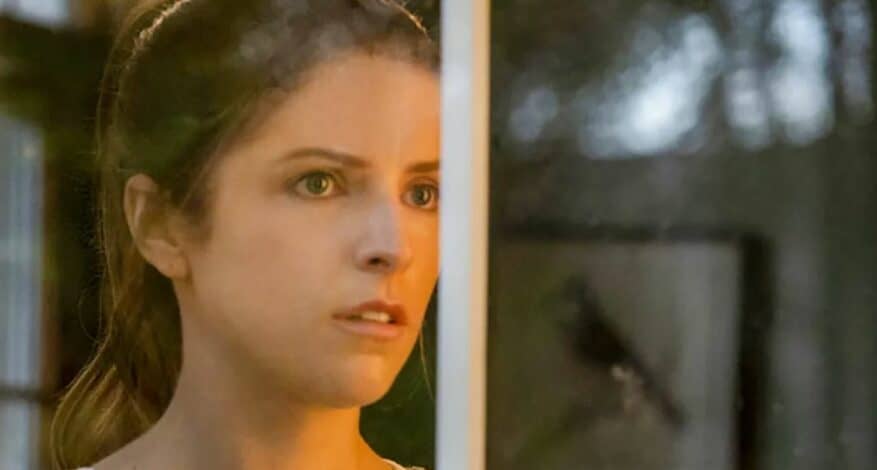
Alice, Darling is a new film starring Anna Kendrick (Pitch Perfect, A Simple Favor, Trolls) that explores topics of psychological abuse.

The film tells the story of Alice, a young professional in a relationship with a seemingly charming older man. The truths of that relationship are revealed during a vacation with her best friends Sophie (Wunmi Mosaku) and Tess (Kaniehtiio Horn).

With the help of her friends, Alice begins to identify the abuse and eventually ends the relationship. The film premiered to positive reception during the 2022 Toronto Film Festival and was released in theatres this January.

Emotional & Psychological Abuse

Emotional and psychological abuse (also sometimes called mental abuse) can be difficult to identify, especially when the abuser is not physically violent or avoids blatant verbal abuse.

The National Domestic Violence Hotline reports that 95% of contacts reveal they are experiencing emotional abuse: “Emotional abuse is also a foundation for other forms of abuse. Often, it is used to erode a person’s self-esteem and self-worth and create a psychological dependency on the abusive partner.”

Here are a few common examples:

  • Embarrasses you in front of friends and family
  • Mocks you for opinions and beliefs
  • Isolates you from supportive friends and family
  • Belittles your goals or accomplishments
  • Blames you if they cheat
  • Keeps you from sleeping or caring for yourself
  • Tricks or forces you to compromise morals
  • Gaslights you to not trust yourself

“A survivor may find themselves deep into a relationship before realizing that their choices, everything from who they can talk to, see and where they can go, to whether or not they’re able to end the relationship—are no longer their own,” explains this article from Domesticshelters.org.

A Personal Connection

During a recent interview on “Armchair Expert,” a popular podcast co-hosted by Dax Shepard and Monica Padman, Kendrick discussed a past personal relationship that shared similarities with the film.

“We had embryos together, this was my person,” Kendrick says. “And then about six years in – somewhere around there – I remember telling my brother, when things had first kind of gone down, ‘I’m living with a stranger. Like, I don’t know what’s happening.’”

Kendrick describes examples of emotional abuse that escalated when she tried to address her concerns. She remembers feeling embarrassed about what was happening to her.

“There definitely was part of me that was like my mother raised me better than this. How am I the girl during the pandemic locked in my bathroom…facetiming with my two best friends and sobbing and whispering so he doesn’t hear?”

After repeatedly being told by her partner that she was at fault and provoking the violence, Kendrick struggled to identify herself as the victim. She was convinced the problem could be fixed by working on herself.

“I truly dismantled my life,” she says. “I started seeing two therapists a week, and I started trying to learn to meditate, and I got into al-anon.”

Kendrick ended the relationship before starting work on Alice, Darling. She credits a therapist for helping her to establish new boundaries. The actor never intended to speak about the relationship during interviews about the film but instinctively shared her story during a media event.

“It was like I couldn’t swallow the shame anymore.”

Call our 24-Hour Crisis Hotline

If you or someone you know is being abused, our advocates are available every day of the year.

READ MORE

Depp v Heard Verdict

After weeks of testimony, the verdict in the Depp v Heard defamation trial was decided on June 1.

Although the jury determined both parties liable for defamation, the decision found Heard defamed Depp in three statements. He was awarded $15 million across compensatory and punitive damages. Heard was awarded $2 million in damages for one statement made by Depp’s attorney that was identified as defamation.

Legal pundits and social media influencers have celebrated the jury’s verdict as a categorical win for Depp. Crowds gathered outside the courthouse in Fairfax, Virginia after the decision to applaud and cheer. Experts in missions to support survivors of intimate partner abuse soon began to offer another perspective, and major media outlets have followed the lead.

PERFECT VICTIM MYTH

The idea of the “perfect victim” has begun to be explored in recent media stories. Maybe you’ve struggled with this myth, too. Have you ever thought someone was too angry or didn’t seem sad enough when they shared stories with you about their trauma?

Our interpretation of a victim’s behavior or choices often informs whether we believe them. Consider, for example, the persistent belief that women who have been sexually assaulted while wearing revealing clothing or drinking are culpable.

Although neither Heard nor Depp easily fit social expectations for survivors of intimate partner abuse, public sentiment faired more positive for Depp. Social media users were especially disparaging of Heard. She was mocked for staying, hitting, belittling, manipulation, and physical violence.

Despite the same being revealed in testimony related to Depp’s behavior, the #justiceforjohnny hashtag was used more than 10 million times on social media during the trial.

MUTUAL ABUSE?

Violence by both parties was often described as “mutual abuse” during testimony.

“Domestic abuse, in particular, is messy and complicated,” writes Eliana Dockterman for Time. “The victim often stays with the perpetrator fearing economic, social, or physical repercussions. Sometimes the victim fights back. And victims can be flawed: They don’t need to be pure or sober to tell the truth.”

Research and practice find that intimate partner abuse can best be understood by identifying the primary aggressor. This determination isn’t just related to physical size or strength. More often than not, the primary aggressor is the partner with more financial power and social influence to maintain control of the other partner.

THERE IS HOPE

Ruth Glenn, CEO of the National Coalition Against Domestic Violence, was interviewed during PBS NewsHour after the verdict. When asked for her reflections on the decision, Glenn responded:

“What we witnessed during this case in the courtroom, and certainly outside of the courtroom, was a miscarriage of understanding the dynamics of domestic violence.”

Advocates and survivors have gone on record with Rolling Stone and CBS News to express concerns the court proceedings, public response, and subsequent verdict will discourage victims from coming forward and seeking support.

“There is hope,” reminds Glenn. “We’re going to have to keep moving forward in allowing victims and survivors to have their voice and talk about the abuse that they have endured.”

We believe you.

Please call our 24-hour hotline to speak with an advocate.

(Featured image from NPR.org)

READ MORE

The Depp v Heard Trial

The defamation trial of Johnny Depp versus Amber Heard has people talking about domestic violence.

Trigger Warning: This post includes descriptions of abuse that could be re-traumatizing for victims and survivors of abuse.

Evidence of violence

The trial finds Depp suing Heard because of this essay she wrote in The Washington Post about her experience as a victim of intimate partner abuse. Although not mentioned in the essay, Depp is suing Heard claiming the article is defamatory.

Several witnesses for the prosecution, including Depp, already have testified. Attorneys from both sides read and questioned text messages sent between and about the former couple. These messages revealed a pattern of aggressive name-calling and verbal violence.

Several video and audio recordings, many made without the other’s consent, also have been played during testimony. In one of the recordings, Depp accuses Heard of punching him. Heard acknowledges it happened but contends she didn’t hurt him. Other videos capture Depp yelling and slamming cabinets. He threatens to cut his wrists with a knife in another recording.

Mutual Abuse?

Media coverage has used terms like “mutual abuse” and “reactive abuse” to describe the violence. In a recent interview with NBC News, Ruth Glenn, President and CEO of the National Coalition Against Domestic Violence, spoke about the use of those terms.

“I don’t believe in mutual abuse. I don’t believe that two parties decide to meet in the kitchen and box it out,” Glenn said. “It just doesn’t sound right, reactive abuse. I’m going to abuse you as a reaction? No, I’m going to defend myself as a reaction.”

Advocates in the mission to end intimate partner abuse know that violence is rooted in power and control. Although behaviors from both partners can be abusive, one person tends to have more control in the relationship than the other. Tactics such as emotional abuse, isolation, and threats often accompany physical abuse.

Abusers also minimize, deny, and blame others, especially to leverage support from third parties.

Blame Shifting

The National Domestic Violence Hotline website offers more insight on blame-shifting.

“Sometimes the justifications sound really good. Especially when we’re looking for something — anything — to help make sense of how the person we care for is acting toward us. It’s normal to want to rationalize what’s going on because abuse is pretty irrational.”

“We often want to find reasons because we don’t have any real data on why abusers do what they do,” Glenn said during the NBC interview. “I think we find many different ways to make it OK in our heads that somebody can be abusive.”

Legal advocates for survivors, many of whom have spent hundreds of hours in courtrooms listening to testimonies, also understand that abusers often attempt to shift the blame to victims, especially when victims have reacted physically in self-defense.

Public Opinion

Although the trial is not about establishing whether the abuse happened, or who abused whom, public opinion abounds. A recent Google search returned more than a hundred million web links to the topic.

Supporters of Depp believe Heard was the primary aggressor, and she shifted blame to Depp as the victim.They point to an absence of physical abuse in Depp’s previous relationships, which has been backed by the testimony of former partners. Testimony also revealed that Depp’s mother physically, emotionally, and verbally him as a child and also abused their father.

Supporters of Heard say the prosecution’s testimonies do not invalidate her claims of abuse. Heard believes she has a right to tell her story — in private and public. The defense is expected to present their evidence and arguments in the coming days.

Taking Sides

Given the frequency of intimate partner abuse, it’s likely you’ve struggled with many of these same questions when supporting a friend or family member who was being abused. Maybe this very public trial will help us to better understand power and control and, in turn, more deeply consider the complexities of intimate partner abuse.

24-Hour Hotline

Call 800.544.2022 to speak with a domestic violence advocate.

READ MORE
Blog

Will Smith discusses trauma from intimate partner abuse

Will Smith was interviewed recently about his new memoir, Will.

It caught our attention because he talks about childhood trauma. When he was around 9, he watched his father physically abuse his mother. It left a lasting impact on him. He struggled with considering his father a hero and a good person while hurting someone else he loved.  

“I was probably 9, and I watched my father beat up my mother. And I was too scared to do anything. And just on my young mind, it became imprinted. 

It’s like, what kind of kid stands there and lets somebody hit their mother and they don’t do anything, you know? And that became really the core trauma of my childhood that my personality and my persona became to form around, to be the opposite of that, you know? I was never going to be scared again. 

What was really difficult for me is my father’s my hero. My father’s the greatest person I’ve ever known, and that dichotomy breaks a young mind, you know? It’s like, how do you love somebody who did that? 

That really just became the central core of the wound that I was overcoming throughout my childhood, and then ultimately throughout my life.” 

This leads to one of the myths we discussed recently – intimate partner abuse only affects adults in the household. That’s not true.  

The majority of children in an abusive household will witness the abuse. Studies have shown children who experience intimate partner abuse with their parents exhibit depression, anxiety, learning difficulties, and more.   

They hear the violence and feel scared, too. Every child responds differently but some things are common. Infants may experience failure to thrive or have developmental delays. School children often suffer from depression, anxiety, and digestive illnesses. Teens might show struggles at school and feel responsible for their siblings and abused parent. 

Sometimes survivors stay because they don’t want their children to be homeless or the abuser has threatened to harm the children if they leave. Other times, parents are afraid children could be taken from their care if they expose the abuse. 

**Image from the New York Times

We are committed to safety, healing, and stability for you and your children.

Call us to begin the conversation. We are here for you 24 hours a day. 800.544.2022

READ MORE
man by fence with headphones onBlog

Read, Watch, and Listen to Stories

Choosing to read, watch, and listen to stories is one way you can help end intimate partner abuse.

Stories help us to process, sympathize, and bond in shared experiences. Although some popular stories perpetuate myths and outdated assumptions, so many offer insight to understanding. This is a collection of books, movies, songs, and TikToks for you to consider and contemplate. 

Trigger alert: If you are a survivor, this post could trigger memories. If you need to talk to someone, remember our hotline is available 24-hours a day: 800-544-2022. 

Read Books

Watch Movies

Listen to Songs

Read more. Let's make some noise.

This is part of a series for Domestic Violence Awareness Month.

READ MORE
Alex and daughter Maddy from Maid on Netflix21 Years

We’re watching Maid on Netflix – and you should too.

Educate yourself, bring awareness to intimate partner abuse, and support survivors.

Why is Maid on Netflix important? Because it shows the real struggles survivors go through to leave their abuser and the obstacles they face if they’re able to leave.  

Alex struggles with the label of domestic abuse and says, “I’d hate to take a bed from someone that’s been abused for real.”  

Verbal and emotional abuse is intimate partner abuse! Throwing things and punching near a partner is physical abuse. It’s terrifying. As Alex’s friend Danielle tells her – abuse escalates over time. 

This series is important because it shows how isolated Alex was when she left. She had no job, no money, no childcare, and no friends because her circle is tied in with her abuser.  

There is a stigma about people who have been abused. People may think – Why didn’t she just leave? Why did she go back?  

Maid does an exceptional job at showing the hurdles survivors go through. The gaslighting, promising he will change this time, how scary court can be, and so much more.  

So, we’re watching Maid on Netflix, and you should too. To educate yourself, to bring awareness to intimate partner abuse, and to support survivors.

Have you wondered if your relationship is healthy? Do you have a friend you suspect could be suffering from physical or emotional abuse? Whether you just want to talk or you’re ready to initiate services, we will answer your call 24 hours a day, every day of the year – 800-544-2022. 

Further Reading

Lakeisha Goedluck writes about Maid and her own experiences with intimate partner abuse.

READ MORE
  • 1
  • 2