anniversary heart kentuckyBlog

Anniversary Reflections on the Farm

It’s our 17th anniversary! Federal designation officially naming our organization a nonprofit entity arrived on February 14, 2005. We interviewed Darlene Thomas, our executive director, for her reflections on the farm’s history through years.

“While settling into the new shelter 17 years ago, we began to consider how to integrate the land with services for survivors. Maybe equine therapy or a herd of sheep? Although these options weren’t a good fit, early dialogues confirmed the land must complement existing traditional services for survivors.

Local and national conversations were beginning to explore topics related to food deserts, local food production, and social entrepreneurship. We convened community experts to discuss how our land could be used to address these issues.The commitment of staff and resources to achieve this integration would be substantial, so we started small with only a few box gardens of seasonal herbs and vegetables for meal prep in shelter.

We honed our gardening skills and observed interest in the effort over the next two seasons. Consultations with arborists and farmers informed our land use plan, and local garden clubs provided native cuttings and seeds for planting. A generous grant from Grow Appalachia allowed us to hire a Farm Advocate to manage the farm and programming. This early financial commitment allowed us to leverage additional support from United Way, Kentucky Utilities, and Toyota Motor Manufacturing, Kentucky.”

Listening & Responding

We thought vegetable production would be our primary focus, but the community inspired a new unexpected direction for the farm.

“A few years ago, survivors and staff had planted a small garden of flowers. Kentucky Proud admired the flowers during a visit to the farm and asked if we might put together some small table bouquets for their kick-off breakfast at the State Fair.

Soon after that event, calls and emails requesting bouquets of our flowers for centerpieces overwhelmed us. The expansion of our flower production became a priority. Around this same time, individuals and private foundations stepped in to fund the renovation of an outbuilding on the back of our farm program for much-needed space to fulfill flower orders and facilitate workshops for survivors.

John Paul and Eloise DeJoria, with friends from JP’s Peace, Love & Happiness Foundation, visited the farm to learn more about our program. That visit inspired a generous donation to begin renovation of the outbuilding. Don and Mira Ball provided additional generous support to complete the project.

Special attention was given to the renovation to meet certified commercial kitchen requirements. Today, this building is the hub for production of value-added products from the farm, including lip balms, soaps, other Handmade By Survivors products.”

Promising Results

A federal grant awarded to the University of Kentucky Center for Research on Violence Against Women to conduct multi-year research on the farm’s effectiveness recently concluded. Publication of the research outcomes is expected soon.

“Stories and statistics tell us the farm-based programs we have developed are effective. Those few early box gardens have grown to almost 7,000 square feet of cultivated land, and approximately 60% of shelter residents directly participate in at least one nature-based program during their stay with us. But I believe all survivors living at our shelter benefit from indirect engagement with the farm. Even just sitting on the porch watching the sunset or listening to the rain can make a difference.”

Read more

Follow the link above for more anniversary stories.

READ MORE
Blog

KFW’s Art Meets Activism Grant Recipient 

The Art Meets Activism grant from the Kentucky Foundation for Women will allow us to provide trauma-informed artmaking with survivors of intimate partner abuse. 

This Art Meets Activism grant will provide an advocate on staff with training and certification in therapeutic artmaking. We’ll be able to offer art-based support groups for residents at shelter, as well as community-based workshops for survivors receiving supportive services outside of shelter, with an informed focus on healing. Open studio sessions will also be available for self-guided art.  

The goal of these activities is to help survivors heal emotionally. Similar to the nature-based healing approach of our farm, trauma-informed art-making may increase survivors’ confidence, leading to improved feelings of self-worth and well-being. Through group sessions, there is the opportunity to become more connected to community, ultimately reducing the frequent feelings of isolation some survivors experience.    

We are honored to receive this grant and be among so many inspirational women and organizations. Here is a full list of fellow grant winners 

About KFW 

The Kentucky Foundation for Women is a private foundation formed in 1985 by Louisville writer Sallie Bingham.  Its mission is to promote positive social change by supporting varied feminist expression in the arts. 

READ MORE
Blog

Celebrating Martin Luther King Jr. Day

“Darkness cannot drive out darkness; only light can do that.”

As we honor and celebrate the legacy of Martin Luther King, Jr, these words written by him decades ago continue to inspire and make a meaningful connection to our mission. 

“I have the audacity to believe that peoples everywhere can have three meals a day for their bodies, education and culture for their minds, and dignity, equality, and freedom for their spirits.”

His words call us to personal and social action that acknowledges racism and prejudice persist in our lives, community, and nation.

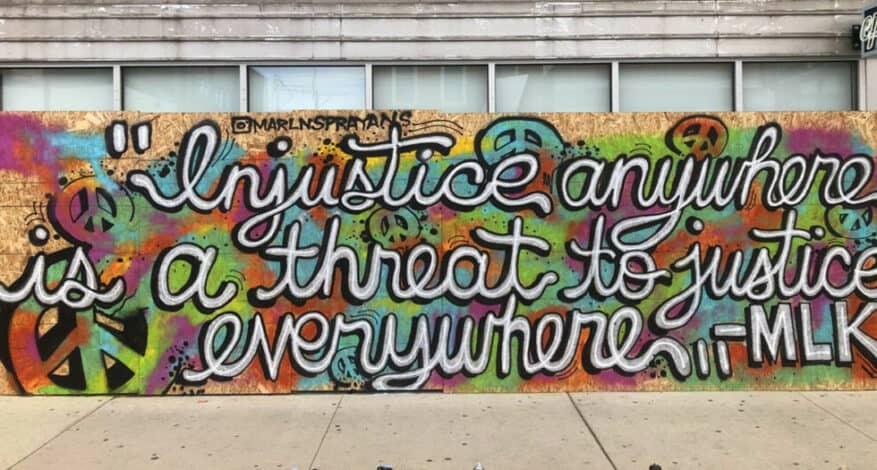
“Injustice anywhere is a threat to justice everywhere. We are caught in an inescapable network of mutuality, tied in a single garment of destiny. Whatever affects one directly, affects all indirectly.”

We are reminded that freedom of spirit is tied to every part of our being and that long-term sustainable change is possible.

“We shall overcome because the arc of the moral universe is long, but it bends toward justice.”

As this new year continues to unfold, may we continue to serve and commit to justice with the same peace and compassion of today. Let us remember that to serve is to commit to change — and to change we must heal.

Continue to educate yourself.

Our book recommendation is Stamped from the Beginning: The Definitive History of Racist Ideas in America by Ibram X. Kendi

READ MORE
Blog

I’ll Stand by You

“When in court I can’t act as your attorney, but I’m here for you.”

Survivors of intimate partner abuse often need to navigate the legal system for longer-term orders of protection and matters related to safety, custody, and property. This is where legal advocates come in. While the advocate’s role is to restore agency and explain processes, most importantly they stand beside survivors during one of the scariest days of the healing journey.

For many survivors, the court hearing will be the first time they see the abuser since escaping.

Morgan remembers her day in court like it was yesterday. “I instinctively look left, right, and there he is, and he’s got this look on his face that just sent a chill up my spine.”

Stephanie Love, a legal advocate serving survivors in Clark and Powell counties, says, “When in court I can’t act as your attorney, but I’m here for you. I can make sure you have what you need. I can nudge you to remember something. I can act as an extra barrier between you and the abuser.”

Advocates make sure survivors have a plan for their physical and emotional safety after court. They also provide connections to our support groups and local resources for food, clothing, and other needs.

“We get the survivor in touch with their community, so they aren’t just relying on us,” says Stephanie.“You want to have other relationships in your life. If you’ve just got the one relationship, how healthy are you as an individual? It’s the same with survivors.”

Legal advocacy and support services are made possible with federal grant funding from the Victims of Crime Act (VOCA), non-taxpayer funding generated by fines paid by federal criminals. Violence Against Women Act (VAWA) funding also provides survivors with no-cost attorney services and representation for especially difficult cases. The Kentucky Justice and Public Safety Cabinet administers both funding sources.

YOU DESERVE TO BE SUPPORTED.

800.544.2022

Our 24-hour crisis hotline is answered every day of the year. You will speak to a compassionate Certified Domestic Violence Advocate who wants to support your specific needs.

Together, we can develop a safety plan that meets the specific needs of you and your children. Find emergency shelter with us or a partner shelter. Make plans for one of our legal advocates to accompany you to upcoming court appointments. Share information about nearby support groups.

You might not be ready to leave or want to know more to support a friend. That’s ok. We are here to listen, too. Please call us if you or someone you know is being harmed.

Read the fall issue of Bloom!

This is one article from our print newsletter. Follow the link above to read the full issue!

READ MORE
Blog

Will Smith discusses trauma from intimate partner abuse

Will Smith was interviewed recently about his new memoir, Will.

It caught our attention because he talks about childhood trauma. When he was around 9, he watched his father physically abuse his mother. It left a lasting impact on him. He struggled with considering his father a hero and a good person while hurting someone else he loved.  

“I was probably 9, and I watched my father beat up my mother. And I was too scared to do anything. And just on my young mind, it became imprinted. 

It’s like, what kind of kid stands there and lets somebody hit their mother and they don’t do anything, you know? And that became really the core trauma of my childhood that my personality and my persona became to form around, to be the opposite of that, you know? I was never going to be scared again. 

What was really difficult for me is my father’s my hero. My father’s the greatest person I’ve ever known, and that dichotomy breaks a young mind, you know? It’s like, how do you love somebody who did that? 

That really just became the central core of the wound that I was overcoming throughout my childhood, and then ultimately throughout my life.” 

This leads to one of the myths we discussed recently – intimate partner abuse only affects adults in the household. That’s not true.  

The majority of children in an abusive household will witness the abuse. Studies have shown children who experience intimate partner abuse with their parents exhibit depression, anxiety, learning difficulties, and more.   

They hear the violence and feel scared, too. Every child responds differently but some things are common. Infants may experience failure to thrive or have developmental delays. School children often suffer from depression, anxiety, and digestive illnesses. Teens might show struggles at school and feel responsible for their siblings and abused parent. 

Sometimes survivors stay because they don’t want their children to be homeless or the abuser has threatened to harm the children if they leave. Other times, parents are afraid children could be taken from their care if they expose the abuse. 

**Image from the New York Times

We are committed to safety, healing, and stability for you and your children.

Call us to begin the conversation. We are here for you 24 hours a day. 800.544.2022

READ MORE
close up of Morgan with flowers around faceBlog

Morgan’s Story

“I am exactly who he told me I couldn‘t be.”

Before my kids and I escaped, I didn’t feel like I had anyone. It was a really low point in my life.

I was seeing a therapist in Lexington, and we came to the realization together that I was in an abusive relationship. At that point, she recommended I reach out to GreenHouse17.

The person on the phone said ‘let’s get you to a shelter.’ I didn’t really feel comfortable doing that, so they gave me the phone number for Kris [advocate]. It was a relief to talk to someone.

I didn’t feel safe meeting her anywhere except my workplace. I brought her in under the guise of a vendor. We found a conference room, and she stayed with me for three hours while I told her my story. Kris was crucial in helping me to escape.

She told me – at this point you’re not leaving, you’re escaping.

I had a small, very tight circle of people who I was able to confide in and trust. I kept in contact with Kris and an attorney, and we got our plan together for my escape.

Initially it was really scary. My sister told me we could live with them for a little while. The day I decided we were leaving, he went to work, and I was acting fairly normal. My sister and brother-in-law pulled up. Within an hour we met with a sheriff’s deputy and got the EPO.

The day at court came. Kris was there. It was crazy and scary, but it was amazing. Everything went in the favor of my kids and me. It’s a long journey. It’s difficult, but you’ll make it, and it’s so worth it. Once you finally take that first breath and realize I’m free for the first time—it’s an indescribable feeling.

My little girl started pre-K and my son is in first grade. We’ve been isolated for years from my family and friends. Now we’re meeting new people and having a blast. I’m now a member of the Attorney General Survivors Council. I’m going to write a book one day. I have no problem sharing my story. I love doing it because I know it’s going to help someone, somewhere—and that’s the goal.

This is only part of Morgan’s story, in her own words, shared with her permission. 

Support Survivors Today

Follow the link above to donate now.

READ MORE
members of heart of kentucky steering comitteeBlog

Heart of Kentucky Steering Committee

The Heart of Kentucky Steering Committee raises awareness & support in Boyle, Garrard, Lincoln, and Mercer counties.

The Heart of Kentucky Steering Committee leads with a spirit of engagement. They formed in February 2019 to build awareness about services to support survivors in the region.

“It has been wonderful to have this committed group supporting our work,” says staff member and Danville resident Mary Trollinger.

Steve Lownds was an inaugural member. He works at Centre College and engaged staff from the school’s Title IX office in awareness projects on campus. “We are excited to continue to bring community members together to spread the word and support survivors,” shares Steve.

The City of Danville has issued proclamations during Domestic Violence Awareness Month the past few years, and the Advocate-Messenger has featured several articles about the mission.

“The steering committee cares about their community and has raised awareness about local services,” says Mary. “You don’t have to travel a long distance to find safety.”

Read the fall issue of Bloom!

This is one article from our print newsletter. Follow the link above to read the full issue!

READ MORE
Blog

Speak My Name

Today we ask you to listen for 42 seconds as we speak these names. Each name is a life taken by domestic homicide, related to intimate partner abuse in Kentucky from September 2020 – August 2021.

Although Domestic Violence Awareness Month is coming to a close, we will nurture lives harmed until the violence ends.

Connie Taylor, 74, Simpson County
Victoria Cunningham, 67, Hardin County
Pamela Renee Anderson, 57, Marion County
Donna G. Lay, 57, Whitley County
Carrie McCord, 56, McCracken County
Melinda Goosby, 46, Jefferson County
Jill Clayton, 40, Rowan County
Carmelita Lashaun Wright, 39, Franklin County
Don Ray Collett, 38, Laurel County
Tiffany Kidwell, 32, Kenton/Boone County
Angela Carey, 30, Butler County
Ashley Rountree, 29, Bullitt County
Ericka Canada, 26, Warren County
Hannah Fuller, 23, Daviess County
Nikkia Cope, 22, McCracken County
Esther Meza, 22, Clark County
Anonymous child, 12 years old

Speak My Name is a project of the Kentucky Coalition Against Domestic Violence. This is not an exhaustive list. Only victims about whom the coalition is aware through media outlets and domestic violence programs.

READ MORE
Alex and daughter Maddy from Maid on Netflix21 Years

We’re watching Maid on Netflix – and you should too.

Educate yourself, bring awareness to intimate partner abuse, and support survivors.

Why is Maid on Netflix important? Because it shows the real struggles survivors go through to leave their abuser and the obstacles they face if they’re able to leave.  

Alex struggles with the label of domestic abuse and says, “I’d hate to take a bed from someone that’s been abused for real.”  

Verbal and emotional abuse is intimate partner abuse! Throwing things and punching near a partner is physical abuse. It’s terrifying. As Alex’s friend Danielle tells her – abuse escalates over time. 

This series is important because it shows how isolated Alex was when she left. She had no job, no money, no childcare, and no friends because her circle is tied in with her abuser.  

There is a stigma about people who have been abused. People may think – Why didn’t she just leave? Why did she go back?  

Maid does an exceptional job at showing the hurdles survivors go through. The gaslighting, promising he will change this time, how scary court can be, and so much more.  

So, we’re watching Maid on Netflix, and you should too. To educate yourself, to bring awareness to intimate partner abuse, and to support survivors.

Have you wondered if your relationship is healthy? Do you have a friend you suspect could be suffering from physical or emotional abuse? Whether you just want to talk or you’re ready to initiate services, we will answer your call 24 hours a day, every day of the year – 800-544-2022. 

Further Reading

Lakeisha Goedluck writes about Maid and her own experiences with intimate partner abuse.

READ MORE
eliminate barriers in purple speech bubble with mouth and flowersBlog

Advocating in the Workplace

44% of US adults say they have experienced the effects of intimate partner abuse at work.

Intimate partner abuse affects every part of a survivor’s life, including at work. Abusers often sabotage a survivor’s work-life as a control tactic. 

As an employer, what can you do to support survivors?  

If an employee starts suddenly missing days of work, or coming in late, not being able to concentrate, or shows signs of physical abuse – how are you going to respond? Do you have workplace policies and procedures in place?  

If not, visit Workplaces Respond for a model workplace policy and other resources to get a plan in place.

Legal Obligations 

Revisions to KRS 209A effective July 2017 require health, school, faith, law, social, and other professionals to provide resources and referrals for suspected victims of domestic violence in Kentucky. 

If you have professional interaction with someone you believe to be a victim of domestic violence, dating violence, or abuse, you must give the person educational materials related to the abuse. This information must include how the victim may access domestic violence programs and protective orders. 

Click here for resources and here to schedule a training at your workplace. 

As a coworker, what can you do to advocate for survivors? 

See if your workplace has a policy on intimate partner abuse. If they don’t, share this statistic – 44% of US adults say they have experienced the effects of intimate partner abuse at work.

It’s important to have a policy in place for survivors. Share this resource with your company. You can search for resources as a coworker, employer, and advocate. 

Safe Space 

As employers and coworkers, we need to be a safe place for survivors to reach for help. If you have a conversation with someone you suspect is being abused –  

  • Communicate your concerns for the employee’s safety. It’s important to ask what changes could be made to make them feel safer. 
  • Tell the employee that you believe them. Listening, listening, listening, is really important. 
  • Refer the employee to a local domestic violence support agency with trained staff. You can call our crisis hotline, too, to ask for help with supporting an employee. 800.544.2022 
  • Be clear that your role is to try to help and not to judge. Don’t belittle or criticize the reasons a survivor stays or returns to the abuser. 

Read more. Let's make some noise.

This is part of a series for Domestic Violence Awareness Month.

READ MORE