kids talking to advocate alyssa at hollergirlBlog

HollerGirl Music Festival

HollerGirl is a female-forward music festival that focuses on healing from domestic violence.

We were honored to be a part of the new HollerGirl Music Festival last year!  

Our community supports survivors in such unique ways, and we want to share more about this exciting event. 

This year the festival will take place August 11 – 13 at Rockcastle Riverside Campground 

The lineup includes Senora May, Bee Taylor, and so many other amazing female artists.

hollergirl lineup

Find more information, purchase tickets, or become a vendor by visiting their website here and follow along with them on Facebook here. 

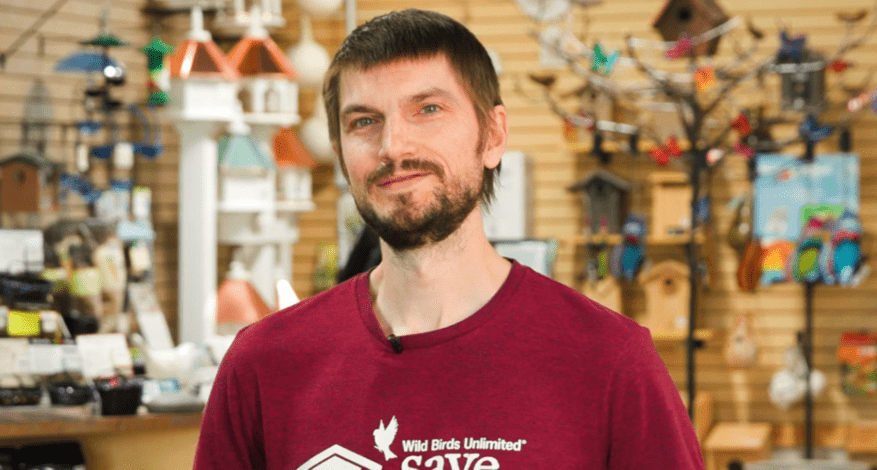
Founder Kristen McClure sat down with us to discuss the festival and how it came to be.  

The Inspiration 

HollerGirl came from the idea of my passion for local music, highlighting women who get overlooked, and bringing in domestic violence is very important to me. 

I fell in love with the whole idea of music festivals and how wonderful they can be. Then I started thinking about all the talented female musicians we have here locally and how little I actually saw them on the bills, especially as headliners. 

The idea of HollerGirl came to me in February last year and I executed the idea in August. 

Women need to be heard. The local musicians we have around here are incredible. 

I wanted to combine the idea of highlighting female musicians with raising awareness for domestic violence survivors. I am a domestic violence survivor myself and my grandmother was also a survivor. 

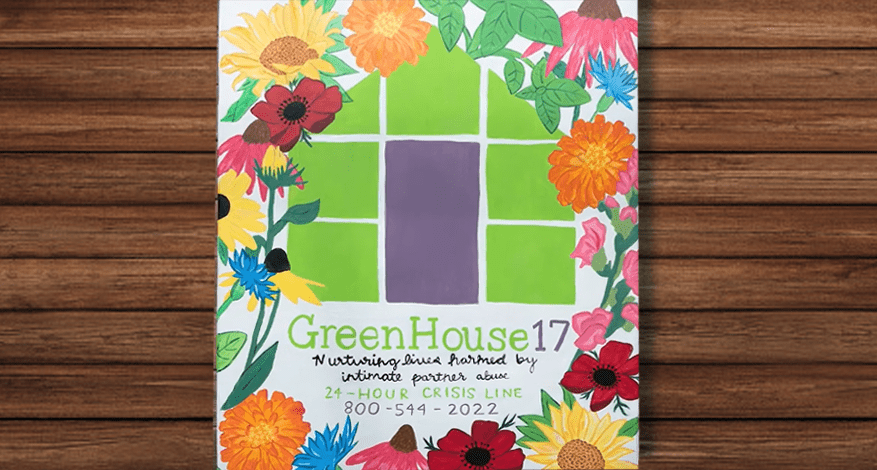
That’s how GreenHouse17 came to be involved. My other main passion is GreenHouse17. I want to raise awareness. 

Family Friendly 

The festival is family-friendly and there will be kids’ activities. 

It’s super important to me that my children, they’re 8 and 10, are surrounded by this sort of atmosphere where women are empowered. It’s important to me for this festival to encourage kids to be strong and understand their place on this earth and what it means to be a good person. 

And understand the impact of what domestic violence means. That they can heal. I want to inspire them with seeing women on the stage. I want little girls to look up there and go, I can do that, too. 

The Location 

The space is Rockcastle Riverside. The river’s right there. It’s in the heat of August so people can walk down to that little sandy beach and get into the river. People are kayaking and kids are playing in the shallow area. 

Workshops, Art Auction, Local Artisans 

We’re going to have workshops this year.  

Cecilia Blair Wright is playing the festival and is also going to be doing music therapy. We’ll have a community art piece with GreenHouse17 and a writing workshop with Amy Figgs. 

There’s also an art auction and local women artisans. 

Open Mic Sunday 

This is a safe space. The open mic is going to be about release, healing, and inspiration. I think it’s an important part of healing from trauma. 

I had so many people coming up to me after the event and saying how special it was to them. People told me, ‘I don’t tell anybody this, but this happened to me. I’m so glad that you’re saying something.’ 

If they want to get up there and scream, sing a song, read poetry, or just say something, do it. 

image
image
image

Click here to read more.

Learn more about HollerGirl!

READ MORE
medical center building university of kentuckyBlog

Brain Injury Awareness Month

March is Brain Injury Awareness Month.

The University of Kentucky Center for Clinical and Translational Science recently started gathering voluntary data from survivors receiving our services for a study on traumatic brain injuries.

“Brain injury due to intimate partner violence has been regarded as an invisible injury and overlooked public health issue,” explains Dr. Justin Karr, Assistant Professor of Clinical Neuropsychology, Principal Investigator.

“There has been a lot of focus on brain injury in athletes and Veterans, but much less focus on survivors of intimate partner abuse.”

Decreased coordination, inability to concentrate, and lapses in memory are associated with injuries which can make it harder for someone to escape abuse, find safety, and begin to heal. These common symptoms can often be missed during standard evaluations.

“We’re hoping to learn more about the unmet health needs that survivors experience following a brain injury so that we may determine how to best address those needs,” explains Dr. Karr.

Women who are 18-64 years old and have experienced intimate partner violence during the past five years could be eligible for participation in the study. Click here for more information.

Read the Spring 2023 issue of Bloom

This is one article from our print newsletter. Follow the link above to read the full issue!

READ MORE
Blog

Remembering Lydia

“There is no normal anymore. You’ve got to find the new normal.”

Early last year Lydia Cassady, a devoted mother of two teenagers and a certified clinical medical assistant, was preparing to flee the abuse of her longtime partner and father of her children. He shot and killed her in their home before she could escape.

“She was my younger sister, 12 years younger, so I kind of raised her,” shares Carolyn Hundley. “She was so creative. If you needed something fixed, an outfit made, a wreath for your door, she could do it. Lydia’s middle name was Blanche, so everyone called her Aunt B. She had tons of stuff with bumblebees on it.”

After Lydia’s death, Carolyn received a call from an advocate at our shelter offering support. Darlene, our executive director, attended Lydia’s funeral service, an act of kindness that touched the family.

With every tragic loss, loved ones are left to grieve while trying to understand the violence.

I think with anyone close to these situations, there’s guilt,” shares Carolyn. “My grief group tells me all the time, ‘you can go there, but you can’t stay there.’”

“We find the strength to continue without her by working to help others.”

The Kentucky Coalition Against Domestic Violence estimates domestic homicides related to intimate partner abuse increased 86% last year. Please reach out to our 24-hour hotline if you or someone you know is being abused: 800.544.2022.

image
image
image
READ MORE
staff group photoBlog

International Women’s Day

#EmbraceEquity

International Women’s Day (IWD), marked annually on March 8, celebrates the achievements of women and calls for women’s equality. This year’s IWD theme is #EmbraceEquity in the workplace, healthcare, sports, and arts.  

Jenny Garrett OBE, an award-winning career coach, trainer, and author, compiled 37 ways to embrace equality for the IWD blog. We’ve chosen a few of our favorites from Jenny’s article and added a couple of our own here:

  1. Flip it. 

Have you heard a woman being referred to as a ‘working mom’? How often do you hear men referred to as a ‘working dad?’ If you can’t flip it, don’t say it.  

  1. ‘One and done’ is not enough.

Recruiting one woman is not enough to make change happen.  

  1. Use an intersectional lens. 

Consider the diversity of women in your community and workspace. What are the experiences of women who don’t identify as white, straight, or without disability? 

  1. Read Invisible Women.

Written by Caroline Criado Perez, this book uses eye-opening data to understand bias in a world designed by men. 

  1. Support art made by women.

Read books, listen to music, and buy art created by women. 

  1. Listen. 

Ask women about their experiences and obstacles and act on their recommendations. 

  1. Start at home.

Who does the housework, the lion’s share of the caring and household admin?   

  1. Support women-owned businesses.

Shopping at small businesses owned by women supports them and their families—and improves local economies. 

  1. Stop stagnating women’s careers.

When they are pregnant, parenting, or assuming the responsibility for the care of their parents.  

  1. Don’t leave the office housework to women.

Do women, even if in a leadership role, take on more admin tasks at your workplace? 

  1. Advocate for gender equity in healthcare.

Know about common gender biases of doctors and call for the inclusion of more women in clinical trials. 

  1. Tune in.

Keep in touch with world affairs, watch documentaries, listen to podcasts, and find ways to remove obstacles to gender equity. 

  1. Use inclusive language.

When referring to groups of people, an inclusive “y’all” is better than the gender-specific ‘you guys” or “ladies and gentlemen.” 

  1. Separate performance.

Appreciate that talent doesn’t just look and behave in one way. Separate performance from potential and personality from skill sets. 

  1. Watch and attend women’s sporting events.

Start with the University of Kentucky Women’s Basketball, Softball, or Soccer games. 

  1. Check your bias.

Take the Implicit Association Test to measure attitudes and beliefs that people may be unwilling or unable to report. 

  1. Believe survivors of intimate partner abuse.

Support missions like ours to advocate against power-based violence, call for change, and support survivors during the healing journey. 

READ MORE
Blog

Shelter Life – Launching Phase

Walking into shelter for the first time can be a very scary experience.

Although every survivor’s journey after fleeing abuse is unique, our shelter services are designed around three phases of shelter life — Welcoming, Healing, and Launching. This is part three of a 3-part blog series that explores common activities during each phase.   

Launching 

When a survivor begins preparations to leave the shelter, they continue to work with their Healing Advocate and also choose another advocate to help during the Launching phase. 

Housing 

Although each survivor needs different types of housing support, most receive temporary rental and utility assistance. 

Some survivors transition to apartments in their home county or near supportive family and friends, while others move to apartments in the ZeroV Homes Lexington. Twelve of these units are scattered near downtown Lexington, with easy access to public transportation, and twelve cottage-style duplexes are nestled on the backside of the emergency shelter’s property.  

Breaking Down Fears 

A large part of the Launching phase is to work on emotional support. For a lot of survivors, this is the first time they’ve lived on their own in a long time.  

Advocates will work through fears and safety plan for survivors. If the survivor has children, our Youth Advocate will help safety plan with the kids. 

What’s Next? 

While a survivor is still at shelter, Launching Advocates will connect them with an Outreach Advocate in the community where they will be living. Staff members live and work in all 17 counties of our service area. 

Outreach Advocates continue supporting survivors after they transition out of shelter.  

Call us anytime.

24-HOUR HOTLINE 800.544.2022

READ MORE
scott with children21 Years

Teen Dating Violence Awareness – Part 2

February is Teen Dating Violence Awareness and Prevention Month.

The theme is, “Be About It,” encouraging everyone to help create a world free from relationship abuse. It’s important to start talking to your children about intimate partner abuse early and often.  

Scott, the program manager for our Children’s Safe Exchange and Visitation, shared how he discusses his work and topics surrounding intimate partner abuse with his son, who is about to turn 13. 

I have been working with traumatized youth in various residential facilities since the winter of 1995. As a parent, I feel that I have an advantage in talking to my son about intense issues since most parents’ “intense” feels like my Tuesday. That’s certainly not entirely true, but that’s how it feels sometimes when I talk to parents who aren’t social work lifers.  

My advantages are compounded by my spouse who is an Intervention Specialist working at VIP [Violence Intervention and Prevention Center] on UK’s campus. Most of her work is centered on sexual assault. 

My son will be 13 this April. He has been subjected to post-work debriefings between my wife and me for the past 12 years. There is not a lot he hasn’t heard. The good news is talking to him about intimate partner abuse, consent, sexual assault, etc. already has some built-in context.  

When we need to approach an issue with him, it usually develops organically. Most of the time he reports from YouTube, or we overhear something he is watching and try to be pretty frank with him.  

Despite the built-in context, it can still be difficult as my son is on the Autism Spectrum and does not give the cues we normally need to tell us the message is received and registered. I am direct, frank, and approach as if I’m talking to a dear friend. 

Sometimes we get cues that he is on board with what we are saying. The other day I trimmed my beard and my son says, “Hey dad, please don’t be mad…but you look like Andrew Tate.”  

I don’t at all, but I know he’s paying attention. 

Call our 24-Hour Crisis Hotline

If you or someone you know is being abused, our advocates are available every day of the year.

READ MORE
teenagers field making hearts with handsBlog

Teen Dating Violence Awareness – Part 1

February is Teen Dating Violence Awareness and Prevention Month.

TDVAM has me thinking about my past and my daughter’s future.  

It wasn’t until I started working at GreenHouse17 that I really reflected on my first high school relationship. And even more so after having my daughter in September.  

Although the details are fuzzy now, I remember enough to know I should’ve left my boyfriend when I was a sophomore/junior in high school. He showed many signs of abuse, even though he never hit me.  

He would physically restrain me by holding my wrists and yell at me in the halls of school. He also went on a hunger strike when I broke up with him at one point and convinced our friends it was a romantic gesture until I gave up and returned to the relationship. 

When I take this quiz about my high school relationship – Is your relationship healthy? – from love is respect, I get this response – 

 “If you scored 5 or more points, you are definitely seeing warning signs and may be in an abusive relationship. Remember the most important thing is your safety — consider making a safety plan. You don’t have to deal with this alone. Contact us at loveisrespect.org” 

I don’t want my daughter to end up in an unhealthy relationship. I want her to be knowledgeable about red flags and feel comfortable discussing these things with trusted people in her life. 

Start Early 

I plan to start talking to my daughter early. Starting discussions about bodily autonomy is important to prevent sexual abuse and later intimate partner abuse. This article from Rady Children’s Hospital discusses seven steps to teach your children about bodily autonomy. 

This parent guide from love is respect is a good resource to get conversations started with your teenager. 

Conversations 

I asked Scott, the program manager for our Children’s Safe Exchange and Visitation, how he discusses topics surrounding intimate partner abuse with his son, who is about to turn 13. 

Read what he shared here. 

Call our 24-Hour Crisis Hotline

If you or someone you know is being abused, our advocates are available every day of the year.

Photo by Melissa Askew on Unsplash

READ MORE
Blog

Black History Month

This year’s national theme for Black History Month is Black Resistance.

Each year, the Association for the Study of African American Life and History (ASALH) chooses the theme for Black History Month. The Black Resistance theme is a call to study how Black Americans have established safe spaces where Black life can be sustained, fortified, and respected.

Indeed, this is true for ending intimate partner abuse. Our mission took shape with suffrage during the Jim Crow era. Theories of second-wave feminism, developed alongside the Civil Rights movement, defined the mission.

Black women resisted systemic racism and oppression during these decades—and exclusion by white women in the work—to develop philosophies, policies, and practices that are the cornerstone of our mission.

Safe Spaces

In more recent years, Black women have developed research and discourse that have redefined best practices in the field. But people of color harmed by an intimate partner are less likely to report the crimes or seek support from social service organizations than white women.

This report prepared by the Women of Color Network (WOCN) explains why. Distrust of law enforcement, criminal justice processes, and social service providers is common—for good reason.

Law enforcement are more likely to arrest Black women for self-defense in the context of intimate partner abuse. If seeking legal protection from abuse, Black victims are more likely to be criminalized by the judicial system than white victims.

The WOCN report also outlines several reasons that discourage Black victims of intimate partner abuse from accessing social services, including the following:

  • Cultural and/or religious beliefs
  • Lack of service providers that look like the survivor or share everyday experiences
  • Lack of culturally appropriate services
  • Lack of trust based on the history of racism and classism

“…the survivor seeking assistance is the only expert on their culture and their experiences within their community.”

Looking Back & Moving Forward

This month we renew our commitment to non-discrimination, honor contributions of Black women to our mission, and celebrate Black women-led organizations that are creating safe spaces for positive change.

Tarana Burke

Activist, community organizer, executive, and founder of the “me too” movement

Combahee River Collective

“We are a collective of Black feminists who have been meeting together since 1974.”

Kimberlé Crenshaw

American civil rights advocate and a leading scholar of critical race theory.

FreeFrom

“We’re creating an ecosystem in which survivors can thrive.”

Aileen Clarke Hernandez

Union organizer, civil rights activist, women’s rights activist, and former president of NOW.

National Black Women's Justice Network

We envision a society where healing—not punishment—is upheld as justice.”

Pauli Murray

Civil rights activist, gender equality advocate, Episcopal priest, lawyer, and author.

Ujima

The National Center on Violence Against Women in the Black Community.

Women of Color Network

Dedicated to building the capacity of women of color advocates responding to violence against women of color.

Cover Image:

Collection of the Smithsonian National Museum of
African American History and Culture, Gift of Leah L.
Jones, © Leah L. Jones

READ MORE
two people at front deskBlog

Shelter Life – Healing Phase

Walking into shelter for the first time can be a very scary experience.

Although every survivor’s journey after fleeing abuse is unique, our shelter services are designed around three phases of shelter life — Welcoming, Healing, and Launching. This is part two of a 3-part blog series that explores common activities during each phase.   

Healing 

“When clients first come in, they work on immediate safety goals – getting all their documents and making sure they have everything they need to basically start a new life,” says advocate Alyssa. 

“When they get to Healing, we work on long-term goals like employment, counseling, housing, legal advocacy, and setting up referrals to the community so they have support systems.” 

Advocate Kristen adds, “And also the emotional aspect of processing what brought you here. After you’re safe and have time to rest, all these feelings and realizations start coming out about your past trauma and we’re here to talk about that and find outlets that work best to regain self-sufficiency.” 

First Meeting 

During the first meeting with their Healing Advocate, survivors discuss their long-term goals during the remainder of their stay at shelter such as finding a job, housing, and transportation.  

Healing Advocates also talk through the survivor’s history and help them process their trauma. 

“We’re listeners and keepers of their stories while we work towards safety for their families,” says Alyssa. 

After the initial meeting, survivors and Healing Advocates meet at least twice a week to work towards their goals. 

Goals 

An important part of the Healing phase is making sure people are connected with support systems in their community like Legal Aid of the Bluegrass and the Children’s Safe Exchange and Visitation program.  

Every survivor’s healing journey is different, but common goals include reaching financial independence, going back to school, working out schedules for their children, and finding a therapist. 

What’s Next? 

When survivors are ready to begin their transition out of shelter, they move on to phase 3 – Launching.

Call us anytime.

24-HOUR HOTLINE 800.544.2022

READ MORE
Blog

Alice, Darling

Alice, Darling is a new film starring Anna Kendrick (Pitch Perfect, A Simple Favor, Trolls) that explores topics of psychological abuse.

The film tells the story of Alice, a young professional in a relationship with a seemingly charming older man. The truths of that relationship are revealed during a vacation with her best friends Sophie (Wunmi Mosaku) and Tess (Kaniehtiio Horn).

With the help of her friends, Alice begins to identify the abuse and eventually ends the relationship. The film premiered to positive reception during the 2022 Toronto Film Festival and was released in theatres this January.

Emotional & Psychological Abuse

Emotional and psychological abuse (also sometimes called mental abuse) can be difficult to identify, especially when the abuser is not physically violent or avoids blatant verbal abuse.

The National Domestic Violence Hotline reports that 95% of contacts reveal they are experiencing emotional abuse: “Emotional abuse is also a foundation for other forms of abuse. Often, it is used to erode a person’s self-esteem and self-worth and create a psychological dependency on the abusive partner.”

Here are a few common examples:

  • Embarrasses you in front of friends and family
  • Mocks you for opinions and beliefs
  • Isolates you from supportive friends and family
  • Belittles your goals or accomplishments
  • Blames you if they cheat
  • Keeps you from sleeping or caring for yourself
  • Tricks or forces you to compromise morals
  • Gaslights you to not trust yourself

“A survivor may find themselves deep into a relationship before realizing that their choices, everything from who they can talk to, see and where they can go, to whether or not they’re able to end the relationship—are no longer their own,” explains this article from Domesticshelters.org.

A Personal Connection

During a recent interview on “Armchair Expert,” a popular podcast co-hosted by Dax Shepard and Monica Padman, Kendrick discussed a past personal relationship that shared similarities with the film.

“We had embryos together, this was my person,” Kendrick says. “And then about six years in – somewhere around there – I remember telling my brother, when things had first kind of gone down, ‘I’m living with a stranger. Like, I don’t know what’s happening.’”

Kendrick describes examples of emotional abuse that escalated when she tried to address her concerns. She remembers feeling embarrassed about what was happening to her.

“There definitely was part of me that was like my mother raised me better than this. How am I the girl during the pandemic locked in my bathroom…facetiming with my two best friends and sobbing and whispering so he doesn’t hear?”

After repeatedly being told by her partner that she was at fault and provoking the violence, Kendrick struggled to identify herself as the victim. She was convinced the problem could be fixed by working on herself.

“I truly dismantled my life,” she says. “I started seeing two therapists a week, and I started trying to learn to meditate, and I got into al-anon.”

Kendrick ended the relationship before starting work on Alice, Darling. She credits a therapist for helping her to establish new boundaries. The actor never intended to speak about the relationship during interviews about the film but instinctively shared her story during a media event.

“It was like I couldn’t swallow the shame anymore.”

Call our 24-Hour Crisis Hotline

If you or someone you know is being abused, our advocates are available every day of the year.

READ MORE